Ever scrolled through your messages and stumbled upon “Wyll”, wondering 🤔, “what does Wyll mean in text?” You’re not alone!
In today’s fast-paced texting world, acronyms and slang appear faster than ever, leaving even the savviest texters confused.
This guide will dive deep into Wyll, its origin, uses, and practical examples, so you can text like a pro and never feel left out again! 💬✨
Origin of Wyll 🌐
The term “Wyll” is a relatively new addition to texting slang. While it may look like a typo of “will,” it actually has a unique purpose in digital communication. Internet linguists suggest that Wyll emerged in online communities around 2020–2021 as part of a wave of abbreviated, playful language. 💻
Unlike traditional acronyms, Wyll doesn’t always stand for a strict phrase. Its meaning is largely context-driven, which makes understanding it crucial for modern digital conversations. This adaptability is what helped it spread so fast among teenagers and young adults. 🧑💻
What Does Wyll Mean? 🧐
In texting, Wyll is often used as a casual way to indicate intention or willingness. Think of it as shorthand for “I will” or “I am willing to.” It adds a relaxed tone, often implying informality or friendliness. 💌
Here’s the breakdown:
- Wyll = Willing – Showing readiness to do something.
- Wyll = I Will – Shortened form of “I will” in informal texting.
- Context matters – Sometimes it’s just a friendly acknowledgment.
Essentially, Wyll communicates commitment without formality. It’s the perfect slang for texting friends, group chats, or casual social media interactions. 🌟
How to Use Wyll in Texts ✨
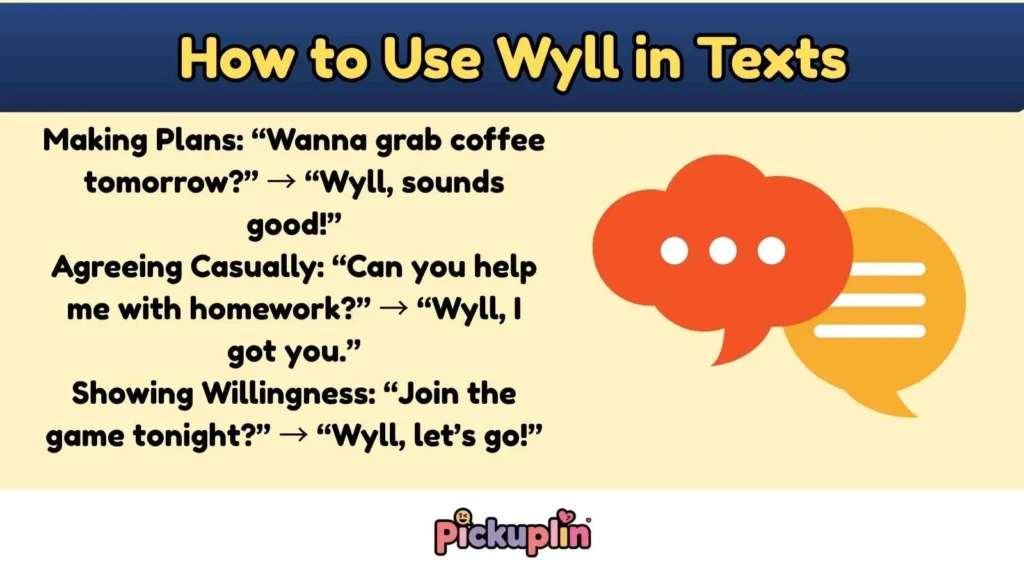
Using Wyll correctly is easy once you understand its context. Here are some common scenarios:
- Making Plans: “Wanna grab coffee tomorrow?” → “Wyll, sounds good!”
- Agreeing Casually: “Can you help me with homework?” → “Wyll, I got you.”
- Showing Willingness: “Join the game tonight?” → “Wyll, let’s go!”
Notice how Wyll makes the response friendly, informal, and approachable—perfect for social texting etiquette. 🗨️
Practical Examples of Wyll in Texts 💬
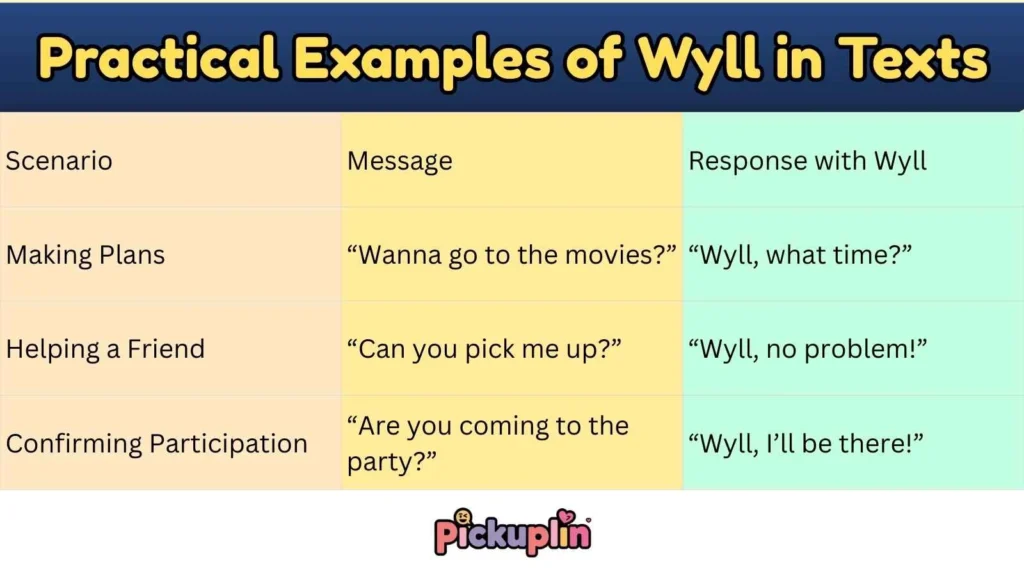
Here’s a table showcasing typical usage in different contexts:
| Scenario | Message | Response with Wyll |
|---|---|---|
| Making Plans | “Wanna go to the movies?” | “Wyll, what time?” |
| Helping a Friend | “Can you pick me up?” | “Wyll, no problem!” |
| Confirming Participation | “Are you coming to the party?” | “Wyll, I’ll be there!” |
Difference Between Wyll and Other Slang 🤯
While texting slang is full of abbreviations, Wyll is unique because it:
- Conveys willingness rather than emotions or reactions.
- Is context-sensitive, not just a fixed acronym.
- Can replace full phrases like “I will” without losing tone.
Compare Wyll with similar texting terms:
- BRB: Be Right Back (action-oriented)
- OMG: Oh My God (reaction-oriented)
- Wyll: Willing/Informal commitment (intent-oriented)
Using Wyll with Emojis 😎
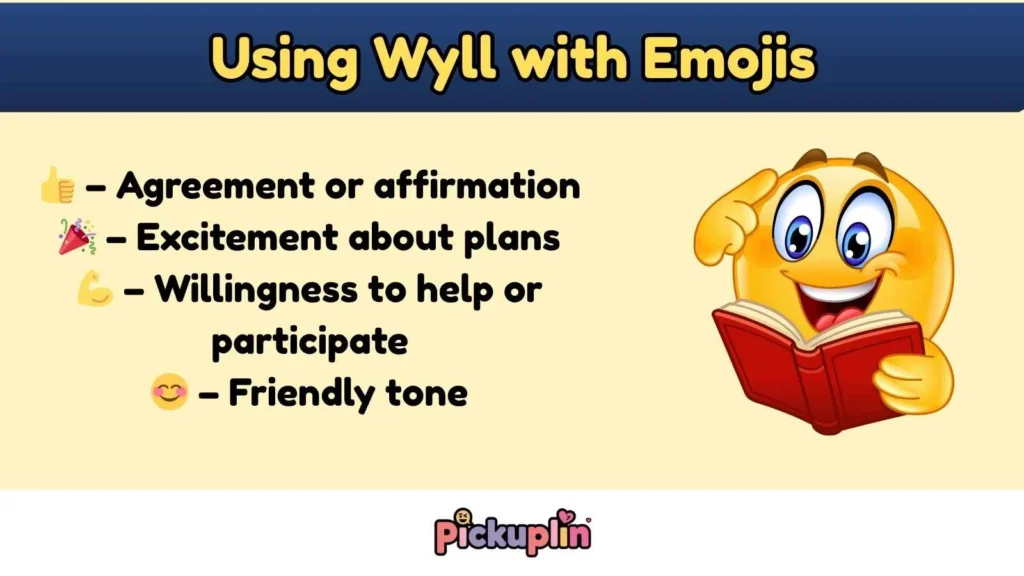
Adding emojis makes Wyll even more expressive. Some common pairings include:
- 👍 – Agreement or affirmation
- 🎉 – Excitement about plans
- 💪 – Willingness to help or participate
- 😊 – Friendly tone
Example: “Wyll! 💪 Let’s do this 🎉” – Here, Wyll + emojis conveys eagerness and friendliness in a single line. 📱
Common Misconceptions About Wyll ❌
Many people think Wyll is a typo or random slang. Here are some myths:
- Myth 1: Wyll = Will (always). ❌ Not exactly—it often means “I’m willing” or “I will” depending on context.
- Myth 2: Only teens use it. ❌ Adults in casual chats use Wyll too!
- Myth 3: It’s unprofessional. ❌ In casual texting, Wyll is perfectly fine.
Quick Reference Table for Wyll Usage 📊
| Meaning | Context | Example |
|---|---|---|
| Willing | Friend asks for help | “Wyll, I can help with that 💪” |
| I will | Making plans | “Wyll meet you at 7?” |
| Friendly acknowledgment | Casual chat | “Wyll, got it! 😊” |
Why Wyll Became Popular 🚀
The rise of Wyll can be attributed to:
- Short, easy-to-type: Perfect for fast texting.
- Friendly tone: Less formal than “I will,” more relatable.
- Social media amplification: Teens sharing slang online spread it quickly.
Its popularity reflects the modern trend of expressive, context-driven digital communication. 🌐
Tips for Using Wyll Wisely ✅
Even slang has etiquette. Here’s how to use Wyll effectively:
- Context first: Only use Wyll in informal chats.
- Emoji support: Pair Wyll with emojis to enhance tone.
- Don’t overuse: Too many slang words can confuse readers.
- Know your audience: Some friends or family may not understand Wyll yet.
FAQs
1. Is Wyll slang only for texting?
Primarily, yes. Wyll is mostly used in digital communication, like texts, chats, and social media. It’s casual and context-driven.
2. Can adults use Wyll?
Absolutely! Anyone comfortable with informal digital slang can use Wyll, as long as it fits the conversation tone.
3. Does Wyll have a negative meaning?
No, Wyll is positive and shows willingness, commitment, or friendly acknowledgment. It’s rarely used negatively.
4. Can Wyll replace “I will” in formal writing?
No. Wyll is informal and should be limited to casual texting or online chats, not formal documents or emails.
5. How is Wyll pronounced?
It’s pronounced exactly like “will,” but the spelling gives it a playful, modern vibe.
Conclusion
Wyll may seem mysterious at first, but it’s simply a fun, casual way to show willingness or intent in text.
From expressing readiness to joining plans, Wyll adds a friendly, modern tone to your digital conversations.
By understanding its context, pairing it with emojis, and using it wisely, you can communicate naturally and confidently online. 💬

I’m the voice behind Pikuplin, where I simplify meanings, slang, and everyday expressions in a way that actually makes sense. I love breaking down words and phrases so readers can understand not just the definition, but the real meaning behind them. Every piece I write is based on clarity, curiosity, and real human understanding.