If you’ve ever opened a message and thought, “Wait… what does ASL mean in text?” — you’re not alone. Digital conversations move fast. Slang evolves daily. And abbreviations like ASL can feel confusing if you don’t know the context.
In today’s world of texting, social media, gaming chats, and short-form messaging, understanding slang is essential. It helps you connect, communicate clearly, and avoid awkward misunderstandings.
So if you’re searching for what does asl mean in text, you’re about to get a clear, expert-level breakdown — explained in simple, friendly language.
What Does ASL Mean in Text? (Quick Answer) ⚡
The most common answer to what does asl mean in text is:
ASL = Age, Sex, Location
It’s a quick way someone asks basic personal details in online conversations. Instead of typing out three separate questions, people shorten it to “ASL?”
For example:
- “Hey, ASL?”
- “ASL before we chat?”
- “What’s your ASL?”
This abbreviation became popular in early internet chatrooms and still appears today — although usage has changed over time.
Breaking Down ASL: What Each Letter Means 🔍
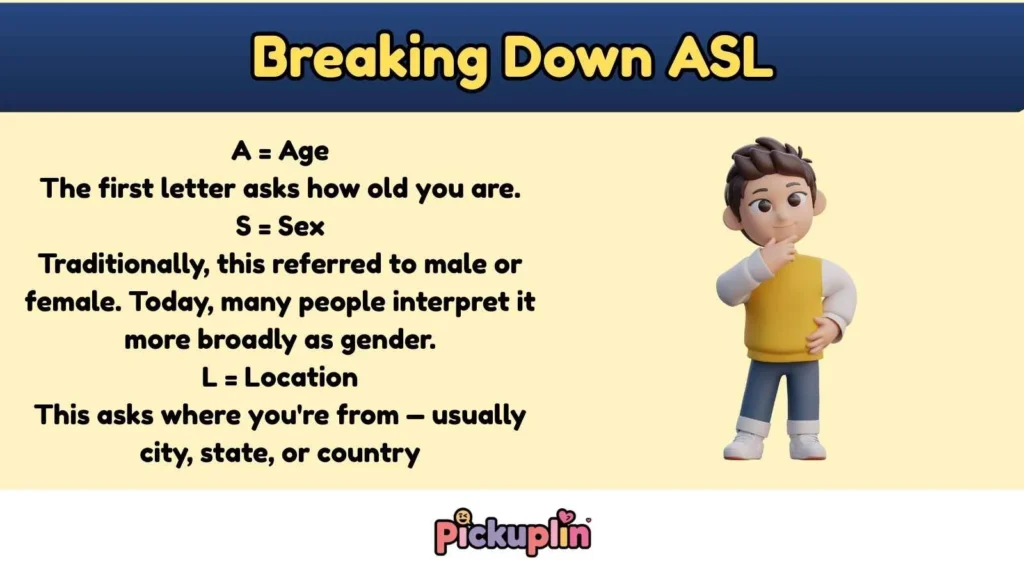
A = Age
The first letter asks how old you are.
S = Sex
Traditionally, this referred to male or female. Today, many people interpret it more broadly as gender.
L = Location
This asks where you’re from — usually city, state, or country.
A typical response looks like this:
“18/F/California”
This means: 18 years old, female, from California.
The Origin of ASL in Online Culture 🌐
To fully understand what does asl mean in text, we need to look at its history.
ASL became widely popular in early internet chatrooms in the late 1990s and early 2000s. Platforms like AOL Instant Messenger (AIM) and IRC chat systems used fast-paced, anonymous conversations.
Users needed quick ways to gather basic information. Instead of typing full sentences, they created shorthand.
ASL became one of the most recognized internet abbreviations of that era.
It helped strangers quickly decide if they wanted to continue chatting. Over time, it became part of digital slang culture.
How ASL Is Used in Text Messages Today 📲
Today, when someone asks what does asl mean in text, the answer depends on context.
There are two main modern uses:
1️⃣ Traditional Meaning (Age, Sex, Location)
This still appears in:
- Online gaming chats 🎮
- Random chat apps
- Stranger-based messaging platforms
2️⃣ Slang Meaning: “As Hell”
In modern texting, especially among younger users, ASL can also mean “as hell.”
Example:
- “I’m tired ASL.”
- “That movie was boring ASL.”
Here, ASL intensifies the emotion — similar to saying “very” or “extremely.”
This newer meaning is growing in popularity on social platforms.
ASL Meaning Comparison Table 📊
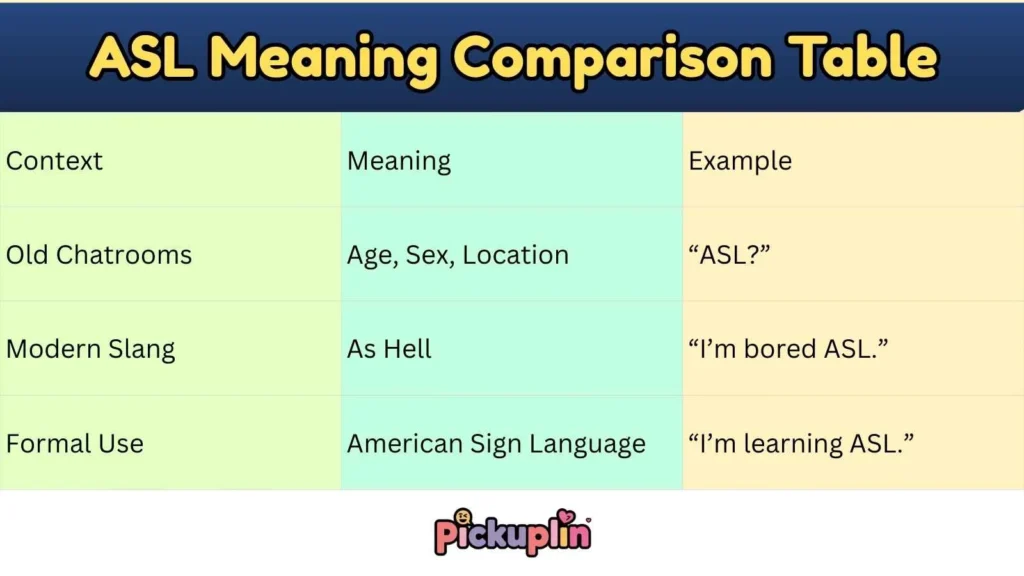
| Context | Meaning | Example |
|---|---|---|
| Old Chatrooms | Age, Sex, Location | “ASL?” |
| Modern Slang | As Hell | “I’m bored ASL.” |
| Formal Use | American Sign Language | “I’m learning ASL.” |
Context always determines the correct interpretation.
ASL vs American Sign Language 🤟
Another important point when answering what does asl mean in text is distinguishing it from American Sign Language.
In educational or professional contexts, ASL usually stands for American Sign Language — a complete visual language used by the Deaf community.
Example:
- “She’s fluent in ASL.”
- “I’m taking ASL classes.”
This meaning has nothing to do with chat slang. That’s why understanding context is crucial.
Why Context Matters So Much 🧠
Language online is flexible. The same abbreviation can mean different things depending on tone and platform.
Ask yourself:
- Is this a casual chat with a stranger?
- Is this a social media caption?
- Is this an educational conversation?
The surrounding message will usually reveal which meaning applies.
Examples of ASL in Real Conversations 💬
Example 1: Chat App
Person A: “Hey.”
Person B: “Hi, ASL?”
Here it clearly means Age, Sex, Location.
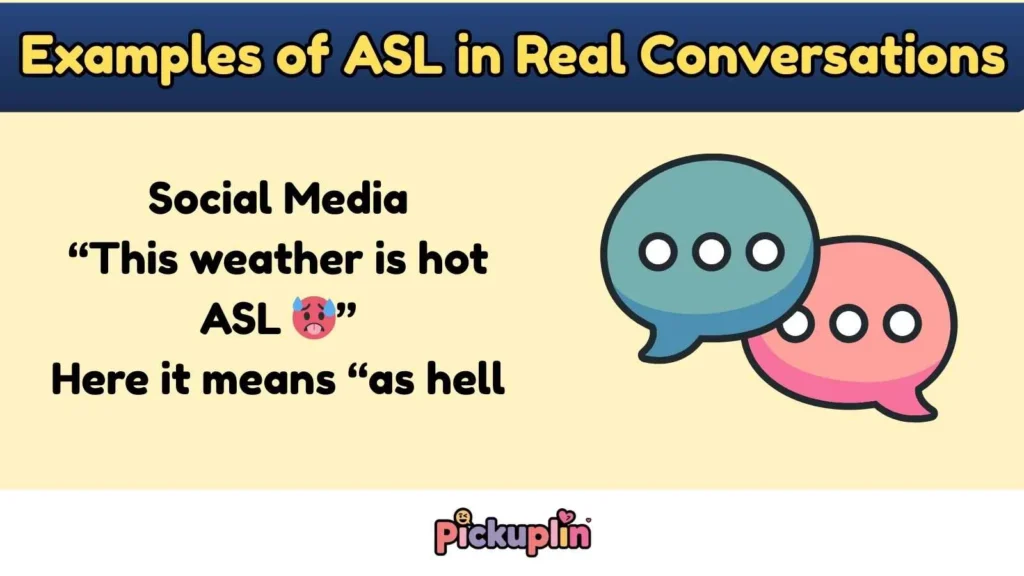
Example 2: Social Media
“This weather is hot ASL 🥵”
Here it means “as hell.”
Example 3: School Setting
“I’m studying ASL this semester.”
This refers to American Sign Language.
Is It Safe to Share Your ASL? ⚠️
If someone asks your ASL in a random chat, think carefully.
Sharing age and location with strangers online can be risky. Always prioritize privacy.
Online safety tips:
- Never share exact address
- Avoid giving full birth date
- Be cautious with strangers
- Trust your instincts
Digital literacy includes knowing when not to respond.
Common Mistakes About ASL ❌
- Assuming it always means one thing
- Using it in formal writing
- Misunderstanding tone
- Confusing slang with American Sign Language
Clarity matters in communication.
How to Respond When Someone Says “ASL?” 🤔
You have options:
- Answer briefly: “20/M/Texas”
- Decline politely: “I prefer not to share.”
- Ignore if uncomfortable
You control what information you give.
Why ASL Became So Popular 💡
It saves time. It simplifies introductions. And it reflects early internet culture where speed mattered.
Short abbreviations made chatting efficient. That efficiency mindset continues today.
Related Internet Slang Terms 📚
- BRB – Be Right Back
- TTYL – Talk To You Later
- IMO – In My Opinion
- SMH – Shaking My Head
FAQs
1. What does ASL mean in text from a guy?
It usually means Age, Sex, Location. However, context matters. It could also mean “as hell.”
2. Is ASL outdated slang?
The Age, Sex, Location meaning is less common than before, but still used in some chat environments.
3. What does ASL mean on TikTok?
On modern platforms, it often means “as hell.” For example, “I’m tired ASL.”
4. Is ASL rude?
Not necessarily. But asking personal details too quickly can feel intrusive.
5. Can ASL mean something professional?
Yes. In academic contexts, ASL commonly means American Sign Language.
Conclusion:
So now you fully understand what does asl mean in text.
It can mean:
- Age, Sex, Location (classic internet slang)
- As Hell (modern intensifier)
- American Sign Language (formal meaning)
The key is context. Always read the full message before deciding what ASL stands for.
Language keeps evolving. Staying informed helps you communicate confidently and clearly online. 💬✨

I’m the voice behind Pikuplin, where I simplify meanings, slang, and everyday expressions in a way that actually makes sense. I love breaking down words and phrases so readers can understand not just the definition, but the real meaning behind them. Every piece I write is based on clarity, curiosity, and real human understanding.