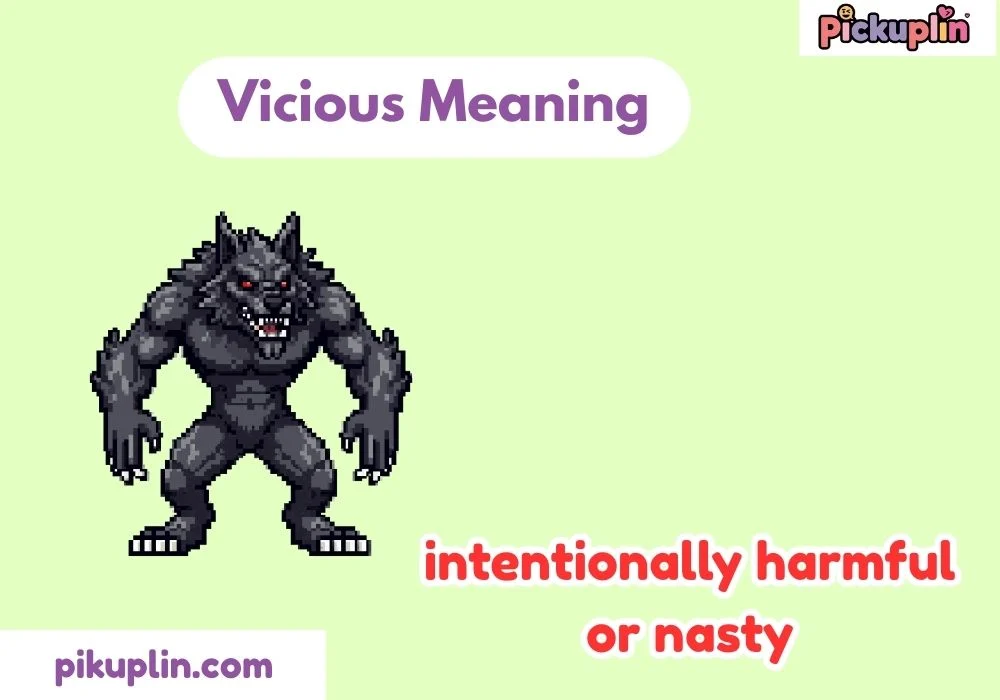
The word vicious is powerful. It feels sharp, intense, and emotional the moment you hear it. But what is the exact vicious meaning? Is it always negative? Can it describe people, actions, words, or even cycles? 🤔
In this in-depth guide, you’ll discover the true meaning of vicious, its origin, real-life examples, emotional impact, correct usage, and common misunderstandings — all explained in a simple, human way.
Whether you’re a student, writer, or just curious, this article will give you expert-level clarity without confusion. ✨
What Does Vicious Mean? (Simple Definition) 📖
The vicious meaning refers to behavior, actions, or words that are cruel, violent, deliberately harmful, or morally aggressive. It often implies intent — meaning the harm is not accidental.
In simple words:
Vicious describes something that is intentionally harmful, brutal, or mean-spirited.
The word can be used for:
- People (a vicious person)
- Actions (a vicious attack)
- Speech (vicious rumors)
- Cycles or patterns (a vicious cycle)
Core Meaning of Vicious in Different Contexts 🌍
The meaning of vicious slightly changes depending on how it’s used. Let’s break it down clearly.
1. Vicious as Cruel or Violent
This is the most common use. It describes extreme cruelty or physical aggression.
Example: The animal made a vicious attack.
2. Vicious as Malicious or Spiteful
Here, vicious refers to emotional or verbal harm.
Example: She spread vicious lies to ruin his reputation.
3. Vicious as Self-Perpetuating
Used in phrases like vicious cycle, it describes a situation that keeps making itself worse.
Example: Stress caused a vicious cycle of anxiety and poor sleep.
Origin and History of the Word Vicious 🕰️
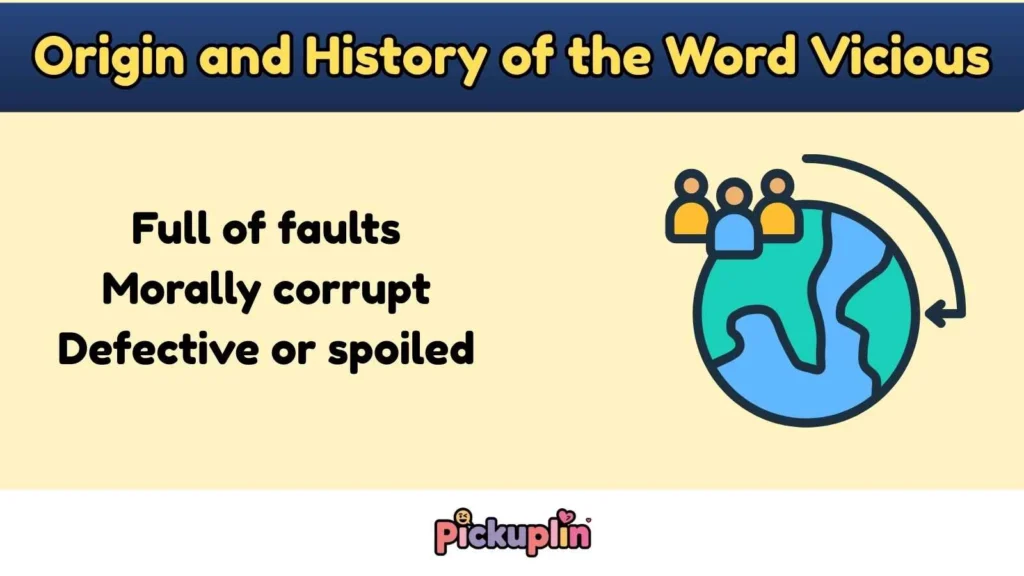
Understanding the origin adds depth to the vicious meaning.
The word comes from the Latin term vitiosus, meaning:
- Full of faults
- Morally corrupt
- Defective or spoiled
Over time, it evolved in English to describe harmful behavior driven by bad intent. This historical background explains why the word feels so morally charged today.
Is Vicious Always Negative? ❌
Yes — vicious is almost always negative. Unlike some intense words that can be positive in certain contexts, vicious carries a strong sense of harm or cruelty.
However, it can sometimes be used figuratively for emphasis.
Example: The competition was vicious. (Meaning extremely intense, not evil)
Even here, the tone still implies danger or harshness.
Common Examples of Vicious in Sentences ✍️
Here are real, natural examples to fully understand usage:
- The bully launched a vicious verbal attack.
- Social media can become vicious very quickly.
- He was caught in a vicious cycle of debt.
- The criticism was unfair and vicious.
- The storm left vicious damage behind.
Vicious vs Similar Words: Key Differences 🔍
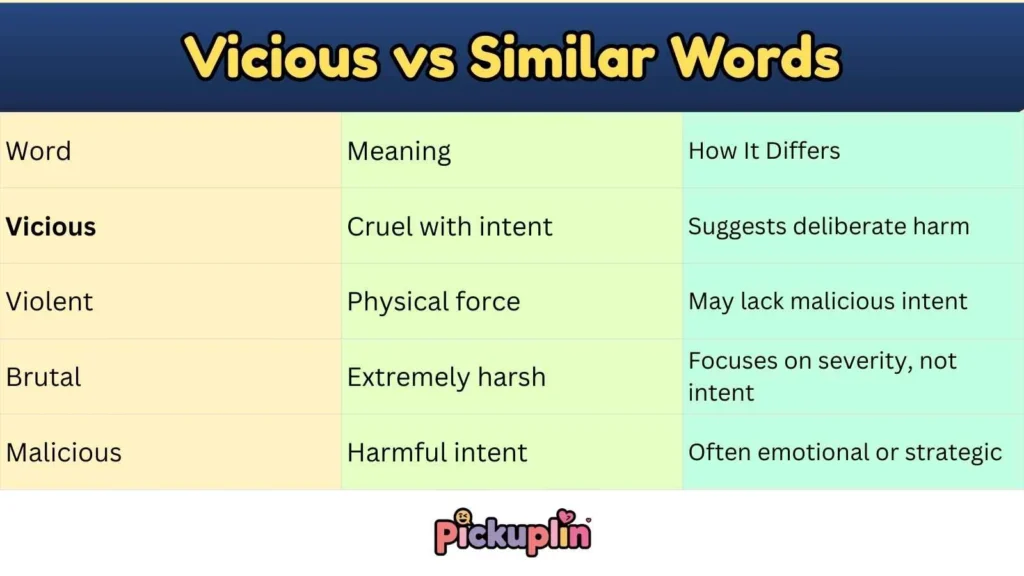
| Word | Meaning | How It Differs |
|---|---|---|
| Vicious | Cruel with intent | Suggests deliberate harm |
| Violent | Physical force | May lack malicious intent |
| Brutal | Extremely harsh | Focuses on severity, not intent |
| Malicious | Harmful intent | Often emotional or strategic |
What Is a Vicious Cycle? 🔁
One of the most searched uses of the term is vicious cycle.
A vicious cycle is a situation where a problem causes effects that make the original problem worse — again and again.
Example:
- Lack of sleep → stress
- Stress → anxiety
- Anxiety → even less sleep
This loop continues unless actively broken.
Emotional Impact of the Word Vicious 💥
The word vicious carries emotional weight. When used, it signals:
- Serious harm
- Intentional cruelty
- Moral judgment
That’s why writers, journalists, and speakers use it carefully — it instantly shapes perception.
When Should You Use the Word Vicious? ✔️
Use vicious when:
- Harm is intentional
- Behavior is cruel or aggressive
- You want to convey severity
Avoid using it casually. Overuse can weaken its impact.
Vicious in Modern Language & Media 📺
Today, vicious is often used in:
- News reporting
- Social commentary
- Psychology discussions
- Online culture
It reflects how society talks about harm, bullying, and cycles of negativity.
Common Mistakes When Using Vicious ⚠️
- Using it for accidental harm ❌
- Confusing it with “intense” ❌
- Applying it to neutral situations ❌
Always remember: vicious implies intent.
FAQs
1. What is the simplest vicious meaning?
Vicious means intentionally cruel, violent, or harmful.
2. Is vicious always about physical violence?
No. It can describe emotional, verbal, or psychological harm.
3. What does a vicious cycle mean?
A situation where problems continuously make each other worse.
4. Can vicious describe words?
Yes. Vicious words are deliberately hurtful or damaging.
5. Is vicious a formal word?
It works in both formal and informal contexts.
Final Thoughts:
The vicious meaning goes far beyond simple aggression. It reflects intentional harm, cruelty, and destructive patterns.
Knowing how and when to use this word helps you communicate more clearly, responsibly, and powerfully.
Language shapes understanding — and words like vicious deserve thoughtful use.

I’m the voice behind Pikuplin, where I simplify meanings, slang, and everyday expressions in a way that actually makes sense. I love breaking down words and phrases so readers can understand not just the definition, but the real meaning behind them. Every piece I write is based on clarity, curiosity, and real human understanding.