Twat meaning is a topic many people search for quietly, often after hearing the word in a movie, online argument, or casual conversation 🤔.
It’s one of those words that carries strong emotion, cultural nuance, and social weight. Understanding what it means—and how it’s actually used—matters more than people realize.
This guide is written to help you understand the term accurately, responsibly, and in real-world context. No exaggeration.
No shock tactics. Just a clear explanation that respects language, culture, and modern communication.
What Does “Twat” Mean?
At its core, the twat meaning depends heavily on context, region, and tone.
In modern English, especially in informal speech, “twat” is commonly used as an insult. It refers to someone who is acting foolish, annoying, rude, or deliberately unpleasant.
Simple definition:
A twat is a person perceived as irritating, stupid, or disrespectful—usually said in anger or frustration.
However, the word has a much older and more sensitive origin, which explains why it’s considered offensive in many settings.
Is “Twat” a Bad Word?
Yes—“twat” is widely considered a profanity ⚠️.
While it’s sometimes used casually in certain cultures, it remains vulgar and inappropriate in formal, professional, or respectful conversation.
Key reasons it’s considered offensive:
- It originated as a crude anatomical reference
- It’s often used to insult someone’s intelligence or character
- It can feel aggressive or demeaning
Important note: Even when used jokingly, the word can easily offend. Social awareness matters.
Origin and Historical Meaning of “Twat”
Understanding the origin of the word adds important context.
The term dates back several centuries and originally referred to female anatomy. Over time, its meaning shifted away from anatomy and toward insult-based usage.
Language evolution often works this way—words soften, harden, or completely change meaning depending on how society uses them.
Today, most people using the word are not referencing its original meaning. Still, the historical background is why the term remains controversial.
Modern Usage: How “Twat” Is Used Today
In everyday conversation, the twat meaning usually refers to behavior, not anatomy.
It’s often used to describe someone who is:
- Acting selfishly
- Being deliberately annoying
- Showing ignorance or arrogance
Examples in neutral explanation (not endorsement):
- “He was acting like a twat during the meeting.”
- “Don’t be a twat—just listen.”
⚠️ These examples are for understanding only, not encouragement.
British vs American Meaning of “Twat”
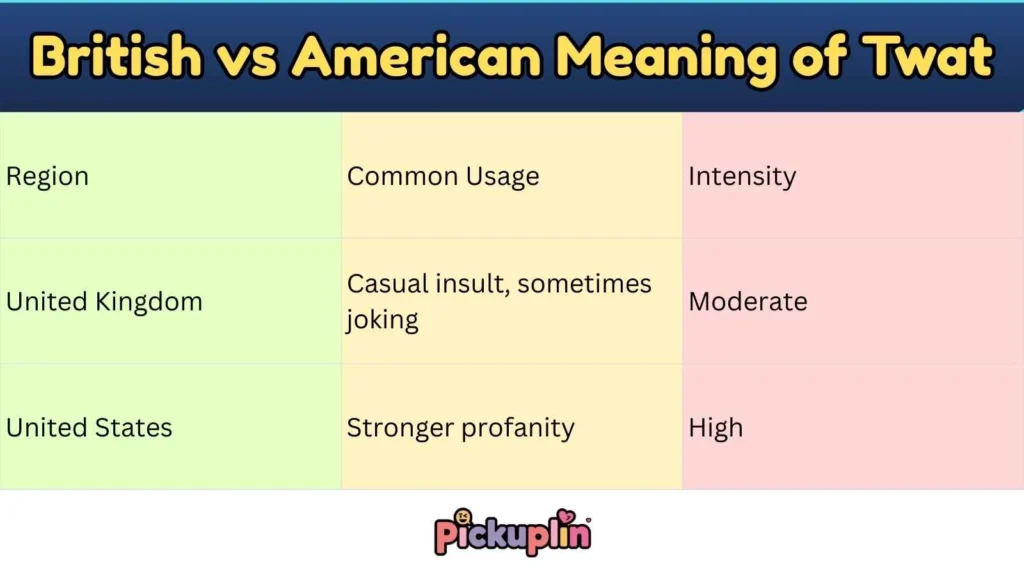
One of the most interesting aspects of the twat meaning is how it changes by region 🌍.
| Region | Common Usage | Intensity |
|---|---|---|
| United Kingdom | Casual insult, sometimes joking | Moderate |
| United States | Stronger profanity | High |
In British English, the term may be used more loosely—though still offensive. In American English, it’s often perceived as much harsher.
Same word. Very different reactions.
Emotional Tone and Intent Matter
Language isn’t just about words—it’s about intent ❤️.
The same word can feel:
- Playful among close friends
- Hostile in an argument
- Shocking in formal settings
This is why understanding the emotional weight behind “twat” is essential. Tone, relationship, and environment all influence how it’s received.
Is “Twat” Ever Acceptable?
Short answer: rarely.
Situations where it might appear:
- Comedy or satire 🎭
- Fictional dialogue
- Casual banter between close friends
Situations where it should be avoided:
- Workplace conversations
- Public speaking
- Online discussions with strangers
When in doubt, leave it out.
Why People Search for “Twat Meaning”
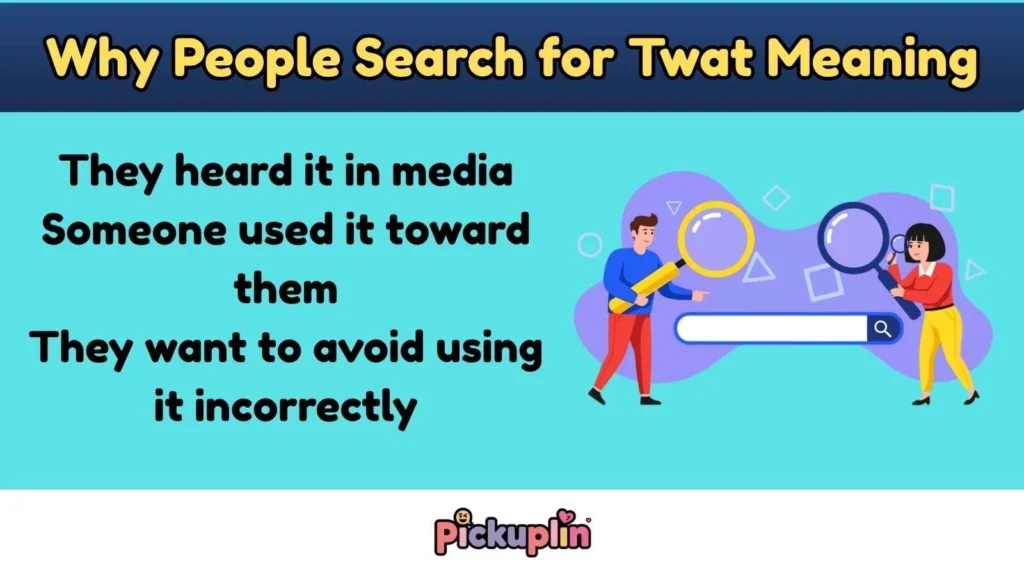
Search behavior tells a story 📊.
People usually look up the twat meaning because:
- They heard it in media
- Someone used it toward them
- They want to avoid using it incorrectly
This shows a desire for understanding, not misuse. And that’s a good thing.
Common Misunderstandings
Let’s clear up a few myths:
-
Myth: It’s harmless slang
Reality: It’s still offensive to many -
Myth: Everyone uses it
Reality: Many avoid it completely -
Myth: It’s funny by default
Reality: Humor depends on audience
Alternatives to Using “Twat”
If your goal is to express frustration without crossing lines, there are safer alternatives 👍:
- “That was unnecessary.”
- “You’re being unreasonable.”
- “That behavior isn’t helpful.”
Clear communication often works better than insults.
Language Responsibility in the Digital Age
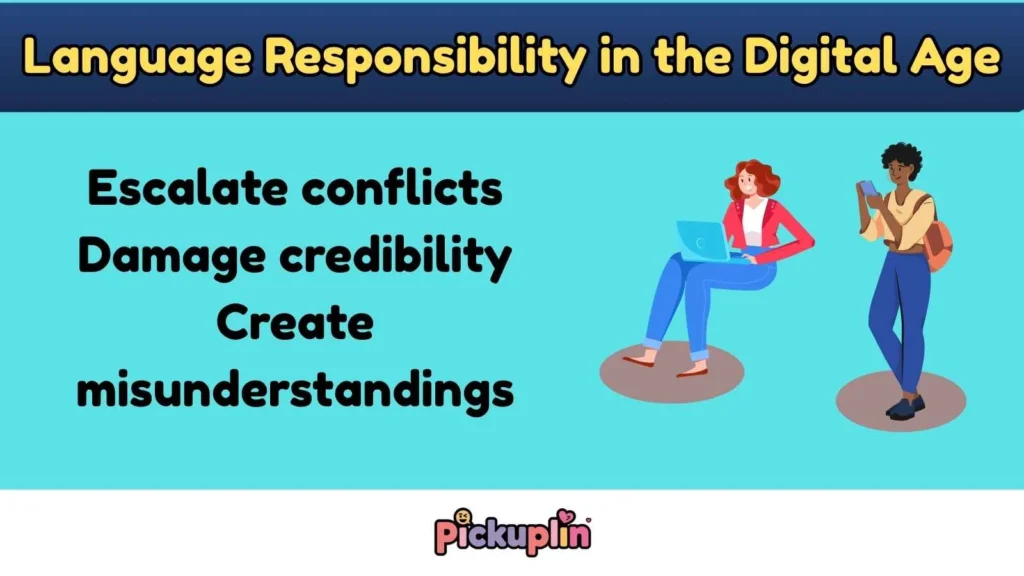
Words travel fast online 🚀.
Using offensive terms can:
- Escalate conflicts
- Damage credibility
- Create misunderstandings
Being mindful of language shows emotional intelligence and respect.
FAQs
Is “twat” a swear word?
Yes. It’s widely considered a vulgar insult and should be used with caution or avoided.
Is the word used differently in different countries?
Yes. British usage is often less intense than American usage, but both recognize it as offensive.
Can “twat” be used jokingly?
Sometimes among close friends, but it still carries risk of offense.
Why does the word offend people?
Because of its crude origins and its use as a personal insult.
Final Thoughts:
The twat meaning is more than a dictionary definition. It’s a reminder that words carry history, emotion, and impact.
Understanding language helps us communicate better, avoid unnecessary conflict, and show respect—even when expressing frustration.
Knowing what a word means doesn’t mean you have to use it.
Choose clarity. Choose awareness. 🌱

I’m the voice behind Pikuplin, where I simplify meanings, slang, and everyday expressions in a way that actually makes sense. I love breaking down words and phrases so readers can understand not just the definition, but the real meaning behind them. Every piece I write is based on clarity, curiosity, and real human understanding.