Tramp stamp meaning is one of the most searched yet misunderstood slang terms related to tattoos. 💡 Over the years, this phrase has carried cultural weight, emotional reactions, stereotypes, and evolving interpretations. Some see it as offensive slang. Others view it as a reclaimed symbol of personal expression.
This guide explores the true meaning of tramp stamp, where it originated, how society shaped its reputation, and how modern perspectives are changing. Written with expert insight and cultural awareness, this article delivers a complete, trustworthy explanation.
If you have ever wondered what a tramp stamp really means — beyond judgment or jokes — you’re in the right place. 😊
What Does Tramp Stamp Mean?
The term tramp stamp refers to a tattoo placed on the lower back, typically centered just above the waistline. While the placement itself is neutral, the slang term developed negative social connotations over time.
In simple terms:
- Tramp → a derogatory slang word implying promiscuity
- Stamp → a visible marking or label
Together, tramp stamp meaning became a judgmental label rather than a description of the tattoo itself. Importantly, the tattoo placement existed long before the slang term — and its meaning is not inherent to the tattoo.
The meaning of a tattoo comes from the wearer, not from society’s assumptions.
Origin of the Term “Tramp Stamp”
The phrase gained popularity in the late 1990s and early 2000s, especially in Western pop culture. During this time, lower back tattoos became trendy among young adults, particularly women.
As the trend grew, so did criticism and stereotyping. Media, comedy shows, and casual slang turned the tattoo into a symbol associated with unfair labels.
Key Historical Factors
- Rise of celebrity culture and reality TV 📺
- Increased visibility of body art in mainstream media
- Societal discomfort with women expressing bodily autonomy
Understanding the origin of tramp stamp meaning helps separate cultural bias from reality.
Lower Back Tattoos Before the Slang
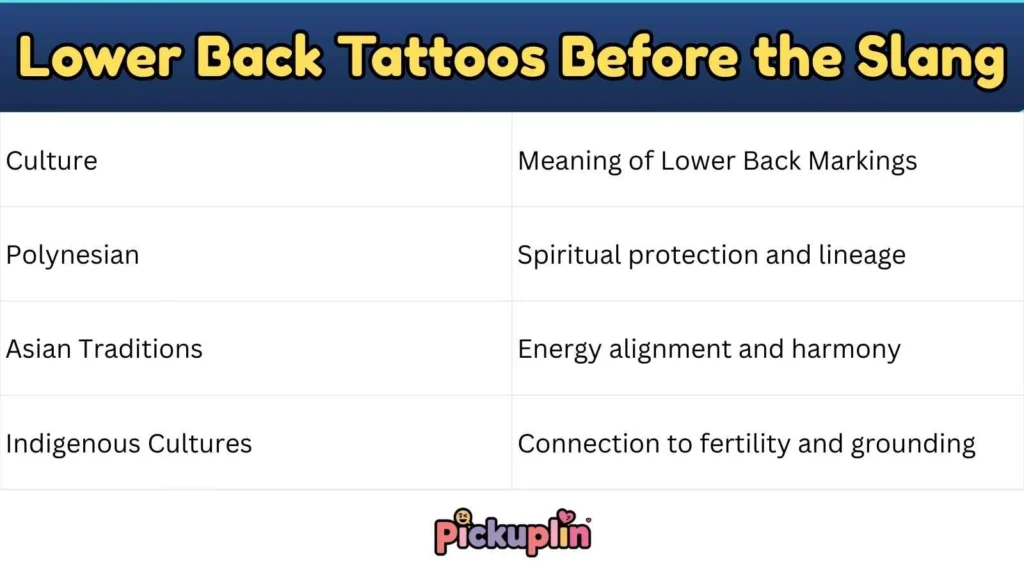
Long before the phrase existed, lower back tattoos appeared in multiple cultures. Ancient and tribal tattooing often used the lower back as a symbolic area connected to strength, balance, and life energy.
| Culture | Meaning of Lower Back Markings |
|---|---|
| Polynesian | Spiritual protection and lineage |
| Asian Traditions | Energy alignment and harmony |
| Indigenous Cultures | Connection to fertility and grounding |
This historical context shows that the tramp stamp meaning as slang is relatively new — and culturally narrow.
Why Did Tramp Stamps Become Stereotyped?
Stereotypes often emerge when society struggles with change. The popularity of lower back tattoos coincided with increased visibility of women making personal style choices.
Instead of acceptance, labeling followed.
Main Reasons Behind the Stereotype
- Media exaggeration and humor-based criticism
- Gender-based double standards
- Lack of understanding about tattoo symbolism
These factors shaped the negative interpretation of tramp stamp meaning, despite no factual basis.
Is the Term “Tramp Stamp” Offensive?
Yes — for many people, the term is considered offensive. It combines body shaming with moral judgment, which can impact self-esteem and social perception.
Language evolves, and awareness grows. Today, many prefer neutral terms such as:
- Lower back tattoo
- Lumbar tattoo
- Back piece
Using respectful language supports trust and inclusivity — a key part of E-E-A-T.
Modern Interpretation of Tramp Stamp Meaning

In recent years, the meaning has shifted. Younger generations and tattoo enthusiasts increasingly reclaim the term or reject it entirely.
Modern views focus on:
- Personal empowerment 💪
- Body autonomy
- Artistic expression
Today, a lower back tattoo often represents confidence, creativity, or a meaningful life moment.
Popular Designs and Their Symbolic Meanings
The design — not the placement — carries the real meaning.
Common Lower Back Tattoo Designs
- Butterflies – Transformation and growth
- Tribal patterns – Heritage and strength
- Floral designs – Beauty and resilience 🌸
- Symbols or quotes – Personal beliefs
This proves that tramp stamp meaning varies widely from person to person.
Gender Bias and Social Judgment
One important aspect often overlooked is gender bias. Lower back tattoos on women received far more criticism than similar tattoos on men.
This imbalance highlights how cultural judgment shaped the slang rather than the tattoo itself.
Judgment says more about society than about personal choices.
Psychological Impact of Tattoo Labeling
Labels can affect how people see themselves. Being judged for a tattoo placement may lead to regret, shame, or self-doubt.
However, many individuals report the opposite: pride and ownership over their body art.
Understanding the deeper tramp stamp meaning helps dismantle harmful assumptions.
Reclaiming the Narrative
Reclaiming language is powerful. Some people intentionally embrace the term as a way to remove its sting.
This cultural shift mirrors similar changes in fashion, music, and self-expression.
Confidence transforms meaning. ✨
Tramp Stamp Meaning in Today’s Culture
In 2025, tattoos are mainstream. Employers, media, and society are more accepting than ever.
The outdated stereotype is fading, replaced by respect for individuality.
Lower back tattoos are once again seen as:
- Artistic
- Stylish
- Meaningful
Common Myths vs Reality
| Myth | Reality |
|---|---|
| Only certain people get them | People from all backgrounds choose this placement |
| They have a fixed meaning | Meaning is personal and subjective |
| They define character | Tattoos do not determine values |
FAQs
Is tramp stamp a real tattoo term?
No. It is slang, not a professional or artistic term.
Does a tramp stamp have a fixed meaning?
No. The meaning depends entirely on the individual.
Are lower back tattoos still popular?
Yes. They are making a comeback with modern designs.
Is it okay to use the term casually?
It’s best to avoid it, as many consider it disrespectful.
Can tattoo meaning change over time?
Absolutely. Personal growth often reshapes interpretation.
Final Thoughts:
The tramp stamp meaning is not about shame or stereotypes. It is a lesson in how language, culture, and bias influence perception.
When we strip away judgment, what remains is personal expression, art, and choice.
Understanding leads to respect — and respect builds trust. 🤝

I’m the voice behind Pikuplin, where I simplify meanings, slang, and everyday expressions in a way that actually makes sense. I love breaking down words and phrases so readers can understand not just the definition, but the real meaning behind them. Every piece I write is based on clarity, curiosity, and real human understanding.