Subordinate meaning is a concept you encounter almost every day—whether you’re reading English grammar, working in an office, or understanding relationships in society.
Yet, many people still feel confused about what “subordinate” really means and how to use it correctly.
In this in-depth guide, you’ll learn the true meaning of subordinate, its origin, real-life examples, grammatical usage, workplace context, and much more—all explained in a simple, friendly, and expert tone 😊.
What Is the Meaning of Subordinate? 🤔
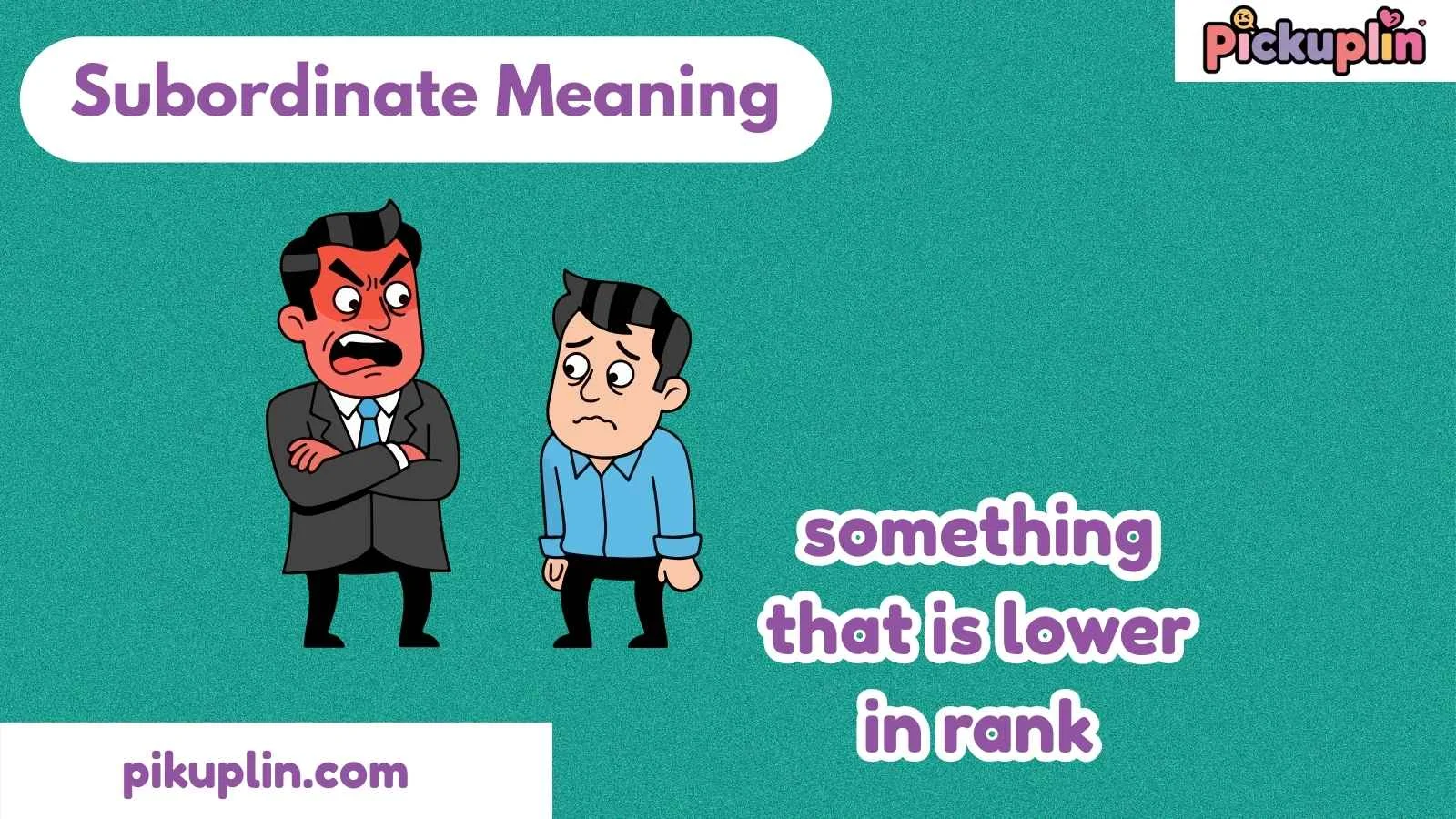
The word subordinate refers to someone or something that is lower in rank, position, or importance compared to another.
In simple words:
A subordinate is a person, role, or element that depends on or is controlled by someone or something else.
This meaning applies across multiple fields such as:
- 👔 Workplace and organizations
- 📘 English grammar
- 🏛 Social and authority structures
- 📚 Literature and writing
The context decides how the word is used, but the core idea remains the same: being under authority or importance.
Origin and History of the Word Subordinate 📜
Understanding the origin of a word helps build language confidence and authority.
The word subordinate comes from Latin:
- Sub = under
- Ordinare = to arrange or order
Together, it literally means “placed under”.
Over time, English adopted this word to describe:
- People under authority
- Secondary ideas or clauses
- Supporting roles in systems
This historical root explains why the subordinate meaning is so consistent across different uses.
Subordinate Meaning in Simple Words ✨

If we simplify it further:
- A subordinate is not the boss
- A subordinate does not lead
- A subordinate follows instructions
Example:
An assistant manager is subordinate to the general manager.
This clarity is essential when using the term in exams, writing, or professional communication.
Subordinate Meaning in the Workplace 🏢
In professional settings, the word subordinate is commonly used.
A subordinate in the workplace is:
- An employee under supervision
- Someone who reports to a senior
- A team member with limited authority
Example:
The manager gave instructions to his subordinates.
Here, the subordinate meaning clearly refers to employees with lower authority.
Using respectful language is important. Modern leadership encourages cooperation, not control 👍.
Subordinate Meaning in Grammar 📘

In English grammar, subordinate has a very specific meaning.
A subordinate clause is a group of words that:
- Cannot stand alone
- Depends on a main clause
- Adds extra information
Example:
She stayed home because she was sick.
“Because she was sick” is a subordinate clause. It depends on the main clause to make sense.
Types of Subordinate Clauses ✍️
There are three main types:
- Noun Clauses – act as nouns
- Adjective Clauses – describe nouns
- Adverb Clauses – describe verbs
This grammatical use strengthens your understanding of subordinate meaning in writing.
Subordinate vs Superordinate ⚖️

To fully understand subordinate meaning, compare it with its opposite.
| Subordinate | Superordinate |
|---|---|
| Lower rank | Higher rank |
| Follows orders | Gives orders |
| Dependent role | Independent authority |
This contrast helps clarify power and structure in language and life.
Real-Life Examples of Subordinate Usage 🌍
Here are everyday examples:
- A student is subordinate to a teacher
- An intern is subordinate to a manager
- A branch office is subordinate to headquarters
Each example reinforces the idea of hierarchy and dependence.
Is Subordinate a Negative Word? ❓
Not at all.
The word subordinate is neutral. It describes structure, not value.
Being subordinate does not mean:
- Being unimportant
- Lacking skill
- Having no voice
Many successful leaders start as subordinates. Growth comes with experience 🚀.
Common Synonyms of Subordinate 🔄
Depending on context, synonyms include:
- Junior
- Assistant
- Inferior (formal use)
- Dependent
Choose synonyms carefully to avoid sounding disrespectful.
Common Mistakes While Using Subordinate ⚠️
Avoid these errors:
- Using it as an insult
- Confusing it with “secondary”
- Overusing it in professional writing
Correct usage builds trust and clarity.
Why Understanding Subordinate Meaning Matters 🎯
Knowing the correct subordinate meaning helps you:
- Write better English
- Communicate professionally
- Understand authority structures
- Improve grammar accuracy
This knowledge supports confidence in exams, work, and writing.
FAQs
What is the simple definition of subordinate?
A subordinate is someone or something that is lower in rank or dependent on another.
Is subordinate only used for people?
No. It is also used in grammar, organizations, and ideas.
What is a subordinate clause?
A clause that cannot stand alone and depends on a main clause.
Can subordinate be used positively?
Yes. It is a neutral descriptive term.
What is the opposite of subordinate?
Superordinate or superior.
Final Thoughts:
The subordinate meaning is simple yet powerful. It describes hierarchy, dependence, and structure across language and life.
When used correctly, it improves clarity, professionalism, and communication. Whether you’re learning grammar, writing content, or understanding workplace roles, mastering this word gives you an edge 💡.

I’m the voice behind Pikuplin, where I simplify meanings, slang, and everyday expressions in a way that actually makes sense. I love breaking down words and phrases so readers can understand not just the definition, but the real meaning behind them. Every piece I write is based on clarity, curiosity, and real human understanding.