Seinen meaning goes far beyond a simple genre label. It represents a storytelling philosophy—one that embraces realism, emotional depth, moral ambiguity, and mature themes.
If you’ve ever watched or read a story that felt more grounded, complex, and psychologically intense, chances are you were experiencing seinen.
In this in-depth guide, we’ll explore what seinen truly means, where it comes from, how it differs from other anime and manga categories, and why it resonates so deeply with adult audiences around the world 🌍.
Whether you’re a casual fan or a serious enthusiast, this article will give you a crystal-clear understanding of the seinen genre.
What Does Seinen Mean? 📖
The seinen meaning originates from the Japanese word 青年, which literally translates to “young man”. In the context of manga and anime, seinen refers to works created primarily for adult men, usually between the ages of 18 and 40+.
However, age is just the surface. Seinen is defined more by its themes, tone, and narrative complexity than by demographics alone.
Seinen isn’t about age—it’s about perspective.
These stories often tackle real-world issues, psychological struggles, ethical dilemmas, and darker aspects of human nature. That’s what sets them apart.
The Origin and History of Seinen 🕰️
To truly understand the seinen meaning, we need to look at its roots.
Early Beginnings
Seinen emerged in Japan during the 1960s and 1970s as manga readers grew older but still wanted compelling stories. Publishers recognized that adult readers needed content that reflected their evolving lives and concerns.
As a result, magazines dedicated to mature storytelling were born.
Evolution Over Time
- 📌 1970s–80s: Gritty realism and political commentary
- 📌 1990s: Psychological depth and experimental storytelling
- 📌 2000s–Present: Global recognition and genre blending
Today, seinen stands as one of the most respected storytelling categories in Japanese media.
Seinen vs Shonen vs Shojo vs Josei ⚖️
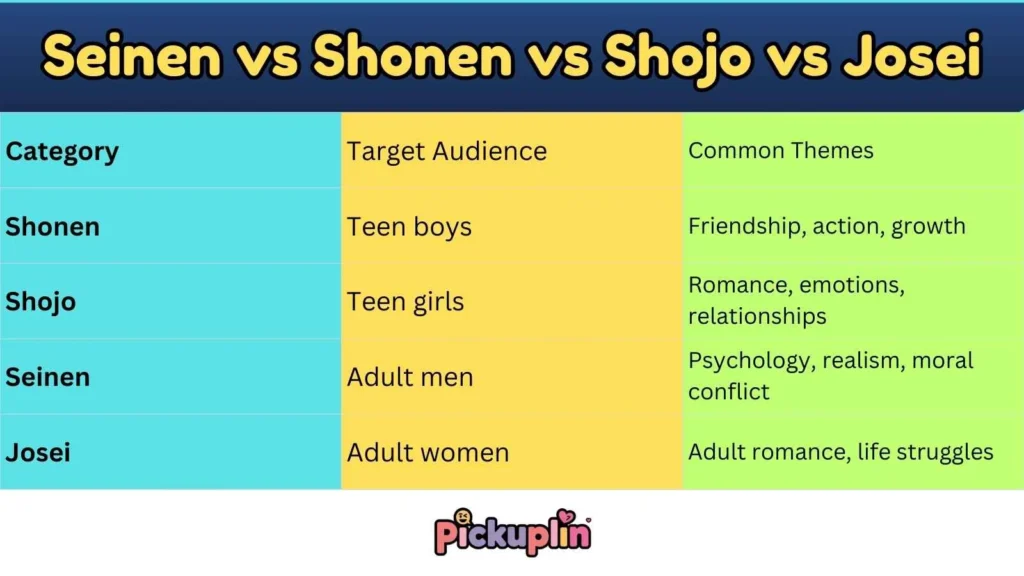
One of the most common questions is how seinen differs from other categories. Let’s break it down clearly.
| Category | Target Audience | Common Themes |
|---|---|---|
| Shonen | Teen boys | Friendship, action, growth |
| Shojo | Teen girls | Romance, emotions, relationships |
| Seinen | Adult men | Psychology, realism, moral conflict |
| Josei | Adult women | Adult romance, life struggles |
The key difference lies in depth and realism. Seinen doesn’t shy away from uncomfortable truths.
Core Characteristics of the Seinen Genre 🔍
Understanding the seinen meaning becomes easier when you recognize its defining traits.
1. Mature Themes
Seinen stories often explore:
- Existential crises 😶🌫️
- Moral ambiguity
- Political and social commentary
- Violence with consequences
2. Complex Characters
Characters are flawed, conflicted, and deeply human. There are no perfect heroes here.
3. Realistic Storytelling
Even in fantasy settings, emotions and consequences feel real.
Psychological Depth in Seinen 🧠
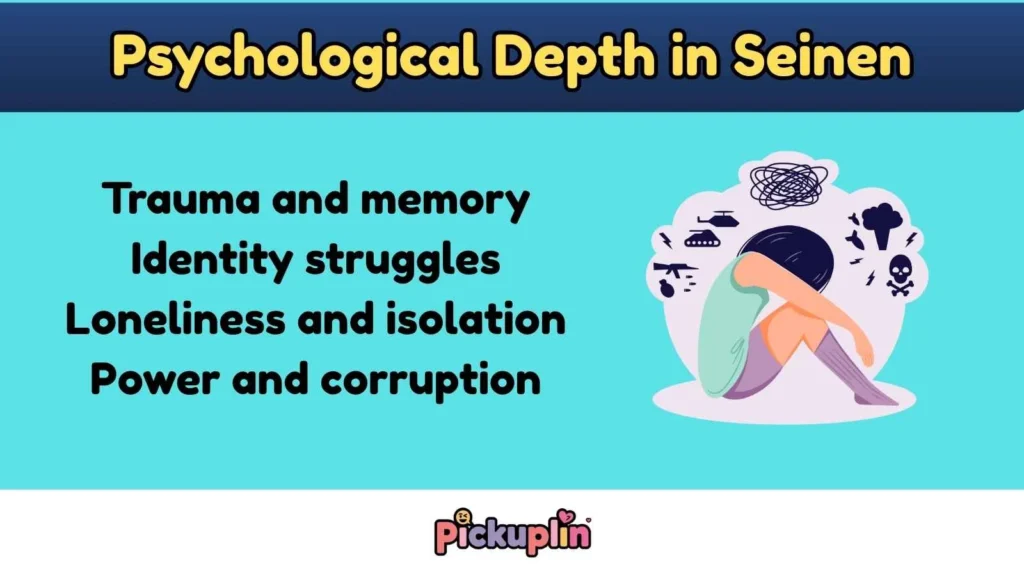
One defining aspect of the seinen meaning is its focus on the human mind.
Seinen works often dive into:
- Trauma and memory
- Identity struggles
- Loneliness and isolation
- Power and corruption
This makes the genre especially appealing to readers who enjoy thought-provoking narratives.
Popular Seinen Themes Explained 🎭
Violence with Purpose
Unlike other genres, violence in seinen isn’t glorified. It has emotional and moral weight.
Social Criticism
Many stories subtly critique society, systems, or authority.
Philosophy and Ethics
Seinen often asks uncomfortable questions without offering easy answers.
Seinen Anime vs Seinen Manga 📺📘
While the core seinen meaning stays consistent, the medium changes the experience.
Seinen Manga
- More detailed storytelling
- Slower pacing
- Deeper internal monologues
Seinen Anime
- Visual and emotional impact
- Music enhances mood 🎶
- Sometimes simplified for adaptation
Both forms offer unique strengths.
Examples of Well-Known Seinen Works ⭐
Here are some iconic representations that define the seinen genre:
- Stories centered on war and trauma
- Crime and psychological thrillers
- Dark fantasy with moral dilemmas
- Slice-of-life narratives for adults
These works resonate because they reflect real emotional experiences.
Is Seinen Only for Men? 🤔
Absolutely not.
While the seinen meaning refers to adult men as a target demographic, the genre is enjoyed by all genders worldwide.
Many readers appreciate seinen for its:
- Honest storytelling
- Emotional maturity
- Intellectual engagement
Misconceptions About Seinen ❌
Let’s clear up some myths:
- Myth: Seinen is always violent
Truth: Many are calm, reflective, and subtle - Myth: Seinen is depressing
Truth: It’s realistic, not hopeless - Myth: Seinen lacks action
Truth: Action exists—but with meaning
Why Seinen Is So Popular Globally 🌍
The global rise of the seinen genre is no accident.
Audiences crave stories that:
- Respect their intelligence
- Reflect adult experiences
- Challenge moral assumptions
Seinen delivers on all fronts.
How to Identify a Seinen Series 🧩
Not sure if something is seinen? Look for these signs:
- Published in adult-oriented magazines
- Focus on internal conflict
- Non-linear storytelling
- Ambiguous endings
These elements strongly align with the seinen meaning.
FAQs
What is the simple meaning of seinen?
Seinen refers to anime and manga made for adult men, focusing on mature and realistic themes.
Is seinen darker than shonen?
Often yes, but mainly because it explores deeper emotional and psychological issues.
Can beginners enjoy seinen?
Absolutely. Many seinen stories are slow-paced and character-driven.
Is seinen a genre or a demographic?
Technically a demographic, but commonly treated as a genre due to shared themes.
Are all mature anime considered seinen?
No. Only those officially targeted at adult audiences fall under seinen.
Final Thoughts:
The seinen meaning represents storytelling at its most honest and human. It respects the audience’s intelligence, embraces complexity, and mirrors real-life struggles.
Whether through intense psychological drama or quiet moments of reflection, seinen proves that animation and comics can be deeply profound art forms.

I’m the voice behind Pikuplin, where I simplify meanings, slang, and everyday expressions in a way that actually makes sense. I love breaking down words and phrases so readers can understand not just the definition, but the real meaning behind them. Every piece I write is based on clarity, curiosity, and real human understanding.