Have you ever met someone who seems to see the world differently—someone whose advice feels uncannily right and perfectly timed?
That person is often described as sagacious. But what does sagacious meaning truly encompass, and why is it so revered in language, literature, and life? 🌟
What Does Sagacious Mean? 🤔
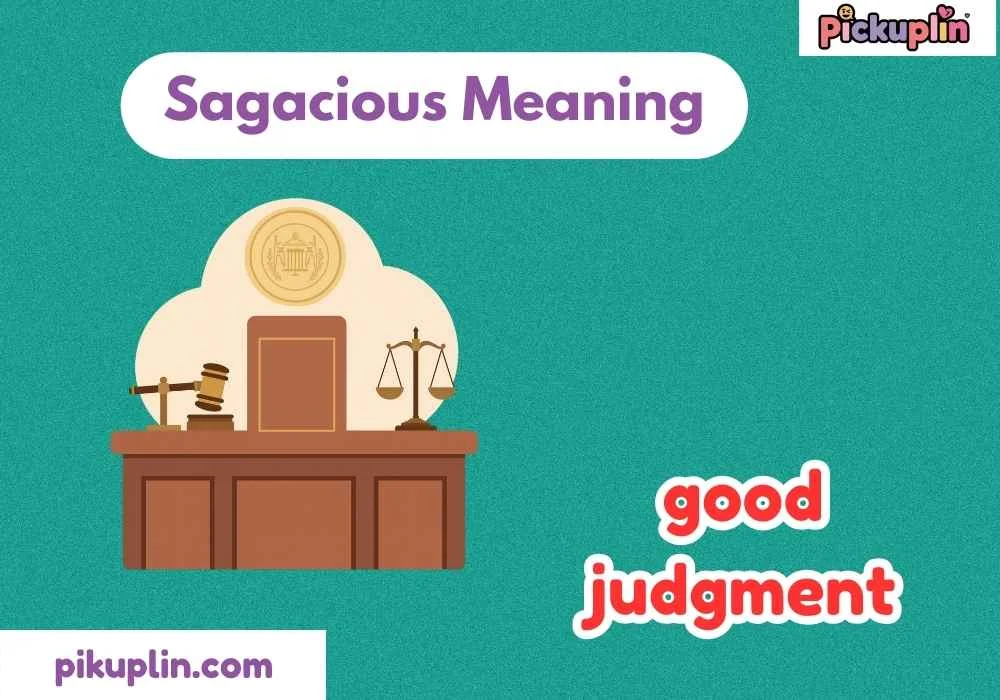
The word sagacious refers to someone who shows keen wisdom, good judgment, and the ability to make insightful decisions. It’s not just about intelligence—it’s about practical and experienced understanding that guides others effectively. 🦉
- Primary definition: Having or showing keen mental discernment and good judgment.
- Synonyms: wise, insightful, prudent, perceptive, astute.
- Antonyms: foolish, naive, shortsighted.
Origin of the Word “Sagacious” 📜
The term sagacious comes from the Latin sagax, meaning keen, shrewd, or discerning. Over centuries, it entered English in the 16th century to describe sharp-minded individuals with wisdom beyond their years. Its deep historical roots make it a word that conveys both respect and admiration. 🏛️
Characteristics of a Sagacious Person 🌟
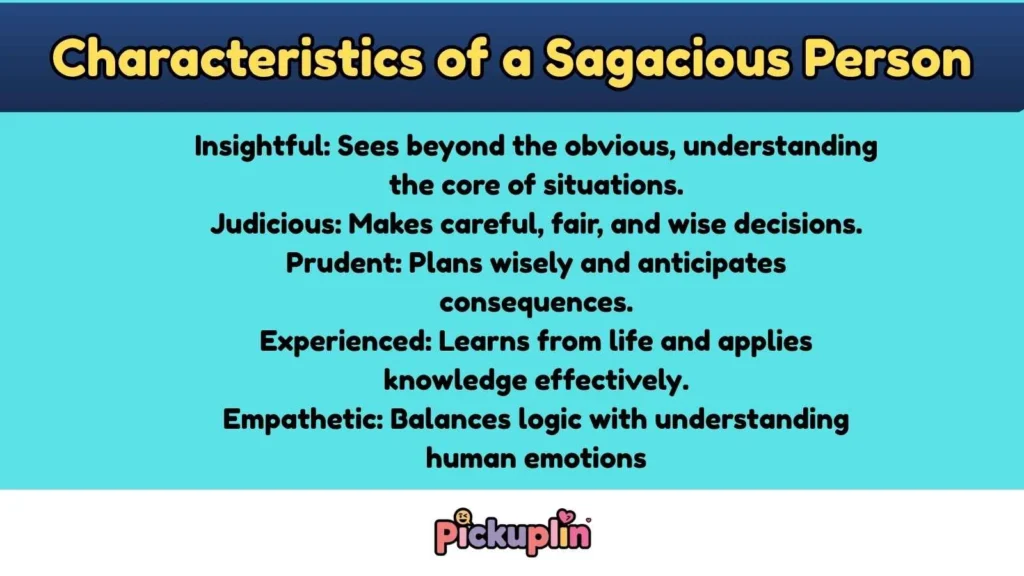
Not everyone who appears smart is truly sagacious. Here are key traits that define a sagacious person:
- Insightful: Sees beyond the obvious, understanding the core of situations.
- Judicious: Makes careful, fair, and wise decisions.
- Prudent: Plans wisely and anticipates consequences.
- Experienced: Learns from life and applies knowledge effectively.
- Empathetic: Balances logic with understanding human emotions.
Examples of Sagacious in Everyday Life 🌐
Understanding the word becomes easier with real-world examples:
- “The sagacious leader guided the team through the crisis with calm and precision.”
- “Her sagacious advice prevented the company from making a costly mistake.”
- “He made a sagacious investment in renewable energy long before it became mainstream.”
Table of Sagacious vs. Similar Words 📊
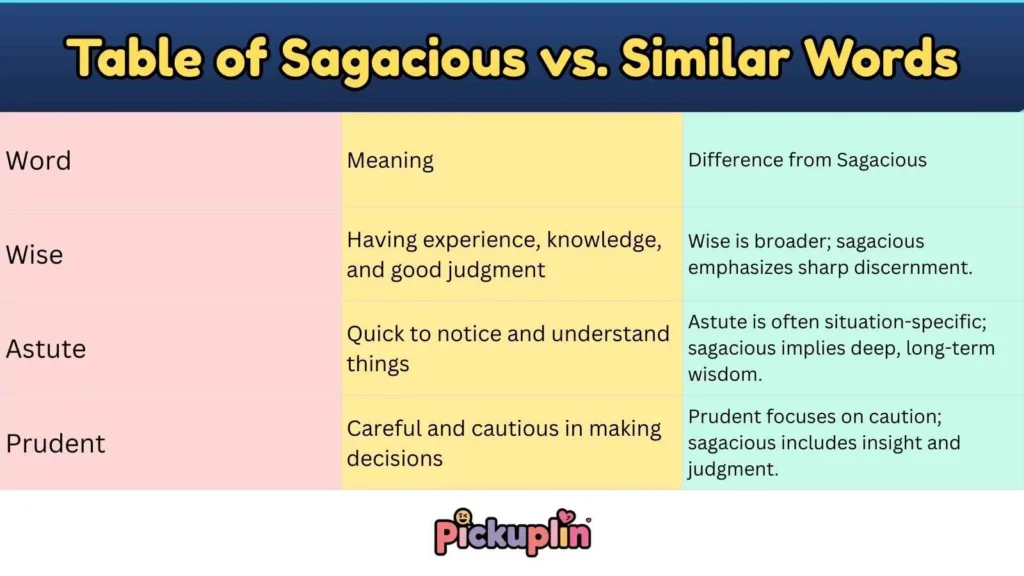
| Word | Meaning | Difference from Sagacious |
|---|---|---|
| Wise | Having experience, knowledge, and good judgment | Wise is broader; sagacious emphasizes sharp discernment. |
| Astute | Quick to notice and understand things | Astute is often situation-specific; sagacious implies deep, long-term wisdom. |
| Prudent | Careful and cautious in making decisions | Prudent focuses on caution; sagacious includes insight and judgment. |
How to Use Sagacious in Sentences ✍️
Using sagacious in speech or writing adds sophistication. Here are examples:
- “Her sagacious approach to problem-solving impressed the entire board.”
- “A sagacious mentor can change the trajectory of a young career.”
- “History remembers sagacious rulers who balanced power with justice.”
Why Being Sagacious Matters in Life 🌱
Wisdom is not just a quality admired in literature; it’s vital in real life. Here’s why:
- Better Decision-Making: Avoids impulsive mistakes.
- Influence & Leadership: Inspires respect and trust.
- Long-Term Success: Anticipates consequences and opportunities.
- Emotional Intelligence: Balances logic with empathy.
Famous Sagacious Figures in History 🌍

Throughout history, sagacious individuals have shaped the world:
- Leonardo da Vinci: Visionary thinker and inventor.
- Abraham Lincoln: Known for wise and balanced leadership.
- Mahatma Gandhi: Exemplified sagacity through nonviolent activism.
Tips to Develop Sagacity in Yourself 💡
Being sagacious isn’t only innate—anyone can cultivate it:
- Read Widely: Expand your knowledge across subjects.
- Reflect Often: Learn from past experiences.
- Seek Mentorship: Learn from sagacious people.
- Think Critically: Question assumptions and analyze situations.
- Practice Patience: Avoid rushed decisions.
Common Misconceptions About Sagacity ❌
Many confuse sagacity with mere intelligence or cleverness. Key points to note:
- Not just smart: Intelligence without judgment isn’t sagacity.
- Not manipulative: True sagacity is ethical and empathetic.
- Not instant: Sagacious thinking often requires time and reflection.
Related Words & Phrases You Should Know 🗣️
- Perceptive thinking
- Prudent decisions
- Shrewd judgment
- Wise counsel
- Astute observation
Quick Sagacious Tips for Daily Life 📝
Here are practical ways to apply sagacity every day:
- Listen more than you speak.
- Pause before making important decisions.
- Learn from mistakes, yours and others’.
- Focus on long-term outcomes rather than short-term gains.
FAQs
1. Is sagacious the same as wise?
While both involve intelligence and judgment, sagacious emphasizes sharp insight and practical discernment.
2. Can anyone become sagacious?
Yes! Through experience, reflection, and learning, you can cultivate sagacity over time.
3. How do you pronounce sagacious?
It’s pronounced as /səˈɡeɪ.ʃəs/ – “suh-GAY-shuhs.”
4. Is sagacious only for people?
Primarily, it describes people, but sometimes it can describe wise decisions or actions.
5. What are some modern examples of sagacious behavior?
Smart investments, ethical leadership, thoughtful mentorship, and problem-solving with foresight are all sagacious actions.
Conclusion:
Understanding the sagacious meaning goes beyond memorizing a dictionary definition. It’s about embracing wisdom, insight, and sound judgment in everyday life.
Whether in personal decisions, leadership, or guiding others, sagacity remains a timeless quality that commands respect and admiration. 🦉

I’m the voice behind Pikuplin, where I simplify meanings, slang, and everyday expressions in a way that actually makes sense. I love breaking down words and phrases so readers can understand not just the definition, but the real meaning behind them. Every piece I write is based on clarity, curiosity, and real human understanding.