Have you ever come across the word pertinent and wondered what it truly means? 🤔 Whether in school, at work, or while reading, understanding the pertinent meaning can make your communication sharper and more effective.
In this comprehensive guide, we’ll break down its definition, origin, usage, and provide clear examples so you can confidently use it in your writing and conversations.
What Does Pertinent Mean? 🧐
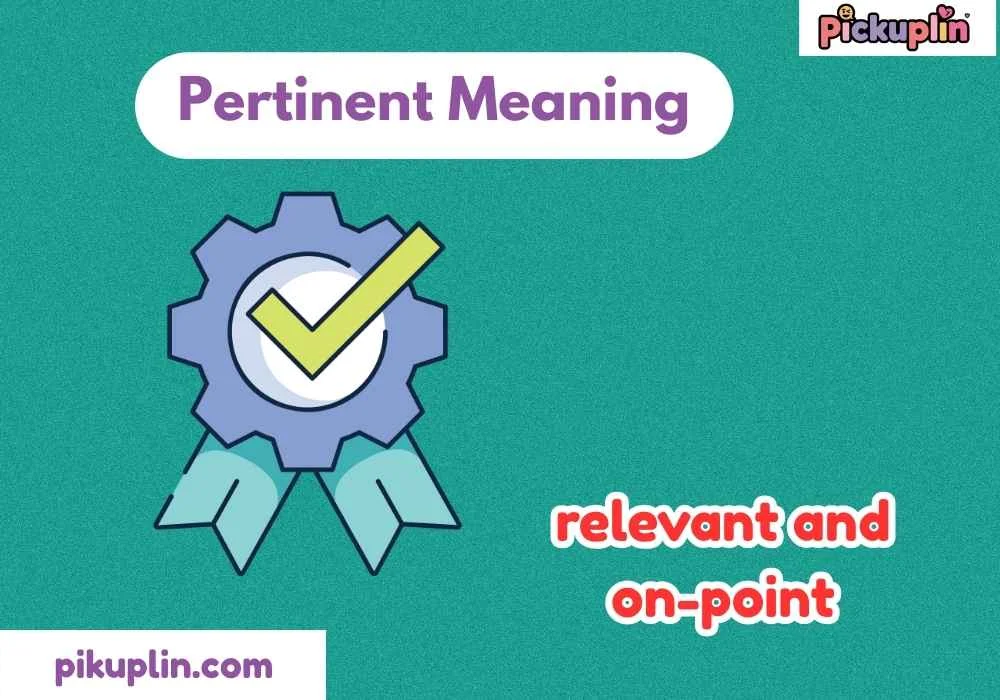
The word pertinent is an adjective that describes something highly relevant or applicable to a particular matter or situation. When something is pertinent, it directly relates to the topic at hand.
Example: “Her comments were very pertinent to the discussion about climate change.”
Simple Synonyms for Pertinent
- Relevant ✅
- Applicable 📝
- Appropriate 🎯
- Significant 🌟
- Connected 🔗
The Origin of the Word Pertinent 📜
The word pertinent comes from the Latin word pertinere, which means “to relate to” or “to concern.” Over time, it entered the English language in the late 14th century, carrying the same core idea: relevance to a subject or matter.
Fun Fact About Pertinent
The root “tenere” in Latin means “to hold.” So literally, pertinere can be interpreted as “to hold toward” something, emphasizing a direct connection or relevance. 🧠
Difference Between Pertinent and Relevant 🔄
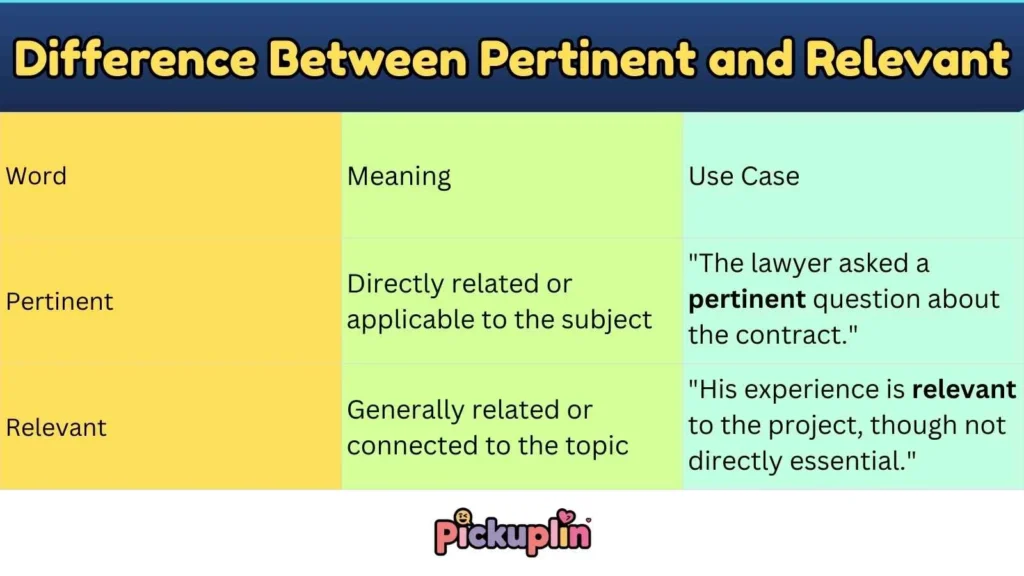
While often used interchangeably, there’s a subtle difference:
| Word | Meaning | Use Case |
|---|---|---|
| Pertinent | Directly related or applicable to the subject | “The lawyer asked a pertinent question about the contract.” |
| Relevant | Generally related or connected to the topic | “His experience is relevant to the project, though not directly essential.” |
Why Understanding Pertinent Meaning Matters 🌟
Knowing the pertinent meaning helps in:
- Writing precise emails or reports ✉️
- Making strong arguments in discussions 💬
- Improving reading comprehension 📖
- Boosting vocabulary for exams and professional growth 🎓
How to Use Pertinent in a Sentence 🖊️
Using pertinent correctly can elevate your communication skills. Here are some examples:
- “She provided pertinent evidence to support her argument.”
- “Make sure your questions are pertinent to the topic.”
- “The notes you took were extremely pertinent to the exam.”
Tips for Proper Usage
- Always pair it with topics, issues, or matters, not random objects.
- Can be used in formal writing, professional discussions, or academic papers.
- Works well with phrases like “highly pertinent,” “particularly pertinent,” or “most pertinent.”
Common Mistakes with Pertinent ❌
- Using it as a noun (incorrect): “His pertinents were helpful.”
- Overusing as a filler word without relevance
- Confusing it with general importance — something can be important but not pertinent
Pertinent Examples in Real Life 🌎
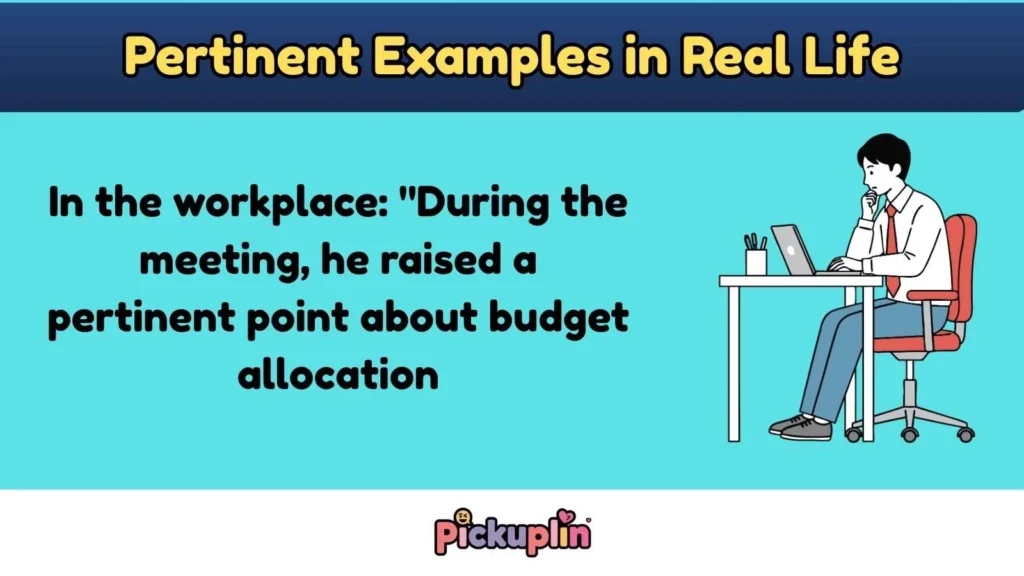
Here are examples to make the word more relatable:
- In the workplace: “During the meeting, he raised a pertinent point about budget allocation.”
- In school: “The teacher asked pertinent questions about the chapter we studied.”
- In legal context: “The lawyer submitted pertinent documents to the court.”
- In daily conversation: “Your observation about traffic patterns is pertinent to our commute planning.”
Examples of Pertinent Questions in Discussions ❓
- “What are the pertinent factors affecting climate change?”
- “Which pertinent data points should we include in our report?”
- “Can you highlight the most pertinent evidence for this case?”
Pertinent in Professional Writing ✨
In professional writing, using pertinent demonstrates clarity and precision. It shows you can filter essential information and focus on what matters most.
Example in Business Email:
“Dear Team,
Please find attached the pertinent documents for our upcoming project meeting. Let me know if anything crucial is missing.”
Example in Academic Writing:
“The study highlights pertinent variables that influence student performance in STEM subjects.”
Tables to Explain Pertinent Use in Context 📊
| Context | Sentence |
|---|---|
| Workplace | “Please focus on the pertinent issues in the project report.” |
| School | “Her notes were pertinent to the exam questions.” |
| Legal | “Submit all pertinent evidence for the trial.” |
| Casual Conversation | “That’s a pertinent point about our weekend plans.” |
Quick Memory Tip for Pertinent 🧠
Think of pertinent as a “direct connection 🔗” to a topic. If it holds meaning directly related to your subject, it’s pertinent. If it doesn’t, leave it out!
Pertinent vs. Important: Key Difference ⚡
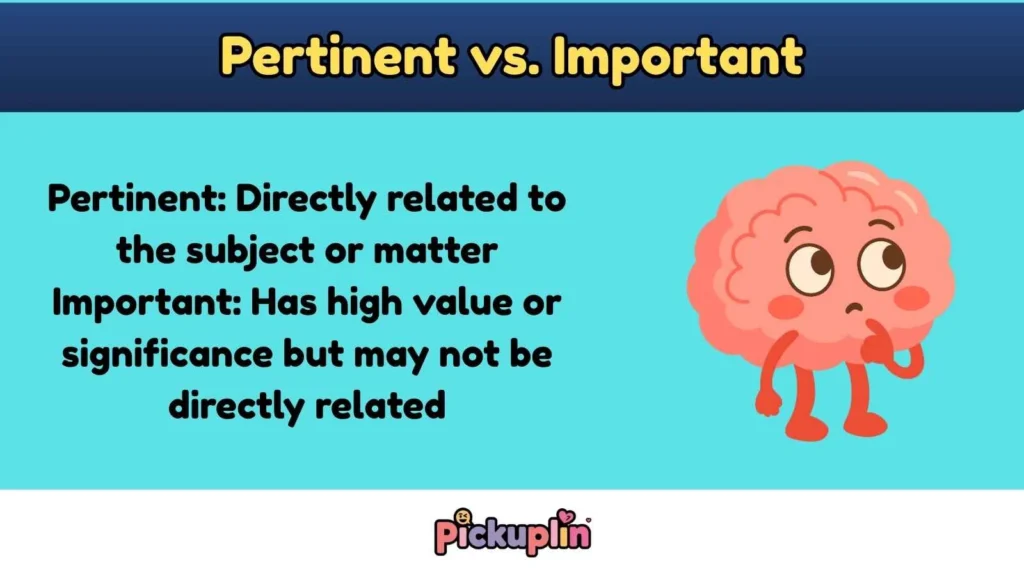
Many confuse pertinent with important. Here’s the simple rule:
- Pertinent: Directly related to the subject or matter
- Important: Has high value or significance but may not be directly related
Real-Life Scenarios to Practice Pertinent Usage 🏆
- During a team meeting, highlight pertinent data that affects the project deadline.
- While reading a book, note pertinent quotes that support your thesis.
- In conversation, respond with pertinent observations to keep discussions meaningful.
Quotes Highlighting Pertinent Thinking 💡
“Focusing on pertinent matters saves time and amplifies impact.” – Unknown
“Not everything you know is relevant; choose the pertinent wisely.” – Anonymous
FAQs
1. What is the simplest definition of pertinent?
Something that is directly relevant or related to the topic or situation.
2. Can pertinent be used in casual conversations?
Yes! While common in professional and academic settings, it can be used in everyday speech to show relevance.
3. Is pertinent the same as important?
No. Important means valuable or significant, but pertinent means directly related to the matter.
4. What are some synonyms of pertinent?
Relevant, applicable, appropriate, significant, connected.
5. How do I remember the meaning of pertinent?
Think of it as something that “holds a direct connection 🔗” to the topic at hand.
Conclusion:
The word pertinent is a powerful tool in communication. It allows you to emphasize what is directly relevant, helping your writing and conversations remain focused and effective.
By understanding its meaning, origin, usage, and real-life examples, you can confidently use pertinent in any context. 🌟

I’m the voice behind Pikuplin, where I simplify meanings, slang, and everyday expressions in a way that actually makes sense. I love breaking down words and phrases so readers can understand not just the definition, but the real meaning behind them. Every piece I write is based on clarity, curiosity, and real human understanding.