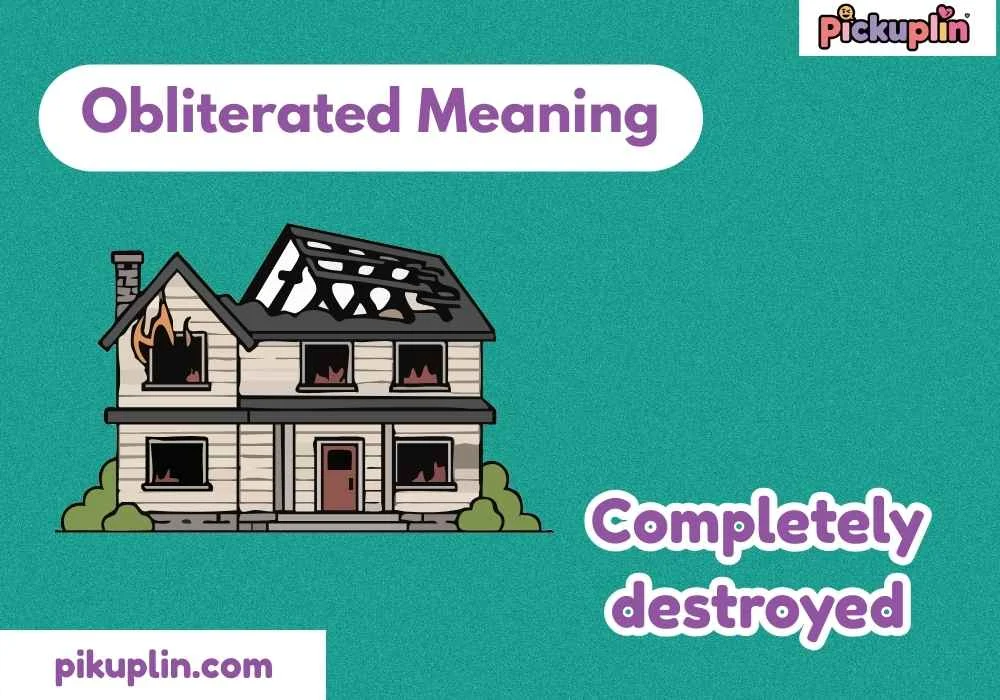
Obliterated meaning is a phrase many people search for when they encounter this powerful word in books, news, movies, or conversations.
The word obliterated carries strong emotional weight. It suggests something more intense than simple damage or loss. It implies total destruction, erasure, or removal—physically, mentally, or even emotionally.
In this comprehensive guide, you will learn the exact obliterated meaning, its origin, real-world usage, emotional contexts, examples, comparisons, and common mistakes. This article is written in clear, expert yet simple language to help you understand and confidently use the word obliterated in daily life. 😊
What Does Obliterated Mean? 📖
Completely destroyed, erased, or removed so thoroughly that little to nothing remains.
When something is obliterated, it is not just damaged—it is wiped out, eliminated, or reduced beyond recognition.
This word is commonly used in both literal and figurative contexts, making it highly versatile in the English language.
Origin and History of the Word Obliterated 🕰️
The term obliterated comes from the Latin word obliterare, which means to erase or to blot out. It is derived from:
- Ob – meaning “against”
- Littera – meaning “letter”
Originally, it referred to the act of erasing letters from a manuscript. Over time, its meaning expanded to include physical destruction, mental exhaustion, and emotional devastation.
Obliterated Meaning in Simple Words ✨

If we explain obliterated meaning in very simple terms:
- Destroyed completely ❌
- Gone forever 🚫
- No clear shape or form left 💥
Think of something being crushed so badly that it cannot be fixed, rebuilt, or recognized anymore.
Literal vs Figurative Meaning of Obliterated ⚖️
1. Literal Meaning
Used when something is physically destroyed.
Example:
The abandoned village was obliterated by the flood.
2. Figurative Meaning
Used when referring to emotions, memory, confidence, or energy.
Example:
After the long exam, I felt completely obliterated.
Common Situations Where the Word Obliterated Is Used 🔥
The word obliterated appears in many real-life situations:
- Natural disasters 🌪️
- War and conflict ⚔️
- Sports defeats 🏆
- Emotional breakdowns 💔
- Mental or physical exhaustion 😴
This wide usage makes understanding the obliterated meaning especially important.
Examples of Obliterated in Sentences 📝
Here are clear examples showing correct usage:
- The storm obliterated the coastline.
- His confidence was obliterated after the public failure.
- The virus obliterated the entire system.
- She was obliterated with exhaustion after work.
- The old records were obliterated to protect privacy.
Obliterated Meaning in Emotional Context ❤️🩹

Emotionally, obliterated is often used to describe intense feelings:
- Emotional burnout
- Severe disappointment
- Total loss of hope
Example:
The harsh words obliterated her self-esteem.
This usage adds emotional depth and intensity to communication.
Obliterated vs Similar Words 🔄

| Word | Meaning | Intensity |
|---|---|---|
| Destroyed | Damaged badly | Medium |
| Ruined | Unable to fix | Medium |
| Wiped out | Removed entirely | High |
| Obliterated | Completely erased | Very High |
Obliterated is stronger than most synonyms.
How Obliterated Is Used in Modern Language 🗣️
In modern English, especially online and in spoken language, obliterated can also mean:
- Extremely tired
- Mentally overwhelmed
- Completely defeated
Example:
That workout obliterated me.
Obliterated Meaning in Books, Media, and News 📰
Writers and journalists use obliterated to create strong imagery:
- Describing war zones
- Highlighting disasters
- Emphasizing emotional impact
This makes the reader feel the scale and severity of the situation.
Common Mistakes When Using Obliterated ❌
Avoid these errors:
- Using it for small damage
- Applying it to mild situations
- Overusing it in formal writing
Incorrect: The pen obliterated the paper.
Correct: The fire obliterated the documents.
Is Obliterated a Negative Word? 🤔
Yes, obliterated generally has a negative or intense tone. However, in casual speech, it can sometimes be humorous:
I’m obliterated after that exam 😂
The tone depends on context.
Why Understanding Obliterated Meaning Matters 🎯
Knowing the exact obliterated meaning helps you:
- Write more powerfully ✍️
- Understand news and media better 🧠
- Avoid misuse in exams or professional writing
Strong vocabulary builds confidence and clarity.
FAQs
1. What is the simplest obliterated meaning?
It means completely destroyed or erased.
2. Can obliterated be used for people?
Yes, figuratively. It often describes exhaustion or emotional damage.
3. Is obliterated formal or informal?
It works in both formal writing and casual speech.
4. Does obliterated always mean physical destruction?
No. It can also describe mental, emotional, or abstract loss.
5. Is obliterated stronger than destroyed?
Yes. Obliterated implies total and irreversible loss.
Final Thoughts:
The word obliterated is more than just a synonym for destruction. It represents total elimination, whether physical, emotional, or mental.
By understanding the true obliterated meaning, you can communicate more precisely, write more vividly, and better understand the language used in media and everyday conversations.
Strong words create strong messages—and obliterated is one of the strongest.

I’m the voice behind Pikuplin, where I simplify meanings, slang, and everyday expressions in a way that actually makes sense. I love breaking down words and phrases so readers can understand not just the definition, but the real meaning behind them. Every piece I write is based on clarity, curiosity, and real human understanding.