Have you ever come across the word “mown” and wondered what it truly means? 🤔 You’re not alone.
Many people encounter this word in books, gardening instructions, or even casual conversation, but its exact definition can seem elusive.
In this detailed guide, we’ll break down mown meaning, its origin, real-life examples, and proper usage so you can confidently understand and apply it.
What Does Mown Mean? 📖
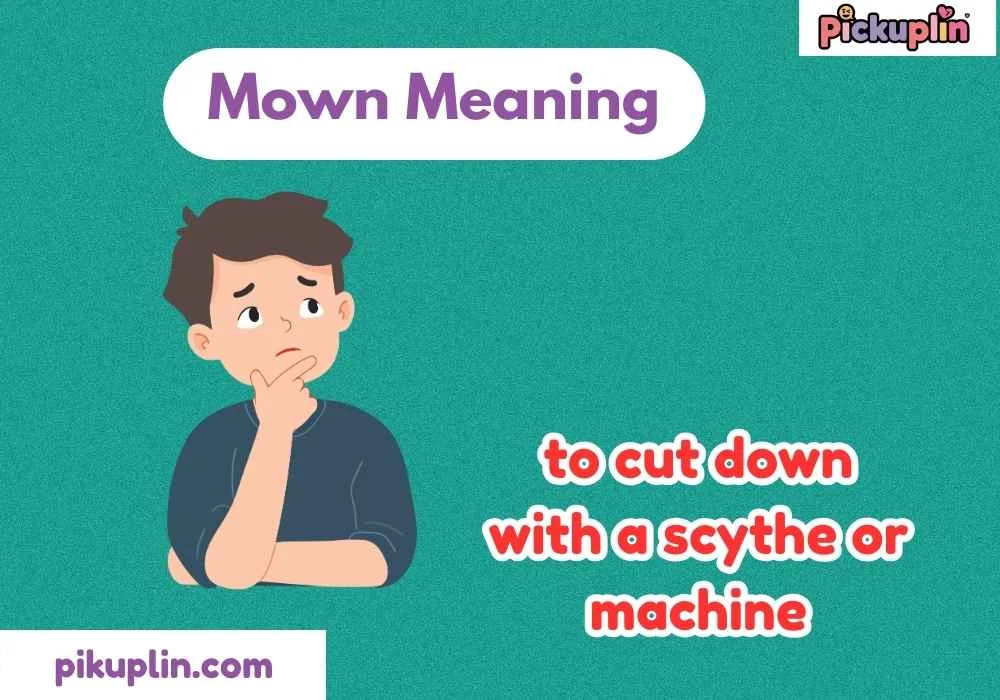
The word “mown” is the past participle of the verb “mow”. It generally refers to the action of cutting down grass, crops, or plants using a scythe, lawnmower, or similar tool.
In simpler words, when you say something is “mown”, it means it has been cut or trimmed. 🌾
Basic Definition Table
| Word | Part of Speech | Meaning | Example |
|---|---|---|---|
| Mown | Past Participle | Cut down (usually grass or crops) | The field was freshly mown this morning. |
Origin and Etymology of Mown 🌍
The term “mown” comes from the Old English word “mōwan”, which means “to mow, cut down.” Over centuries, it evolved into the modern English “mow” and its past participle form “mown”.
This word has a deep agricultural history, as mowing has been essential for farming, gardening, and land management since ancient times. 🌿
Pronunciation of Mown 🗣️
Mown is pronounced as /moʊn/. The word rhymes with “own” and is commonly used in spoken and written English, especially in rural contexts.
How to Use Mown Correctly in Sentences ✍️
Here are a few practical examples to help you understand how to use mown correctly:
- The gardener had mown the lawn before the guests arrived.
- After the harvest, the wheat fields were neatly mown.
- We admired the beautifully mown grass in the park. 🌳
Difference Between Mow, Mowed, and Mown 🔄
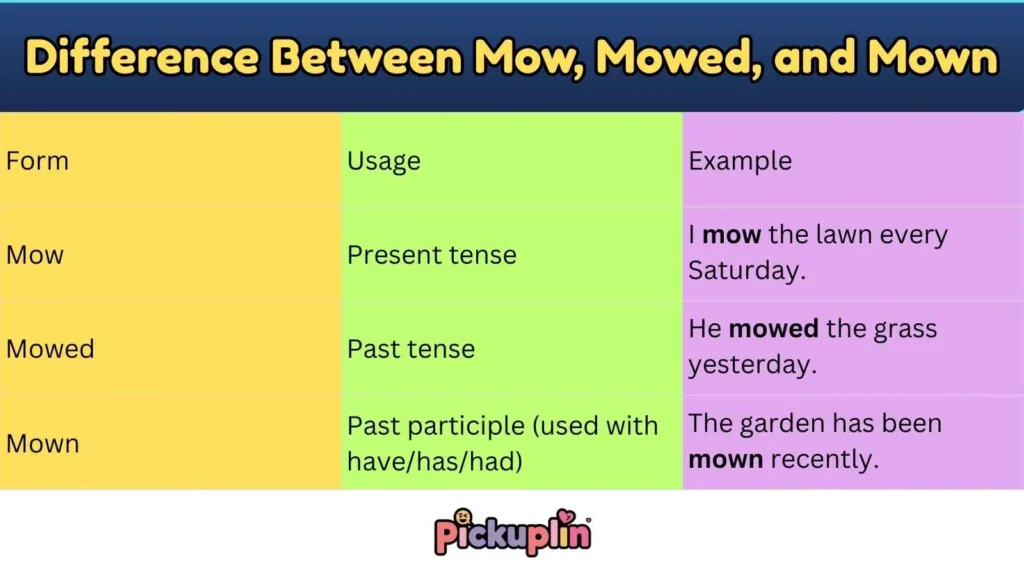
It’s easy to get confused between mow, mowed, and mown. Here’s a simple breakdown:
| Form | Usage | Example |
|---|---|---|
| Mow | Present tense | I mow the lawn every Saturday. |
| Mowed | Past tense | He mowed the grass yesterday. |
| Mown | Past participle (used with have/has/had) | The garden has been mown recently. |
Common Mistakes When Using Mown ❌
- Using mown as a standalone past tense. ✅ Correct: “I have mown the lawn.” ❌ Incorrect: “I mown the lawn yesterday.”
- Confusing mown with mowed. Remember: mowed = past tense, mown = past participle.
Examples of Mown in Literature 📚
Many classic and modern texts use mown to describe nature or farming activities. Here are a few examples:
“The freshly mown fields stretched out under the summer sun, golden and fragrant.”
“He admired the mown grass, thinking of all the labor that went into it.”
Synonyms and Related Words 📝
Here are some words closely related to mown that you might find useful:
- Trimmed ✂️
- Cut down 🌾
- Harvested 🌽
- Lopped 🌿
Antonyms of Mown ❌
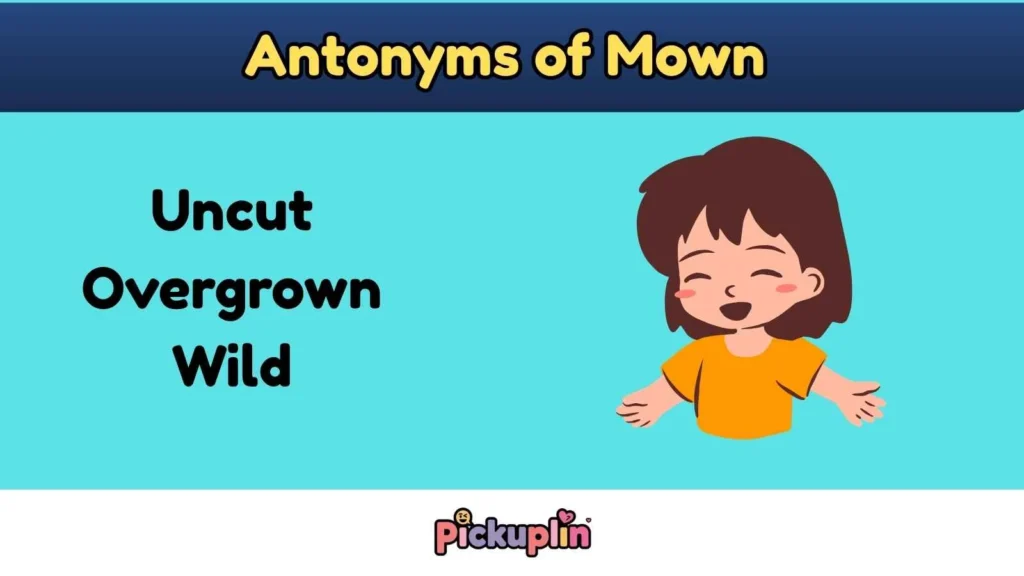
- Uncut
- Overgrown
- Wild
Why Understanding Mown Is Important 🌟
Whether you’re a gardener, farmer, or just love reading, knowing the word mown helps you:
- Improve your vocabulary in English. 🗣️
- Understand gardening and farming instructions. 🌱
- Enhance descriptive writing in literature. ✍️
Fun Facts About Mowing 🧐
- The first mechanical lawnmower was invented in 1830 by Edwin Budding.
- “Mown” appears more often in British English than American English.
- Mowing can actually improve the health of grass by promoting thicker growth.
Practical Tips for Using Mown in Conversation 💬
Here are a few tips for integrating mown naturally:
- Use it with auxiliary verbs like has, have, had: “The lawn has been mown.”
- Use descriptive words: “The freshly mown field smelled amazing.”
- Apply it in storytelling for vivid imagery. 🌾
FAQs
1. Is “mown” only used for grass?
No, mown can refer to any plant or crop that has been cut down, not just grass.
2. Can I say “I mown the lawn”?
No, that’s incorrect. The correct past participle usage is with auxiliary verbs: “I have mown the lawn.”
3. What is the difference between “mowed” and “mown”?
Mowed = past tense (He mowed the lawn yesterday). Mown = past participle (The lawn has been mown).
4. Is “mown” commonly used today?
Yes, especially in gardening, literature, and descriptive writing. 🌱
Conclusion
Understanding the mown meaning is not just about memorizing a word—it’s about recognizing its historical, practical, and literary significance.
From freshly cut lawns to poetic descriptions of fields, mown adds precision and imagery to language. 🌾
Next time you see a perfectly trimmed lawn or a neatly harvested field, you can confidently describe it as mown. Keep practicing and using it in daily conversation! 💬

I’m the voice behind Pikuplin, where I simplify meanings, slang, and everyday expressions in a way that actually makes sense. I love breaking down words and phrases so readers can understand not just the definition, but the real meaning behind them. Every piece I write is based on clarity, curiosity, and real human understanding.