Matinee meaning is a term many people hear in movies, theaters, and event listings—but few truly understand beyond “an early show.” If you’ve ever wondered why matinees feel calmer, cheaper, and more relaxed, or why theaters still use this word in the digital age, you’re in the right place 😊
This in-depth guide breaks down the matinee meaning in clear, human language. You’ll learn its origin, real-world usage, pronunciation, cultural significance, and how it’s used today across film, theater, and live events. Whether you’re a student, a language learner, or just curious, this article gives you everything you need—no confusion, no fluff.
Let’s explore why matinees still matter and what this elegant word truly represents 🎬
What Is the Matinee Meaning? (Simple Definition)
The matinee meaning refers to a performance, show, or event held during the daytime, usually in the late morning or afternoon. It is most commonly used for movies, theatrical plays, concerts, and live performances.
In simple terms:
- A matinee is an early show 🌞
- It takes place before evening or nighttime 🌤
- It often costs less than evening performances 💰
Example:
“We attended the matinee show at 2:00 PM instead of the evening screening.”
This is the most widely accepted and understood matinee meaning in modern English.
Origin of the Word “Matinee” 📜
To fully understand the matinee meaning, we need to look at its roots.
The word matinee comes from the French word “matinée”, which means “morning”. This French term itself originates from the Latin word “matutinus”, meaning “of the morning.”
Over time, English adopted the word but slightly shifted its meaning. Instead of strictly meaning morning, it evolved to represent any performance held earlier in the day, usually before evening.
This evolution shows how language adapts to culture and lifestyle changes—one of the reasons the matinee meaning remains relevant today 🌍
How Is Matinee Pronounced? 🔊
Correct pronunciation adds confidence when using new vocabulary.
Matinee pronunciation:
- mah-tuh-NAY (British & American English)
- Phonetic: /ˈmætɪneɪ/
The emphasis is placed on the last syllable, which is important to remember.
Incorrect pronunciation can change how the word is perceived, so mastering this helps you use the matinee meaning naturally in conversation 🎤
Matinee Meaning in Movies 🎬
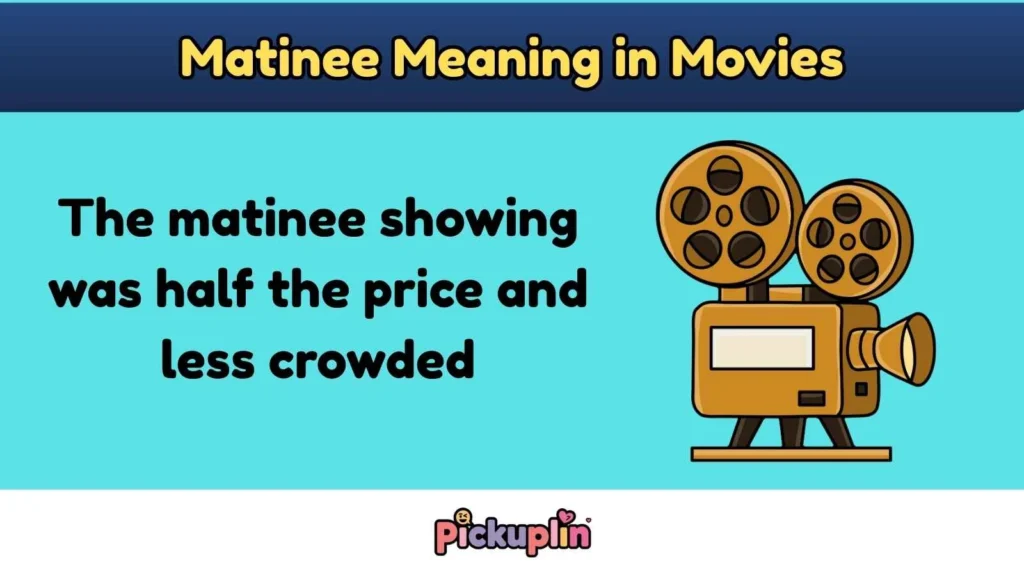
In the film industry, the matinee meaning refers to movie screenings held during the day—typically before 5:00 PM.
Why movie matinees are popular:
- Lower ticket prices 🎟
- Quieter theaters 🤫
- Ideal for families and older people 👨👩👧👦
- Convenient for daytime schedules ⏰
Example:
“The matinee showing was half the price and less crowded.”
This usage perfectly captures the modern matinee meaning in cinema culture.
Matinee Meaning in Theatre and Performing Arts 🎭
In live theater, the matinee meaning is especially significant. A matinee performance is traditionally held in the afternoon, often around 1:00 PM or 2:00 PM.
Matinee performances are common on:
- Weekends
- Public holidays
- Special family days
Actors often perform both a matinee and an evening show on the same day, which highlights the professional demands of live theater.
The theater world preserves the classic matinee meaning as a symbol of accessibility and tradition 🎟
Why Are Matinees Cheaper? 💸
A common question related to the matinee meaning is pricing.
Matinees are usually cheaper because:
- Daytime demand is lower
- They attract students, older people, and families
- They help fill empty seats during off-peak hours
This pricing strategy benefits both audiences and venues, making matinees a win-win option.
Matinee vs Evening Show: Key Differences
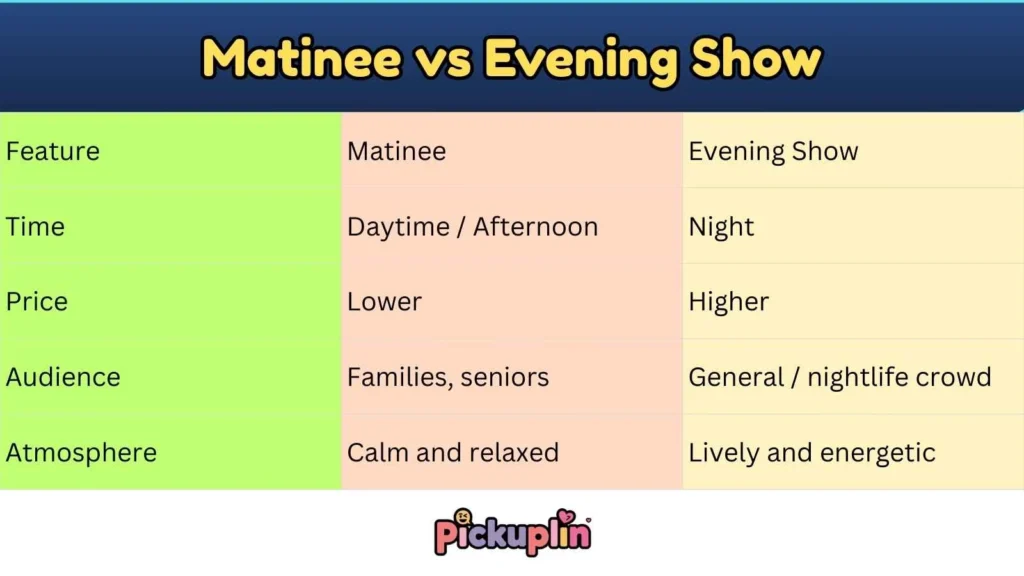
| Feature | Matinee | Evening Show |
|---|---|---|
| Time | Daytime / Afternoon | Night |
| Price | Lower | Higher |
| Audience | Families, older people | General / nightlife crowd |
| Atmosphere | Calm and relaxed | Lively and energetic |
This table clearly shows how the matinee meaning differs from evening performances.
Matinee Meaning in Daily Conversation 🗣
People also use the word matinee casually in everyday speech.
Examples:
- “Let’s catch the matinee and have dinner later.”
- “Matinee shows are perfect for weekends.”
Using the word correctly shows language awareness and cultural familiarity.
Who Should Choose a Matinee? 👥
The matinee meaning often appeals to specific groups:
- Families with children
- older citizens
- Students on a budget
- People who avoid crowds
Matinees offer comfort, savings, and convenience—all in one package 🌈
Is Matinee Still Relevant Today? 📱
Despite streaming platforms and on-demand content, the matinee meaning remains relevant.
Why?
- Live experiences can’t be replaced
- Daytime entertainment fits modern lifestyles
- Matinees support inclusive pricing
Even in the digital era, matinees hold cultural and economic value.
Common Misconceptions About Matinee ❌
Let’s clear up a few myths:
-
Myth: Matinee means morning only
Truth: It includes afternoon shows -
Myth: Matinees are lower quality
Truth: Same performance, different time
Understanding these points strengthens your grasp of the true matinee meaning.
Matinee in Popular Culture 🎥
The matinee meaning appears frequently in movies, books, and media.
Classic cinemas once branded themselves around matinee audiences, especially children and young adults.
This cultural presence reinforces how deeply the word is embedded in entertainment history.
FAQs
1. What does matinee mean in simple words?
The matinee meaning refers to a show or performance held during the daytime.
2. Is a matinee always cheaper?
Usually, yes. Matinees often have discounted pricing.
3. What time is considered a matinee?
Typically late morning to mid-afternoon, before evening.
4. Can concerts have matinees?
Yes, live concerts and events can also be matinee performances.
5. Is matinee an English or French word?
It originated from French but is now fully adopted in English.
Final Thoughts:
The matinee meaning goes beyond just timing. It represents accessibility, tradition, and smart entertainment choices.
From theaters to cinemas, matinees continue to serve audiences who value comfort, affordability, and daytime enjoyment.
By understanding its origin, usage, and modern relevance, you can confidently use the word and make better entertainment decisions.

I’m the voice behind Pikuplin, where I simplify meanings, slang, and everyday expressions in a way that actually makes sense. I love breaking down words and phrases so readers can understand not just the definition, but the real meaning behind them. Every piece I write is based on clarity, curiosity, and real human understanding.