Have you ever wondered what it truly means to hold space for someone? Whether it’s a friend going through a breakup, a family member facing challenges, or even supporting yourself, understanding the holding space meaning can transform your relationships and emotional intelligence. 💖
In this guide, we’ll explore the origins, practical examples, techniques, and deep psychological benefits of holding space. By the end, you’ll feel confident applying this powerful emotional skill in your life.
What Does Holding Space Mean? 🤔
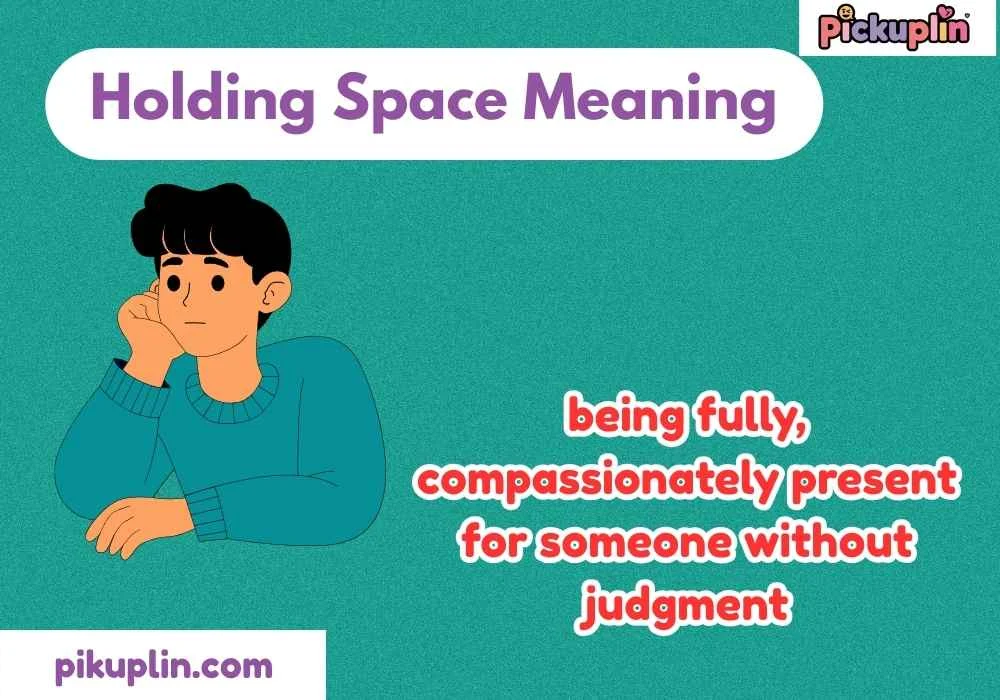
Holding space is the act of being fully present with someone without judgment, offering support without trying to fix, control, or influence their emotions. It’s a practice of empathy, patience, and non-attachment.
Unlike giving advice or solutions, holding space focuses on allowing someone to process feelings at their own pace while knowing they are safe and understood.
Key Elements of Holding Space
- Presence: Fully being there physically or emotionally.
- Empathy: Understanding feelings without judgment.
- Non-judgment: Accepting emotions as they are.
- Support without control: Avoiding unsolicited advice.
- Patience: Allowing time for healing or reflection.
The Origins of Holding Space 🌱
The term “holding space” originated from therapeutic practices and mindfulness traditions. Therapists and spiritual teachers have long emphasized the importance of creating a safe emotional container for others.
Historically, it is rooted in the idea of empathetic presence—being there for someone without imposing your own experiences or solutions. It has become increasingly popular in modern self-help, coaching, and wellness communities.
Why Holding Space Matters 💡
Holding space is more than kindness—it’s a transformative emotional skill. Here’s why it matters:
- Builds trust: People feel safe sharing their deepest emotions.
- Encourages self-growth: Processing emotions without interference allows inner clarity.
- Strengthens relationships: Emotional support fosters deeper connections.
- Promotes mental wellness: Reduces feelings of isolation and loneliness.
How Holding Space Works 🛠️
Holding space works by providing a safe emotional environment. Instead of responding with solutions, you:
- Listen actively and attentively 👂
- Validate emotions without judgment ✅
- Reflect feelings back to the person 🔄
- Offer gentle reassurance when appropriate 🤗
- Allow silence to do its work ✨
Holding Space vs Giving Advice
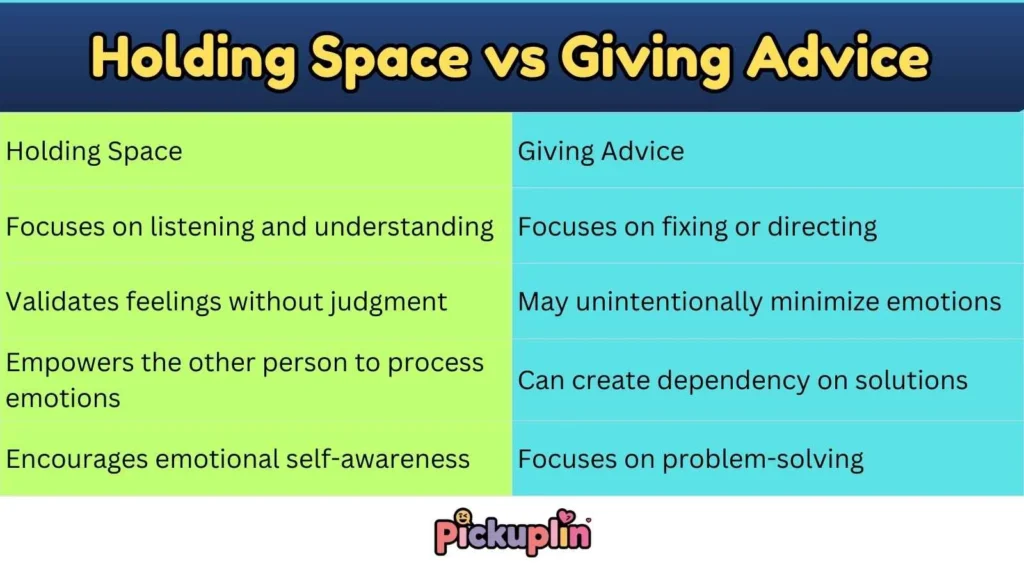
| Holding Space | Giving Advice |
|---|---|
| Focuses on listening and understanding | Focuses on fixing or directing |
| Validates feelings without judgment | May unintentionally minimize emotions |
| Empowers the other person to process emotions | Can create dependency on solutions |
| Encourages emotional self-awareness | Focuses on problem-solving |
Examples of Holding Space in Everyday Life 🌼
Holding space isn’t limited to therapy—it happens daily in friendships, family, and romantic relationships.
Friendship Example
Your friend is upset about a breakup. Instead of saying, “You’ll get over it,” you listen, nod, and say, “I hear you, and I’m here with you.” That’s holding space.
Family Example
When a sibling is anxious about school or work, you might sit with them quietly, offer a comforting hug, and avoid offering solutions unless asked.
Self-Holding Space 🪞
We can also hold space for ourselves by acknowledging our own emotions without self-criticism, journaling, or practicing mindfulness.
Steps to Hold Space Effectively 🧩
- Be fully present: Put away distractions and focus.
- Listen deeply: Use verbal and non-verbal cues to show attention.
- Validate emotions: Reflect feelings back: “It makes sense you feel that way.”
- Avoid judgment or solutions: Resist giving advice unless asked.
- Check in gently: Ask how they’d like support.
- Respect silence: Allow pauses for processing.
Common Misconceptions About Holding Space ❌
- It’s not about fixing problems: Holding space doesn’t require you to solve anything.
- It doesn’t mean approval: You can hold space without agreeing with someone’s choices.
- It’s not always verbal: Silence, presence, and empathy count as holding space.
- It’s not passive: Active listening and mindful attention are intentional actions.
Benefits of Holding Space 🌈
Embracing the practice of holding space brings benefits to both the giver and receiver:
- Improves emotional intelligence: Enhances self-awareness and empathy.
- Reduces conflicts: Creates understanding before reactions arise.
- Strengthens mental health: Emotional processing supports resilience.
- Deepens trust: People feel truly seen and heard.
Signs You’re Successfully Holding Space ✨
- The person feels safe and heard.
- You resist giving advice unless asked.
- You feel calm and patient rather than frustrated.
- You notice deeper conversations and emotional openness.
Challenges When Holding Space ⚠️
While powerful, holding space can be challenging:
- Feeling the urge to fix or advise
- Emotional burnout if boundaries are ignored
- Misinterpreting silence as disinterest
- Balancing personal feelings while supporting others
Tips to Avoid Emotional Burnout 🌿
- Set clear boundaries 🛑
- Take breaks and practice self-care 🧘♀️
- Seek support from others when needed 🤝
- Practice self-reflection regularly 🪞
Tools and Practices to Enhance Holding Space 🛠️
- Mindfulness meditation: Improves presence and awareness.
- Active listening exercises: Focus on paraphrasing and reflecting feelings.
- Journaling: Helps clarify emotions before or after holding space.
- Breathing techniques: Manage stress and remain calm.
Quotes About Holding Space 💬
“Holding space doesn’t mean you have to like, fix, or change anything. It means you are willing to be with whatever is happening.”
“Sometimes all we need is someone to sit silently and just be there for us.”
FAQs
1. Can anyone learn to hold space?
Yes! Holding space is a skill developed through mindfulness, empathy, and active listening practice.
2. Is holding space the same as therapy?
Not exactly. While therapists often hold space, it can also occur in everyday relationships without professional training.
3. How do I hold space for myself?
Self-holding space involves acknowledging your own emotions without judgment, journaling, meditating, or practicing self-compassion.
4. Can holding space improve relationships?
Absolutely. By validating emotions and fostering trust, holding space strengthens emotional bonds in any relationship.
5. Is it okay to set boundaries while holding space?
Yes. You can support others while maintaining personal boundaries to avoid emotional burnout.
Conclusion
Holding space is a profound act of empathy, patience, and emotional presence. Whether for friends, family, or yourself, it encourages deeper connections, emotional growth, and mental well-being.
By practicing active listening, validating emotions, and offering support without judgment, you become a trusted companion in others’ journeys.
Start small today: sit, listen, and offer your presence. Over time, you’ll discover the transformative power of truly holding space. 💖

I’m the voice behind Pikuplin, where I simplify meanings, slang, and everyday expressions in a way that actually makes sense. I love breaking down words and phrases so readers can understand not just the definition, but the real meaning behind them. Every piece I write is based on clarity, curiosity, and real human understanding.