When you hear the word “gypsy”, what comes to mind? Mystery? Travel? Music? 🎻 The term has fascinated people for centuries, but its meaning is deeper and more complex than just stereotypes.
In this comprehensive guide, we’ll explore the gypsy meaning, their origins, culture, traditions, and how they’ve influenced societies worldwide.
Whether you’re curious about history, lifestyle, or social impact, this article has you covered.
What Does Gypsy Really Mean? 🤔
The word gypsy is commonly used to describe a group of traditionally nomadic people, but its origins are often misunderstood. Historically, it has been applied to the Romani people, who migrated across Europe centuries ago. It is important to note that “gypsy” can carry both cultural and sometimes negative connotations depending on context.
Definitions and Modern Interpretation
- Cultural Meaning: Refers to the Romani heritage and traditions.
- Symbolic Meaning: Represents freedom, travel, and artistic expression.
- Misuse: Sometimes used as a stereotype implying unpredictability or dishonesty, which is offensive.
The Origins of the Term “Gypsy” 🏺
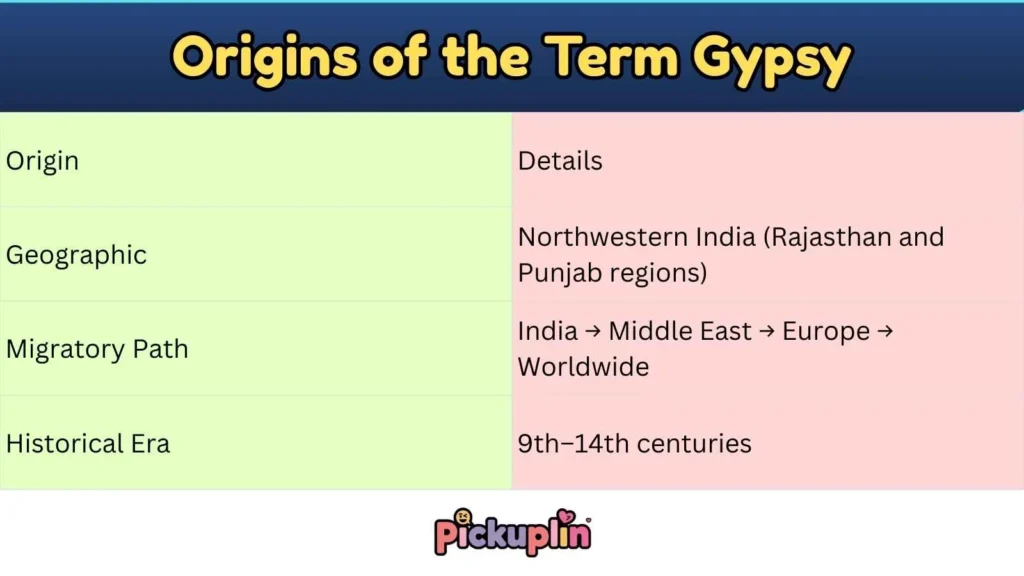
The term “gypsy” originated in Europe during the Middle Ages. People mistakenly thought the Romani came from Egypt, hence the name “gypsy.” In reality, linguistic and genetic research shows their roots trace back to Northwestern India around 1,000 years ago. 🌏
| Origin | Details |
|---|---|
| Geographic | Northwestern India (Rajasthan and Punjab regions) |
| Migratory Path | India → Middle East → Europe → Worldwide |
| Historical Era | 9th–14th centuries |
The Romani People and Gypsy Culture ✨
The Romani, often referred to as gypsies, are diverse in culture, language, and customs. Some key aspects of their culture include:
- Language: Romani language with many regional dialects.
- Music and Dance: Flamenco, jazz, and folk music roots.
- Craftsmanship: Metalwork, storytelling, and fortune-telling traditions.
Why Gypsy Culture is Misunderstood
Due to stereotypes in media and literature, gypsies have often been portrayed as nomadic thieves or wanderers. In truth, their culture emphasizes family, honor, and resilience. 🛤️
Gypsy Lifestyle and Traditions 🏕️
Traditionally, gypsies led a nomadic lifestyle, traveling in caravans or tents. Today, many live in modern cities while still preserving cultural practices. Some important traditions include:
- Family Bonds: Extended families live closely and support one another.
- Festivals: Music, dance, and celebrations are central.
- Fortune-Telling: Historically seen as both spiritual and practical guidance.
Modern Adaptations
While mobility has decreased, gypsy culture adapts continuously. Many integrate into modern economies while maintaining distinct cultural identities. 🌟
Gypsy Music, Art, and Influence 🎶
Gypsy traditions have significantly influenced global music and art. Flamenco in Spain, jazz in Eastern Europe, and folk storytelling all carry gypsy roots. Examples include:
- Flamenco guitar techniques
- Improvised folk dances
- Colorful textiles and costume designs
Gypsy Communities Around the World 🌏
Gypsy communities are widespread:
- Europe: Spain, Romania, Hungary, and Bulgaria
- Americas: USA, Brazil, Argentina
- Asia: India, Turkey, and Middle Eastern countries
Challenges and Stereotypes
Despite their rich culture, gypsies often face prejudice, discrimination, and social exclusion. 🛑 Understanding their history helps combat these stereotypes.
Common Misconceptions About Gypsies ❌
Many myths surround gypsies. Let’s clarify a few:
-
Myth: Gypsies are inherently thieves.
Fact: Crime is not cultural; this is a harmful stereotype. -
Myth: Gypsies do not value education.
Fact: Education is valued, but access varies by region. -
Myth: All gypsies are nomadic.
Fact: Many live in cities and towns.
Famous Gypsy Figures and Their Impact 🌟
Gypsy artists and thinkers have left a global legacy:
- Flamenco guitarists like Paco de Lucía
- Jazz musicians in Eastern Europe
- Authors and poets preserving Romani stories
Gypsy Language and Communication 🗣️
The Romani language is Indo-Aryan and has absorbed words from Persian, Greek, and European languages. Learning a few Romani words can show cultural respect:
- Romi: Romani person
- Chavo/Chavi: Boy/Girl
- Phral: Brother
Gypsy Fashion and Symbols 👗
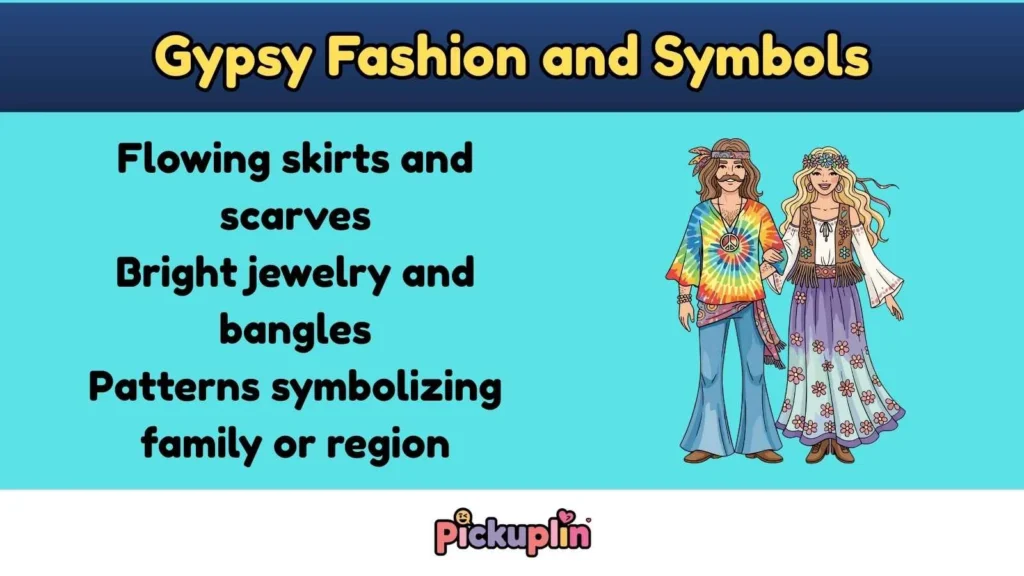
Gypsy attire is colorful, expressive, and meaningful. Elements include:
- Flowing skirts and scarves
- Bright jewelry and bangles
- Patterns symbolizing family or region
Gypsy Beliefs and Spirituality ✨
Spiritual practices vary. Common beliefs include:
- Respect for ancestors
- Fortune-telling and divination
- Celebrations tied to nature and cycles
Gypsy Food and Cuisine 🍲
Gypsy cuisine is diverse and influenced by the regions they inhabit. Popular dishes include:
- Hearty stews
- Flatbreads and pastries
- Spiced meats and vegetable dishes
Gypsy Contributions to Society 🌐
Gypsies have contributed significantly to:
- Arts: Music, dance, and storytelling
- Crafts: Metalwork, textiles, and horse trading
- Social Values: Family bonds, community solidarity
How to Respect Gypsy Culture ❤️
Respecting gypsy culture means:
- Avoiding stereotypes and offensive terms
- Learning about their history and traditions
- Celebrating their music, art, and heritage
FAQs
1. Are gypsies only from Europe?
No. Gypsies, or Romani people, originally migrated from India but now live worldwide.
2. Is calling someone a gypsy offensive?
It depends. Using it as a stereotype is offensive, but referring to Romani heritage respectfully is acceptable.
3. What is the difference between Romani and gypsy?
“Romani” is the accurate ethnic term, while “gypsy” is the common historical label.
4. Do gypsies still live a nomadic lifestyle?
Some do, but many live in cities or towns while preserving cultural traditions.
5. What are some famous gypsy contributions?
Music (flamenco, jazz), dance, storytelling, crafts, and resilience in culture.
Conclusion:
The gypsy meaning goes far beyond stereotypes. It represents a rich heritage, resilience, creativity, and cultural influence that spans centuries and continents.
By learning about their history, traditions, and contributions, we can appreciate the depth of their culture and respect their identity. 🌈

I’m the voice behind Pikuplin, where I simplify meanings, slang, and everyday expressions in a way that actually makes sense. I love breaking down words and phrases so readers can understand not just the definition, but the real meaning behind them. Every piece I write is based on clarity, curiosity, and real human understanding.