In the fast-paced world of texting and online chatting, acronyms and abbreviations are everywhere. One of the most common, yet misunderstood, terms is FW. If you’ve ever received a message with “FW” and wondered what it really means, you’re in the right place! 🚀
By the end of this guide, you’ll fully understand FW meaning in text, its origins, practical examples, and how to use it confidently in your messages.
What Does FW Mean in Text? 🤔
The abbreviation FW in texting typically stands for “Forward”. It’s commonly used in emails, messaging apps, and social media to indicate that a message, email, or post is being sent or shared from someone else.
However, FW can sometimes have alternative meanings depending on context, which we’ll explore below.
Origin of FW in Digital Communication 📜
The term FW originated in email systems. When users wanted to share a message received from another person, they often clicked the “Forward” button, which was abbreviated as FW in the email header. Over time, this shorthand moved into everyday texting and online chats.
Email Example of FW
FW: Meeting Notes from Team Call – Please review.
Common Contexts Where FW is Used 💬
- Email Chains: Indicating a forwarded message from one person to another.
- Text Messaging: Sharing information quickly, often without typing the whole message again.
- Social Media: Sometimes used to signal reposting content.
FW vs FWD: Are They the Same? 📝
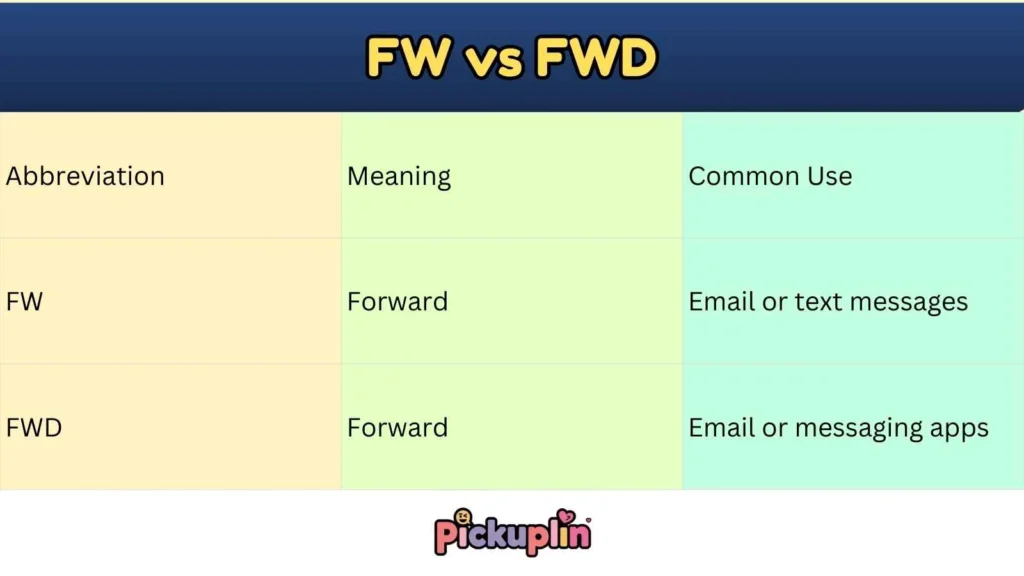
Yes! FW and FWD are often interchangeable. Both indicate that a message or email has been forwarded. However, some email clients default to FW (e.g., Outlook), while others use FWD (e.g., Gmail).
| Abbreviation | Meaning | Common Use |
|---|---|---|
| FW | Forward | Email or text messages |
| FWD | Forward | Email or messaging apps |
How to Use FW in Texts Correctly ✅
Using FW is simple, but context matters. Here’s how you can use it naturally:
- When forwarding a message: “FW: Check out these tips for productivity.”
- When sharing information in a group chat: “FW: Important update from the principal.”
- As a label in emails: “FW: Client feedback attached.”
Alternative Meanings of FW 🌐
While Forward is the most common meaning, some platforms or conversations might use FW differently:
- Friend Warning: A casual warning shared among friends.
- For What: Sometimes seen in quick chat replies, though less common.
- Fire Wall: In tech discussions, FW might refer to network security.
Examples of FW in Everyday Texting ✨
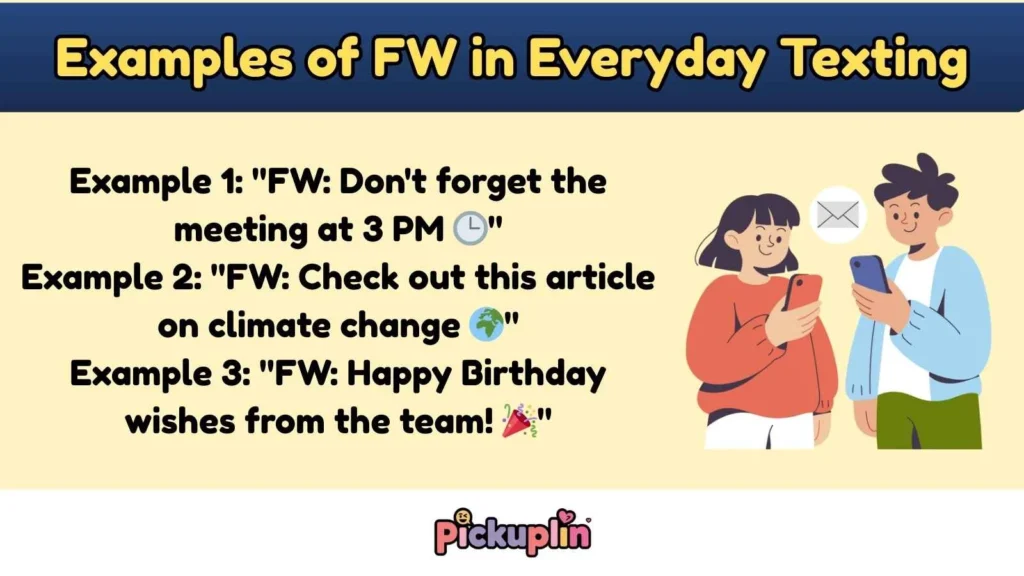
Let’s see some real-world examples:
- Example 1: “FW: Don’t forget the meeting at 3 PM 🕒”
- Example 2: “FW: Check out this article on climate change 🌍”
- Example 3: “FW: Happy Birthday wishes from the team! 🎉”
FW in Social Media Contexts 📱
On platforms like Twitter, Instagram, or WhatsApp, FW is sometimes used to indicate that content is being shared directly from another source. For example, when someone reposts a story or tweet, they might prepend FW to the caption to show attribution.
FW in Professional Communication 💼
In a professional setting, using FW correctly can enhance clarity. It signals that you are not the original author but are passing along information that may be relevant to the recipient.
Example: FW: Updated Q1 Sales Report attached. Please review before the meeting.
Common Mistakes When Using FW ❌
- Using FW without context – can confuse the recipient.
- Assuming everyone knows the meaning – especially in informal chat.
- Overusing FW – can make messages look spammy.
FW in Group Chats 👥
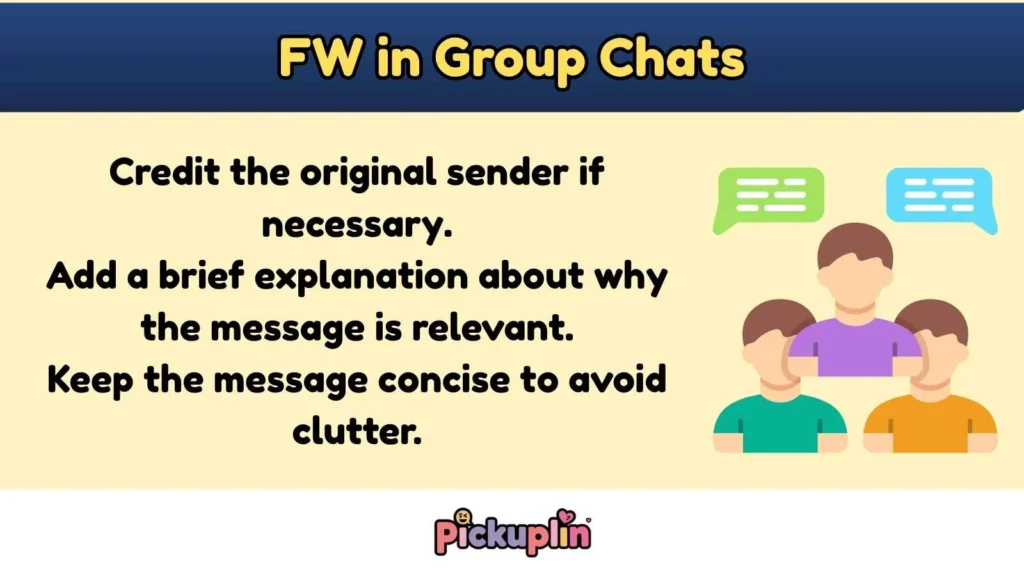
When forwarding messages in group chats, it’s polite to:
- Credit the original sender if necessary.
- Add a brief explanation about why the message is relevant.
- Keep the message concise to avoid clutter.
Texting Etiquette for FW 📲
Proper etiquette ensures your messages are understood and appreciated:
- Always include a brief note with forwarded content.
- Check that the forwarded message is appropriate for the recipient.
- Avoid forwarding sensitive messages without permission.
Fun Facts About FW 😎
- FW was first widely used in email headers in the 1990s.
- It has since migrated to almost every messaging platform.
- Some texting communities have created humorous alternative meanings for FW!
Table of FW Meanings Across Platforms 🖥️
| Platform | FW Meaning | Notes |
|---|---|---|
| Forward | Most formal usage | |
| Forward | Casual chats | |
| Forward/Share | Shows shared content | |
| Slack | Forward/Reference | Often with a note |
Tips for Remembering FW Meaning 🧠
- Think of “Forward” – the most straightforward interpretation.
- Remember the context: email vs chat vs social media.
- Look at surrounding text clues – emojis and content often clarify meaning.
Real-World Scenarios for FW Usage 🌟
Imagine these situations:
- Scenario 1: Your boss sends a report. You forward it: “FW: Updated quarterly report attached.”
- Scenario 2: A friend shares a funny meme: “FW: You have to see this 😂
- Scenario 3: Group announcement: “FW: Change in schedule for tomorrow’s event 🕑”
FAQs
1. What does FW stand for in texting?
FW usually stands for Forward, meaning the message has been shared from someone else.
2. Is FW the same as FWD?
Yes, both abbreviations indicate forwarding a message. Some platforms prefer one over the other.
3. Can FW have other meanings?
Yes, sometimes it can mean Friend Warning, For What, or Fire Wall in specific contexts.
4. How do I use FW professionally?
Include FW at the beginning of the forwarded content, credit original authors if needed, and add a short explanation for clarity.
5. Is it polite to use FW in group chats?
Yes, as long as you provide context and ensure the content is appropriate for all members.
Conclusion
FW is a versatile abbreviation that simplifies communication in emails, texts, and social media. Its primary meaning is Forward, but understanding context is key to interpreting alternative meanings.
By using FW correctly, you can communicate efficiently, professionally, and politely. 🚀
Remember, the key to effective messaging is clarity, context, and etiquette. Always double-check before forwarding sensitive content, and keep your messages concise. 💡

I’m the voice behind Pikuplin, where I simplify meanings, slang, and everyday expressions in a way that actually makes sense. I love breaking down words and phrases so readers can understand not just the definition, but the real meaning behind them. Every piece I write is based on clarity, curiosity, and real human understanding.