Flabbergasted meaning is something many people search for after hearing the word in movies, books, or conversations. It sounds dramatic, funny, and powerful — and honestly, it is. 😄
Have you ever been so shocked that you didn’t know what to say? Your brain froze for a second, your mouth stayed open, and all you could think was, “Wait… what just happened?” That feeling is exactly what flabbergasted describes.
In this in-depth guide, you’ll learn the meaning of flabbergasted, where it comes from, how to use it correctly, real-life examples, common mistakes, comparisons, and much more — all explained in a friendly, easy way. 👍
What Does Flabbergasted Mean? 🤔
The word flabbergasted means being extremely surprised, shocked, or astonished, often to the point of being speechless.
When someone is flabbergasted, the surprise is not small. It’s big. It’s unexpected. It hits hard. 💥
Flabbergasted describes a strong emotional reaction when something completely unexpected happens.
In simple words:
- Surprised — but way more intense 😲
- Shocked — in a non-harmful, emotional way
- Astonished — unable to react immediately
If surprise had levels, flabbergasted would be near the top. 🚀
Simple Definition of Flabbergasted 📘
Flabbergasted means:
Feeling extreme surprise or shock, often leaving someone momentarily speechless.
This word is usually used to describe a reaction to news, events, or actions that were completely unexpected.
Example:
“I was flabbergasted when I found out I won the competition.”
Emotional Meaning of Flabbergasted ❤️
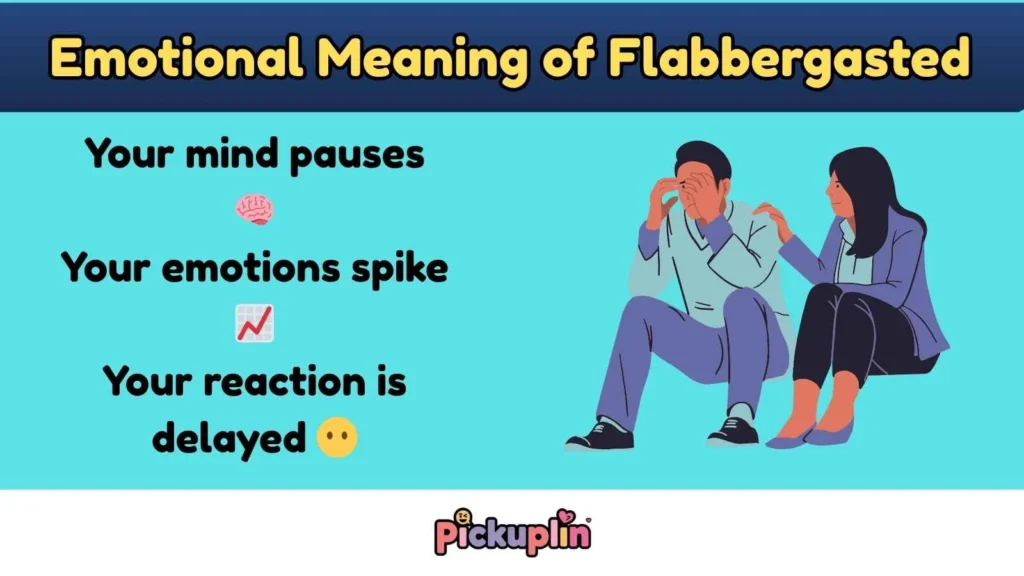
The emotional side of the flabbergasted meaning is important. This word doesn’t just describe surprise — it describes how deeply that surprise affects someone.
When you’re flabbergasted:
- Your mind pauses 🧠
- Your emotions spike 📈
- Your reaction is delayed 😶
It can happen due to:
- Unexpected good news 🎉
- Shocking statements 😳
- Unbelievable actions 🤯
The emotion can be positive, negative, or neutral — but it’s always intense.
Origin of the Word Flabbergasted 🕰️
The origin of flabbergasted is as dramatic as the word itself.
The term appeared in the English language in the 18th century. It was likely created as a playful, exaggerated word meant to express a powerful reaction.
While its exact roots are unclear, many language experts believe it combines:
- “Flabber” — suggesting confusion or disturbance
- “Gasted” — related to being shocked or frightened
Over time, the word stuck because it perfectly captured that overwhelming “I can’t believe this” feeling. 😮
How Flabbergasted Is Used in Everyday Language 🗣️
Today, flabbergasted is commonly used in:
- Casual conversations
- Books and storytelling 📖
- News reactions 📰
- Online posts and comments 💬
It adds emotion and personality to speech, making it more vivid and expressive.
Example:
“She was flabbergasted by how quickly everything changed.”
Flabbergasted vs Similar Words ⚖️
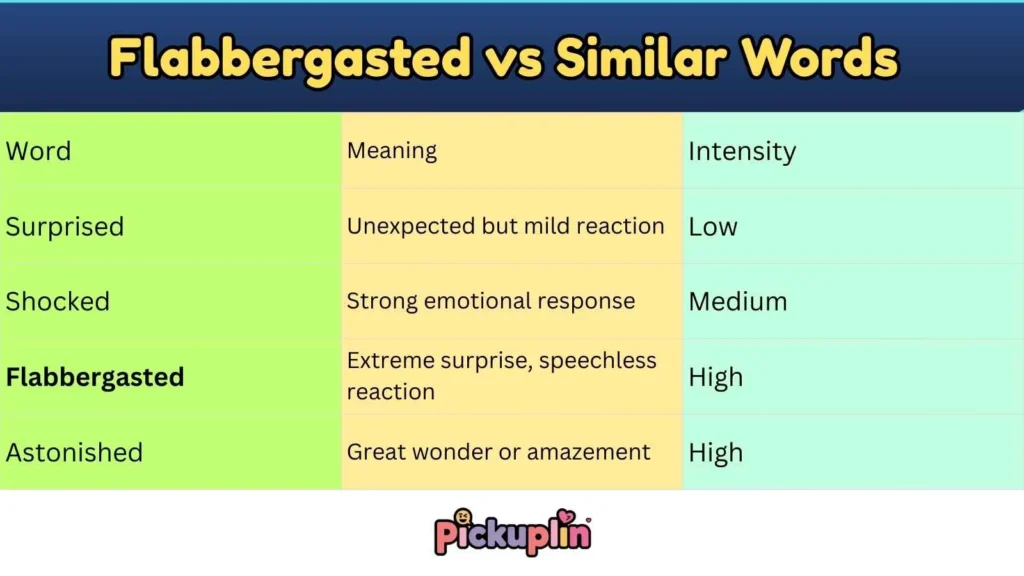
| Word | Meaning | Intensity |
|---|---|---|
| Surprised | Unexpected but mild reaction | Low |
| Shocked | Strong emotional response | Medium |
| Flabbergasted | Extreme surprise, speechless reaction | High |
| Astonished | Great wonder or amazement | High |
Among these, flabbergasted feels the most dramatic and expressive.
Real-Life Examples of Flabbergasted 🌍
Here are realistic examples to fully understand the flabbergasted meaning:
- “I was flabbergasted when my teacher praised my work in front of everyone.”
- “He stood flabbergasted after hearing the final result.”
- “They were flabbergasted by how fast the project was completed.”
Each example shows intense surprise, not just mild curiosity.
Is Flabbergasted Positive or Negative? 🔄
One interesting thing about flabbergasted is that it can be positive or negative depending on the situation.
Positive Use 😊
“I was flabbergasted by the surprise birthday party.”
Negative Use 😟
“She was flabbergasted by the sudden bad news.”
The word itself is neutral — the context gives it emotion.
Common Mistakes When Using Flabbergasted ❌
Many people misuse the word without realizing it. Here are common mistakes to avoid:
- Using it for small surprises ❌
- Using it too frequently ❌
- Using it without emotional context ❌
Tip: Save flabbergasted for moments that truly deserve it.
Flabbergasted in Writing & Storytelling ✍️
Writers love the word flabbergasted because it:
- Adds emotional depth
- Shows reaction without long explanation
- Makes scenes more vivid 🎬
Example:
“He stared at the letter, flabbergasted, unsure whether to laugh or cry.”
When Should You Use Flabbergasted? ⏰
Use flabbergasted when:
- The surprise is intense
- The reaction is immediate
- The moment feels unbelievable
Avoid using it for everyday, expected events.
Flabbergasted in Informal vs Formal English 🎭
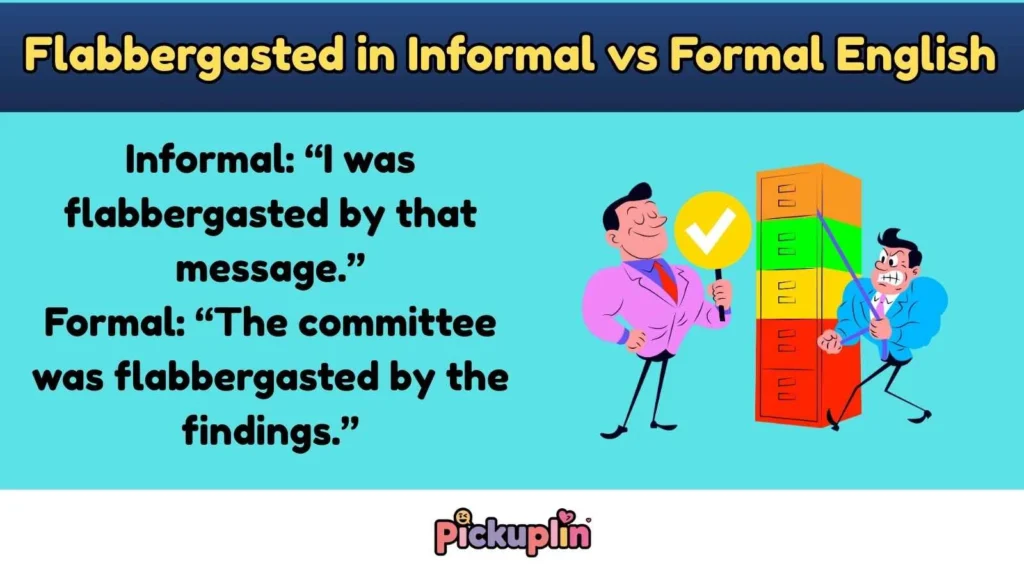
Good news — flabbergasted works in both!
- Informal: “I was flabbergasted by that message.”
- Formal: “The committee was flabbergasted by the findings.”
It’s expressive but still respectable.
Related Expressions and Phrases 🔗
- “Left speechless”
- “Caught off guard”
- “Mind blown” 🤯
FAQs
What is the simplest flabbergasted meaning?
It means being extremely surprised or shocked.
Is flabbergasted a strong word?
Yes, it expresses intense surprise.
Can flabbergasted be used casually?
Yes, but it’s best for big, unexpected moments.
Is flabbergasted positive?
It can be positive or negative depending on context.
Final Thoughts:
The flabbergasted meaning goes far beyond simple surprise. It captures those rare moments when life throws something so unexpected at us that words fail — even for a second.
Used correctly, it adds emotion, clarity, and personality to your speech and writing. Use it wisely, and it will make your language more powerful and expressive. ✨

I’m the voice behind Pikuplin, where I simplify meanings, slang, and everyday expressions in a way that actually makes sense. I love breaking down words and phrases so readers can understand not just the definition, but the real meaning behind them. Every piece I write is based on clarity, curiosity, and real human understanding.