Have you ever come across the word “elicit” and paused, wondering exactly what it means? 🤔 You’re not alone!
Whether in conversations, articles, or academic texts, “elicit” is a powerful verb that can change the tone of your communication.
In this ultimate guide, we’ll explore the elicit meaning, its origins, practical examples, and tips to use it like a pro.
What Does “Elicit” Mean? 🤓
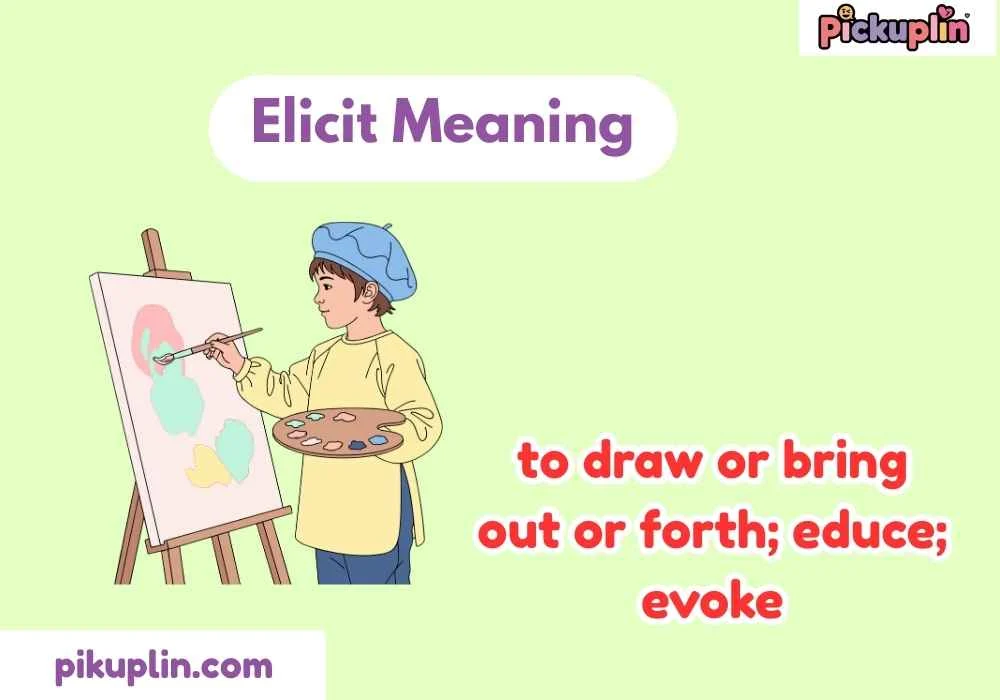
The word elicit is a verb that means to draw out, evoke, or bring forth a response, reaction, or feeling from someone. It is often used in formal, academic, or professional contexts but can appear in everyday speech too.
Example:
“The teacher tried to elicit answers from the students.” 📝
Key Points About the Meaning
- Elicit is an active verb – it requires action to draw something out.
- It is different from “illicit” (which means illegal) – pronunciation is similar, but meanings are entirely different!
- Commonly used in psychology, education, research, and communication.
Origin of the Word “Elicit” 🌍
The word elicit comes from the Latin word elicere, which means “to draw out”. Over time, it entered Middle English and has been used in formal and literary contexts to describe actions that bring out a response.
| Word | Origin | Meaning |
|---|---|---|
| Elicit | Latin: elicere | To draw out, evoke, or provoke a response |
Difference Between “Elicit” and “Illicit” ⚠️

Many people confuse elicit and illicit because they sound alike. Here’s a clear breakdown:
- Elicit: verb, means “to bring out or evoke”
- Illicit: adjective, means “illegal or forbidden”
Example:
Correct: “The joke did not elicit laughter.” 😂
Incorrect: “The joke did not illicit laughter.” ❌
How to Use “Elicit” in Sentences ✍️
Here are several ways you can naturally use elicit in different contexts:
1. In Conversations
- “Her story managed to elicit sympathy from the audience.”
- “I tried to elicit his opinion on the matter.”
2. In Writing
- “The study aims to elicit new insights into human behavior.”
- “Authors often elicit emotional responses through vivid descriptions.”
3. In Research and Surveys 📊
- “Questionnaires are designed to elicit accurate feedback.”
- “Researchers elicit information through structured interviews.”
Common Synonyms of “Elicit” 🔑
Using synonyms can help diversify your writing and communication:
- Extract
- Obtain
- Draw out
- Evoke
- Provoke
Examples of “Elicit” in Literature 📖

Writers often use “elicit” to create emotional impact:
“The novel’s climax was designed to elicit tears from the readers.” ❤️
“A powerful speech can elicit courage and determination in people.” 💪
Grammar Tips When Using “Elicit” 📝
- Verb Form: Elicit (base), Elicited (past), Eliciting (continuous)
- Common Structure: Elicit + object (response, reaction, emotion)
- Example: “The teacher elicited thoughtful answers from the students.”
How “Elicit” Works Psychologically 🧠
In psychology, elicit is used to describe actions that draw out emotions, behaviors, or responses. For example:
- Therapists elicit feelings through open-ended questions.
- Advertising elicits attention and emotional engagement from audiences.
Common Mistakes to Avoid ❌
- Confusing “elicit” with “illicit.”
- Using it in passive voice incorrectly – e.g., “The answer was elicited by the student” (less natural).
- Overusing the word in casual conversations – it sounds formal.
Fun Facts About “Elicit” 🎉
- The word has appeared in literature, research, and official reports for centuries.
- It is a favorite word in education and psychology due to its precision.
- Often used in academic writing to sound authoritative and precise.
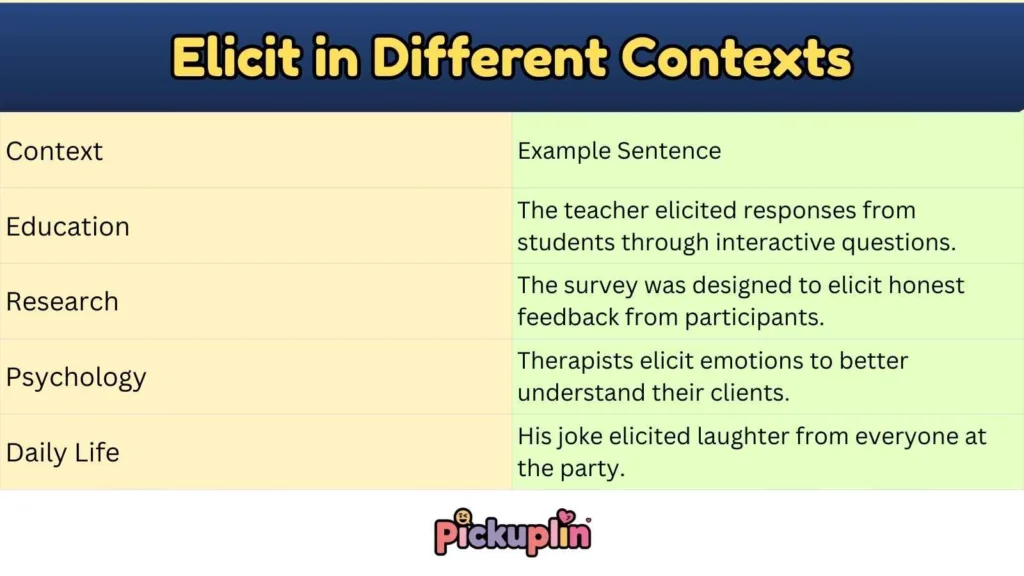
Examples Table: Elicit in Different Contexts 📋
| Context | Example Sentence |
|---|---|
| Education | The teacher elicited responses from students through interactive questions. |
| Research | The survey was designed to elicit honest feedback from participants. |
| Psychology | Therapists elicit emotions to better understand their clients. |
| Daily Life | His joke elicited laughter from everyone at the party. |
Tips to Remember the Meaning of “Elicit” 💡
- Think of it as “drawing out” something hidden.
- Associate it with active engagement – it needs action to produce a response.
- Remember the spelling difference from “illicit” to avoid mistakes.
FAQs
1. Is “elicit” a common word in English?
Yes, especially in formal, academic, and professional writing. It’s less common in casual speech but understood by educated speakers.
2. Can “elicit” be used in daily conversations?
Absolutely! For example, “That comment elicited a smile from her.” Just remember it sounds slightly formal.
3. What is the difference between elicit and evoke?
While both involve drawing out responses, evoke is more emotional or artistic, and elicit is more action-oriented or intentional.
4. How do I remember the difference between elicit and illicit?
“Elicit” = draw out. “Illicit” = illegal. A quick trick: “I elicit emotions,” “I avoid illicit activities.”
5. Can I use “elicit” in writing for SEO or content creation?
Yes! It makes your writing sound authoritative, precise, and formal, which helps in blogs, articles, and research-based content.
Conclusion:
Understanding the word elicit can elevate your communication skills, whether in writing, teaching, research, or daily interactions.
By learning its meaning, proper usage, and contexts, you can confidently draw out responses, emotions, and reactions from people effectively. 💪
Start practicing today – try to elicit meaningful responses in your next conversation.

I’m the voice behind Pikuplin, where I simplify meanings, slang, and everyday expressions in a way that actually makes sense. I love breaking down words and phrases so readers can understand not just the definition, but the real meaning behind them. Every piece I write is based on clarity, curiosity, and real human understanding.