Have you ever stumbled upon an anime or manga and heard the term “ecchi” and wondered what it truly means? 🤔
Whether you’re a casual viewer or an anime enthusiast, understanding the ecchi meaning is essential to appreciate Japanese pop culture fully.
In this comprehensive guide, we’ll break down everything about ecchi, from its origin to examples, so you can confidently explain it to friends or explore it yourself! 🌟
What Does Ecchi Mean? 📝
The term ecchi (pronounced “etchi”) is a Japanese word that loosely translates to “naughty” or “playful sexual content”. It is often used to describe anime and manga that contain suggestive themes, mild sexual humor, or provocative situations without explicit sexual acts. Think of it as flirty, cheeky content rather than hardcore adult material. 😏
Ecchi vs Hentai: Understanding the Difference
Many people confuse ecchi with hentai. Here’s a clear distinction:
- Ecchi: Suggestive themes, fan service, mild sexual jokes, but no explicit sex.
- Hentai: Explicit sexual content and adult scenes intended for mature audiences.
In short, ecchi is playful and humorous, while hentai is adult and explicit. ⚠️
The Origin of Ecchi 📜
The word “ecchi” originally comes from the Japanese pronunciation of the letter “H,” which stands for hentai. Over time, ecchi evolved into a separate term to indicate sexual humor or teasing content without crossing into pornography. The term became popular in manga and anime culture during the 1980s and 1990s. 🎌
Why Ecchi Is Popular in Anime and Manga 🎨
Ecchi has gained huge popularity for several reasons:
- Humor and Entertainment: Ecchi adds comedic relief and playful situations that appeal to a broad audience. 😂
- Fan Service: Many viewers enjoy the art style, exaggerated expressions, and flirty scenes. 💖
- Character Dynamics: Romantic tension and awkward moments are often explored through ecchi scenarios. 💌
Common Themes in Ecchi Anime 📺
Ecchi anime often include the following elements:
- Accidental physical contact or suggestive situations
- Over-the-top reactions to nudity or embarrassment
- Romantic tension between characters
- Mild sexual innuendos and jokes
Examples of Ecchi Scenes in Anime
Here are typical examples you might encounter:
- A character slipping in a bath and accidentally touching someone 🙈
- Clothing malfunctions leading to comedic situations 👗
- Flirty dialogue with subtle double meanings 💬
🎭 Ecchi Genres and Subcategories
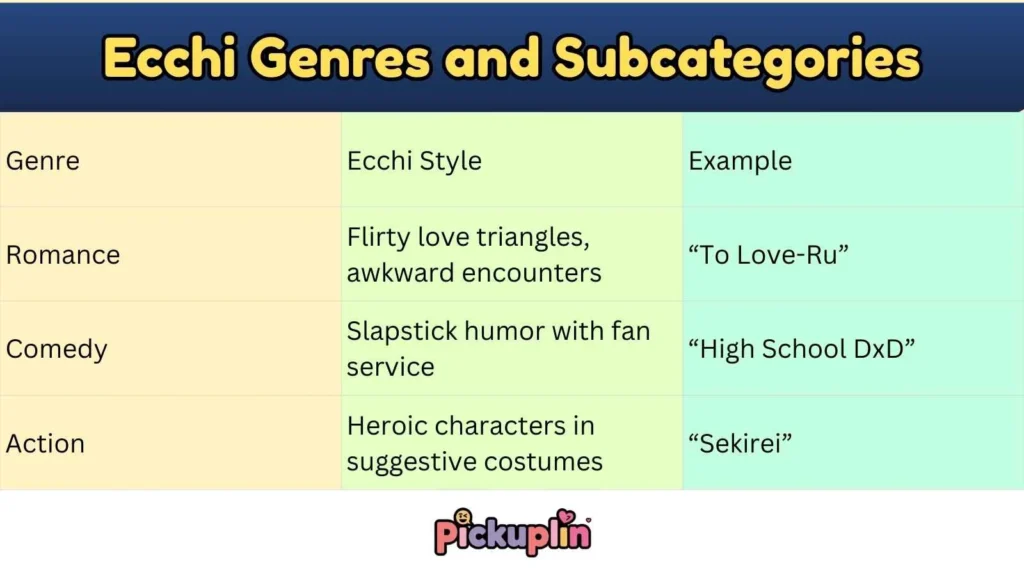
Ecchi can blend with multiple anime genres, making it versatile and fun:
| Genre | Ecchi Style | Example |
|---|---|---|
| Romance | Flirty love triangles, awkward encounters | “To Love-Ru” |
| Comedy | Slapstick humor with fan service | “High School DxD” |
| Action | Heroic characters in suggestive costumes | “Sekirei” |
🎨 Ecchi Art Style: What to Look For
Ecchi anime often use exaggerated art elements to emphasize playful themes:
- Bright, colorful visuals 🌈
- Exaggerated expressions and reactions 😳
- Focus on certain body features (common in fan service) 👀
Psychology Behind Ecchi 🧠
Why do people enjoy ecchi content? It’s not just about sexual attraction. Ecchi triggers emotional and psychological responses such as:
- Laughter from awkward or exaggerated scenarios 😂
- Excitement from romantic tension ❤️
- Curiosity about character interactions 🤔
Top Ecchi Anime Examples 📺
Here’s a curated list of popular ecchi anime:
- High School DxD: Combines action, romance, and ecchi humor 🏫🔥
- To Love-Ru: Classic ecchi romance with comedic twists 💌
- Rosario + Vampire: School life with supernatural ecchi moments 🧛♂️
- Prison School: Extreme comedy with over-the-top ecchi scenes 😆
Ecchi in Manga 📖
Ecchi isn’t limited to anime. Manga often explores ecchi content with:
- Suggestive illustrations with comedic timing 🎨
- Flirty dialogue and innuendos 💬
- Story-driven fan service that enhances character development 📚
Social Perception of Ecchi 🌐
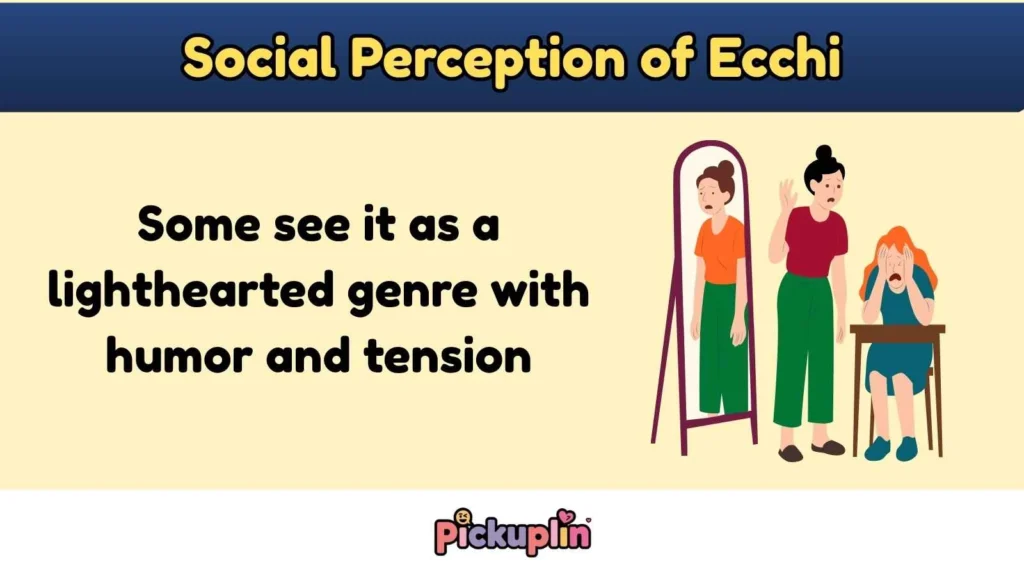
Ecchi is generally viewed as harmless fun among anime fans. However, opinions vary:
- Some see it as a lighthearted genre with humor and tension 😄
- Others criticize it for excessive fan service or objectification ⚠️
- It’s important to understand cultural context and age-appropriate viewing 🔞
How to Identify Ecchi Anime 🎯
Here are key signs that an anime falls under the ecchi category:
- Playful sexual jokes and nudity hints
- Characters frequently in awkward or suggestive situations
- Heavy use of blushes, exaggerated expressions, and double entendres
Common Ecchi Tropes to Recognize ⚡
- Accidental Pervert: Characters stumble into compromising positions
- Beach Episode: Iconic fan service scenario at the beach 🏖️
- Clumsy Hero: Often ends up in suggestive situations unintentionally
- Fan Service Galore: Emphasis on physical appeal without sexual acts
Table of Ecchi Ratings 📊
Some websites rate anime based on ecchi content:
| Rating | Content Level | Example |
|---|---|---|
| Low | Slight innuendos, minimal fan service | “Toradora!” |
| Medium | Frequent suggestive jokes, playful nudity | “High School DxD” |
| High | Extreme fan service, provocative situations | “Prison School” |
Ecchi and Cultural Context 🌏
Understanding ecchi requires knowledge of Japanese culture. While it’s playful in Japan, some Western audiences may perceive it differently. This difference highlights:
- The importance of context in humor 😄
- Different societal norms and media standards 🌐
- Age-appropriate recommendations for viewers 🔞
FAQs
- Q1: Is ecchi inappropriate for teenagers?
- A1: Ecchi is generally mild, but parental discretion is advised. Most ecchi anime are suitable for older teens. 🎓
- Q2: Can ecchi anime be romantic?
- A2: Yes! Many ecchi anime mix romance with humor and tension, making the stories engaging. ❤️
- Q3: How is ecchi different from hentai?
- A3: Ecchi is playful and suggestive, while hentai is explicit adult content. 😏
- Q4: Are all ecchi anime comedic?
- A4: Most include comedy, but some blend ecchi with action or drama for variety. 🎭
- Q5: Can ecchi influence other genres?
- A5: Absolutely! Ecchi can enhance romance, comedy, and action anime by adding playful tension. 🌟
Conclusion
In summary, ecchi meaning refers to playful, flirty, and suggestive content in anime and manga.
It’s a genre that mixes humor, romance, and fan service without crossing into explicit sexual content.
By understanding its origin, tropes, and cultural significance, you can enjoy ecchi anime responsibly and appreciate its role in Japanese pop culture. 🎌

I’m the voice behind Pikuplin, where I simplify meanings, slang, and everyday expressions in a way that actually makes sense. I love breaking down words and phrases so readers can understand not just the definition, but the real meaning behind them. Every piece I write is based on clarity, curiosity, and real human understanding.