Dingleberry meaning is one of those terms that instantly sparks curiosity, confusion, and sometimes laughter 😄. You may have heard it in a joke, an insult, or casual conversation and wondered, “Wait… what does that actually mean?” You’re not alone.
This word has a surprisingly long history, a literal definition that might make you cringe a little 😬, and a modern slang meaning that’s far more common today. In this in-depth guide, we’ll break down everything you need to know—clearly, respectfully, and with expert insight.
By the end of this article, you’ll understand the dingleberry meaning, its origin, how it’s used today, and when (or when not) to use it yourself.
What Does Dingleberry Mean? (Simple Definition)
At its core, the dingleberry meaning has two main interpretations: a literal one and a slang one.
- Literal meaning: A small piece of waste matter that becomes stuck to hair, typically animal fur or human body hair.
- Slang meaning: An insult used to describe a foolish, annoying, lazy, or insignificant person.
Today, the slang meaning is far more common and widely understood 👍.
“Calling someone a dingleberry usually implies they’re being clueless or useless—often in a joking way.”
The Literal Meaning of Dingleberry (Explained Carefully)
The original dingleberry meaning is literal and biological in nature. Historically, it referred to a small clump of waste material that became stuck in hair, especially on animals like sheep or dogs 🐕.
This meaning dates back centuries and was used descriptively rather than insultingly.
Key characteristics of the literal meaning:
- Not slang originally
- Often used in farming or animal care contexts
- Rarely used in modern conversation
Because language evolves, this literal definition has mostly faded from everyday use.
The Slang Meaning of Dingleberry (Most Common Use)
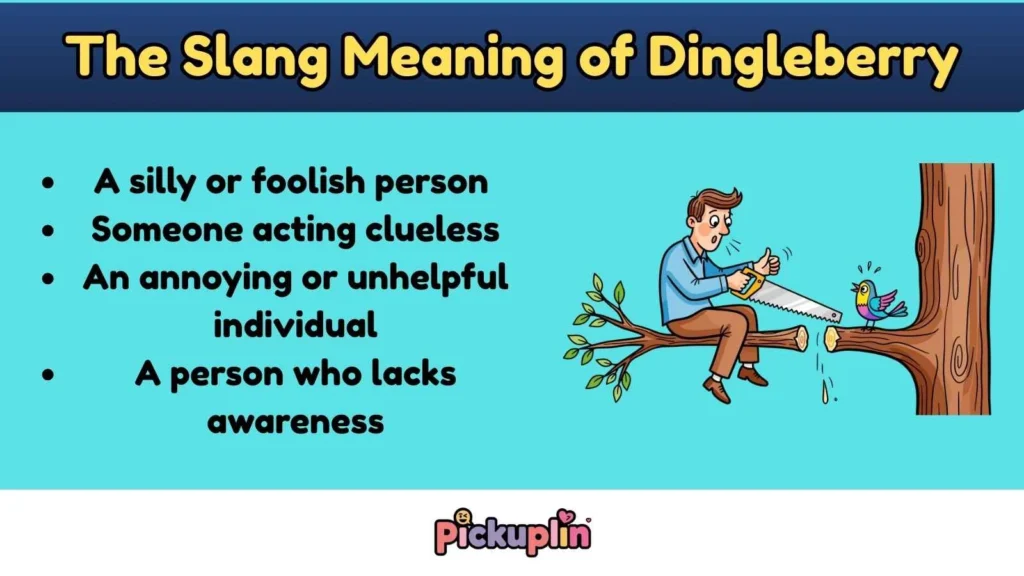
In modern English, the dingleberry meaning is almost always slang.
When used as slang, it describes:
- A silly or foolish person 🤪
- Someone acting clueless
- An annoying or unhelpful individual
- A person who lacks awareness
It’s usually playful rather than cruel, though tone matters a lot.
Example sentences:
- “Stop messing around, you dingleberry.”
- “He forgot his keys again—what a dingleberry.”
- “Don’t be a dingleberry; read the instructions first.”
Is Dingleberry an Insult or a Joke?
Great question 🤔. The answer depends on context, tone, and relationship.
| Situation | Meaning |
|---|---|
| Between friends | Playful teasing |
| During frustration | Mild insult |
| In public or formal settings | Inappropriate |
Most people interpret the slang dingleberry meaning as humorous rather than aggressive.
Origin of the Word Dingleberry 🕰️
The word “dingleberry” has deep roots in the English language.
Etymology breakdown:
- Dingle – an old English word referring to a small wooded valley
- Berry – something small and round
Over time, the term was humorously applied to small clumps found in hair. Later, metaphor took over, turning the word into slang.
This evolution is a classic example of how earthy humor shapes language 😄.
How the Meaning Changed Over Time
The dingleberry meaning didn’t become slang overnight.
Timeline of change:
- 1600s: Literal descriptive term
- 1800s: Humorous undertones emerge
- 1900s: Slang usage grows
- Today: Mostly playful insult
Language naturally softens uncomfortable topics by turning them into humor.
Dingleberry vs Similar Slang Words
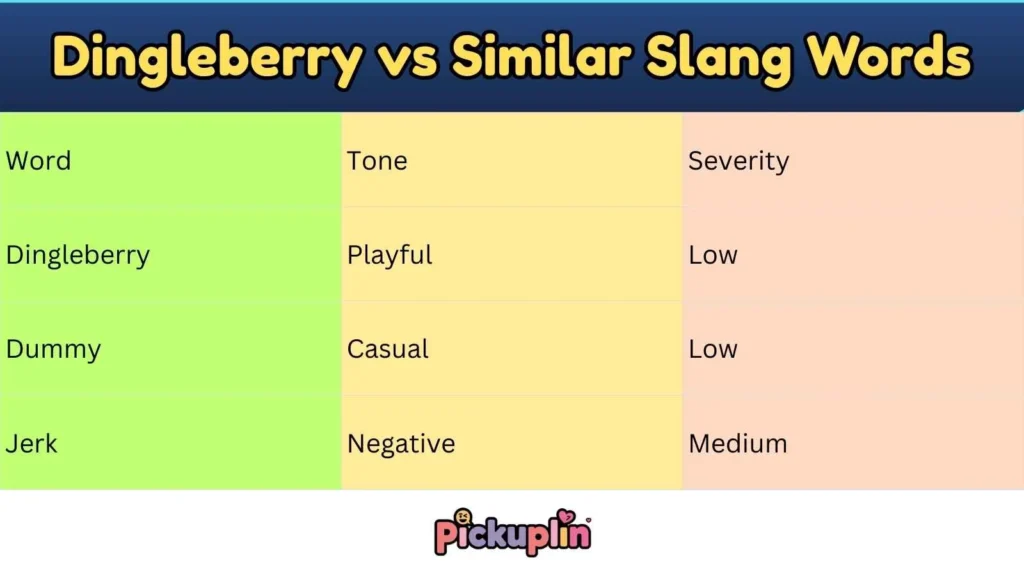
To fully understand the dingleberry meaning, it helps to compare it with similar terms.
| Word | Tone | Severity |
|---|---|---|
| Dingleberry | Playful | Low |
| Dummy | Casual | Low |
| Jerk | Negative | Medium |
Dingleberry stands out for its comedic feel 🍿.
Is Dingleberry Considered Offensive?
Generally, no—but context matters.
The slang dingleberry meaning is usually:
- Non-threatening
- Non-hateful
- Used jokingly
However, it’s still informal and shouldn’t be used in professional or sensitive situations.
When Should You Avoid Using the Word?
Even mild slang has limits 🚫.
Avoid using “dingleberry”:
- At work or in formal writing
- With strangers
- In serious discussions
- In educational or official contexts
Knowing when not to use a word shows language maturity.
Dingleberry in Pop Culture & Everyday Speech
The dingleberry meaning has survived because it’s memorable and funny.
You’ll often hear it in:
- Comedy routines 🎤
- Casual family conversations
- Online memes
- Light-hearted insults
Its humor makes it less harsh than many alternatives.
Psychology Behind Funny Insults
Why do words like “dingleberry” stick?
Because they:
- Use imagery
- Sound silly
- Reduce tension
The brain processes humorous insults differently than aggressive ones 🧠.
How to Explain Dingleberry Meaning to Someone Else
If someone asks you about the dingleberry meaning, keep it simple.
Best explanation:
“It’s a playful slang term for someone acting silly or clueless, usually meant as a joke.”
No need to go into the literal origin unless they’re curious.
Examples of Dingleberry in Real-Life Sentences
- “You left your phone in the fridge, you dingleberry.” 😂
- “Only a dingleberry would skip the tutorial.”
- “He’s not bad—just being a dingleberry today.”
Notice the humor and lack of hostility.
Common Misunderstandings About the Word
Many people assume the dingleberry meaning is extremely offensive. It usually isn’t.
Others think it’s modern slang, when it’s actually quite old.
Understanding context clears up confusion fast ⚡.
FAQs
Is dingleberry a curse word?
No. It’s informal slang but not considered profanity.
Can dingleberry be used jokingly?
Yes, that’s the most common usage today.
Is the word dingleberry still used?
Absolutely. It remains popular in casual speech.
Does dingleberry have a positive meaning?
Not positive, but usually lighthearted rather than mean.
Is it safe to use around kids?
It’s generally mild, but discretion is always wise.
Final Thoughts:
The dingleberry meaning is a perfect example of how language evolves—from literal descriptions to playful slang. While its origin is earthy, its modern use is mostly humorous and harmless.
Understanding when and how to use it helps you communicate more naturally and confidently 💬.
Language is powerful—and knowing the meaning behind words makes you smarter, funnier, and more aware.

I’m the voice behind Pikuplin, where I simplify meanings, slang, and everyday expressions in a way that actually makes sense. I love breaking down words and phrases so readers can understand not just the definition, but the real meaning behind them. Every piece I write is based on clarity, curiosity, and real human understanding.