Understanding the chinky meaning is important not to promote its use, but to recognize why it is considered offensive, where it came from, and how to communicate more respectfully today.
This guide offers a clear, educational explanation of the term, its background, social impact, and better alternatives.
The goal is awareness, not repetition. If you’ve ever seen or heard the word and wondered what it means and why people react strongly to it, this article walks you through everything—calmly, accurately, and responsibly.
What Does “Chinky” Mean?
The chinky meaning refers to a racial slur historically directed at people of East Asian descent. It is widely recognized as offensive and derogatory.
The term has been used to stereotype physical features and to demean an entire group of people based on race or ethnicity. Today, it is considered unacceptable in respectful communication across most cultures and platforms.
Understanding a word’s meaning does not mean endorsing its use.
Key Points to Know
- ❌ It is not a neutral or descriptive term
- ⚠️ It carries a long history of discrimination
- 🚫 Its use can cause harm, offense, and social consequences
Why People Search for the Chinky Meaning
People often look up the chinky meaning for several reasons:
- They heard it in a movie, song, or online comment
- They encountered it in historical or cultural discussions
- They want to understand why it is considered offensive
- They aim to avoid using harmful language unknowingly
Curiosity and a desire to communicate respectfully are valid reasons to seek clarity. 🌍
Historical Background of the Term
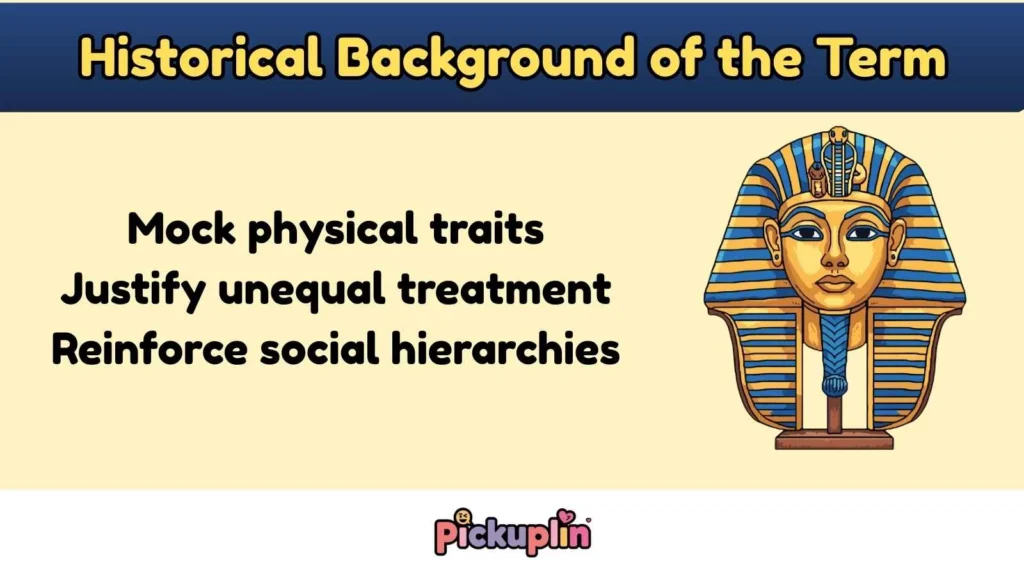
To fully understand the chinky meaning, context matters. The term emerged during periods when Asian communities faced widespread discrimination, exclusion, and stereotyping in Western societies.
It was often used to:
- Mock physical traits
- Justify unequal treatment
- Reinforce social hierarchies
Over time, these associations became deeply embedded, making the word inseparable from its harmful intent.
Is “Chinky” Always Offensive?
In modern usage, the answer is simple: yes.
Even if someone claims no harmful intent, the chinky meaning is tied to a legacy of insult and exclusion. Intent does not erase impact. 💡
Many communities have clearly stated that the word is offensive, and most platforms discourage or moderate its use.
Impact of Using Racial Slurs
Words shape experiences. Using slurs can lead to:
- 😔 Emotional harm
- 🚪 Social exclusion
- ⚖️ Workplace or school consequences
- 📉 Damage to personal credibility
Understanding the chinky meaning helps people avoid unintentionally contributing to these outcomes.
Examples for Educational Context Only
Below are contextual explanations, not endorsements:
- Historical texts: The word appears in older materials reflecting past attitudes.
- Media discussions: It may be referenced when analyzing racism or discrimination.
- Educational settings: Used to explain why certain terms are harmful.
In all cases, the word is discussed critically, not casually.
Common Misunderstandings
Some people misunderstand the chinky meaning due to myths like:
- “It’s just slang” ❌
- “It was okay in the past” ❌
- “It depends on tone” ❌
Language evolves, and many words once normalized are now recognized as harmful.
Respectful Alternatives to Use Instead
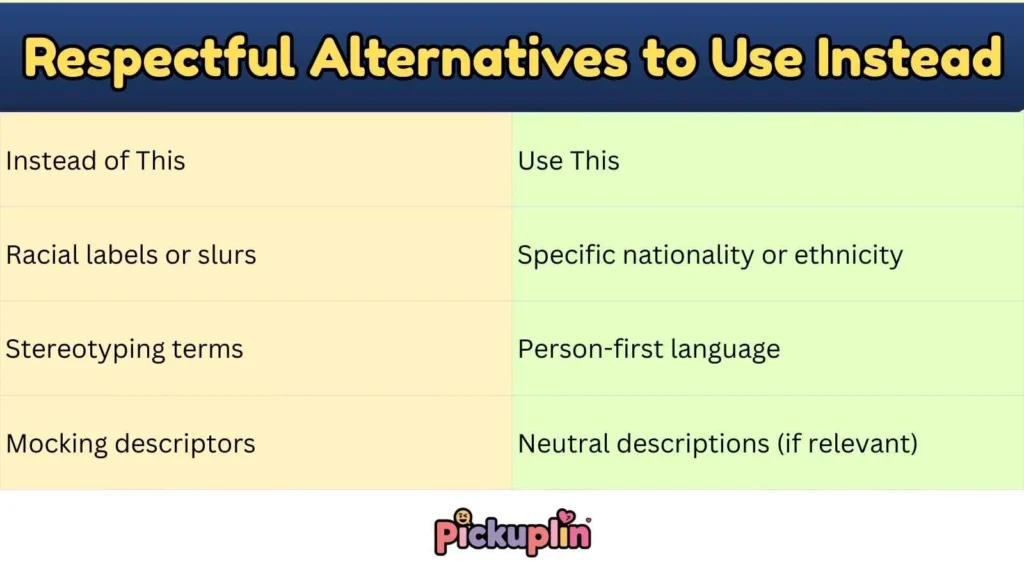
If your goal is respectful communication, there are always better options 👍.
| Instead of This | Use This |
|---|---|
| Racial labels or slurs | Specific nationality or ethnicity |
| Stereotyping terms | Person-first language |
| Mocking descriptors | Neutral descriptions (if relevant) |
Simple respect goes a long way 🌱.
How Language Shapes Culture
Understanding the chinky meaning is part of a larger conversation about how language reflects and reinforces culture.
When people choose inclusive language:
- Communities feel safer
- Dialogue improves
- Trust grows
Small changes in words can create big changes in impact.
Why Awareness Matters Today
In a digital world 🌐, words travel fast. A single comment can reach thousands. Knowing which terms are harmful helps prevent unnecessary conflict and promotes understanding.
Learning the chinky meaning is less about vocabulary and more about empathy.
Educational vs. Casual Usage
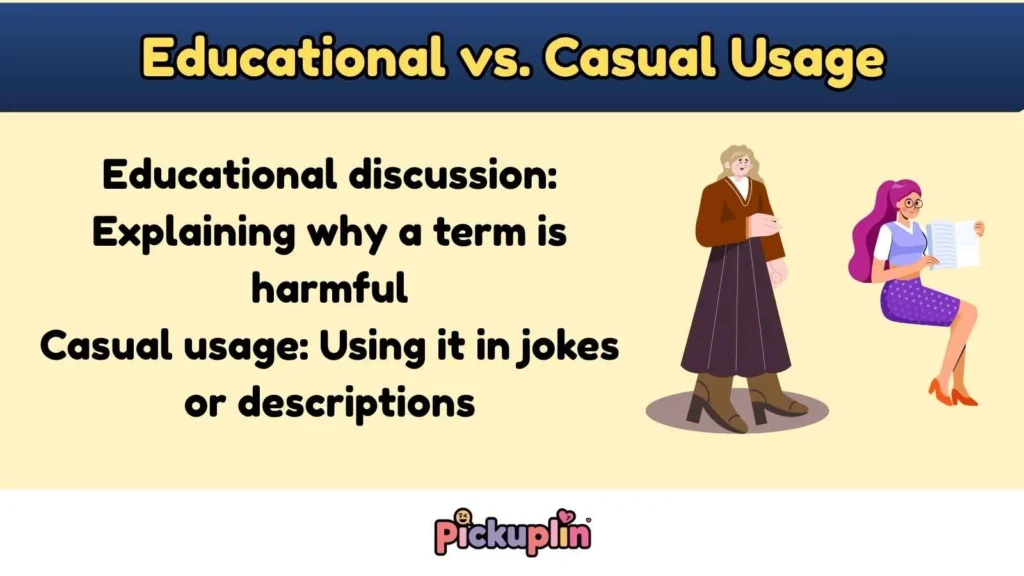
There is a clear difference between:
- Educational discussion: Explaining why a term is harmful
- Casual usage: Using it in jokes or descriptions
The first aims to inform. The second often causes harm.
FAQs
Is it okay to say the word if I don’t mean harm?
No. The chinky meaning is tied to offense regardless of intent.
Why do some old movies or books use it?
They reflect the attitudes of their time, not modern standards.
Can discussing the word be educational?
Yes, when done responsibly and critically, like in this article.
What should I do if I hear someone use it?
Respond calmly, set boundaries, or explain why it’s offensive if appropriate.
Final Thoughts
Understanding the chinky meaning is about awareness, respect, and growth 🌱. Language evolves, and so do we.
By choosing words carefully, we help create a more inclusive and thoughtful world.
Knowledge leads to better choices.
👉 If you found this helpful, explore related posts on respectful communication and modern language awareness to keep learning and growing.

I’m the voice behind Pikuplin, where I simplify meanings, slang, and everyday expressions in a way that actually makes sense. I love breaking down words and phrases so readers can understand not just the definition, but the real meaning behind them. Every piece I write is based on clarity, curiosity, and real human understanding.