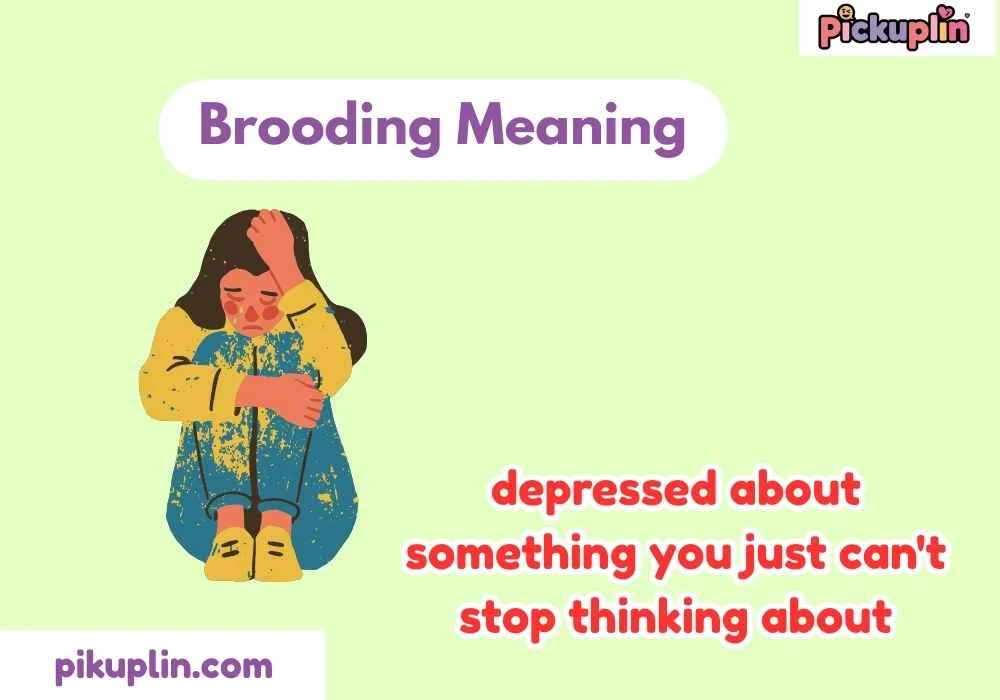
Have you ever noticed someone lost in thought, quiet, and seemingly intense? That feeling of deep reflection or silent intensity is often described as brooding.
Understanding brooding meaning goes beyond the dictionary—it’s about emotions, personality, and how humans process life’s challenges. 🌿
What Is Brooding? 🤔
Brooding refers to a state of deep, often melancholic thought. It’s a mix of reflection, worry, and sometimes moodiness. People who brood are usually introspective and tend to dwell on past events or potential outcomes.
In psychology, brooding is sometimes linked to rumination, a repetitive thought pattern where negative feelings or experiences are repeatedly analyzed. While brooding can spark creativity, excessive brooding can lead to stress or anxiety. 🧠
Origin of the Word “Brooding” 🏛️
The word brooding comes from Old English brod, meaning “to incubate” or “to hatch.” Originally, it described birds sitting on eggs. Over time, it evolved metaphorically to describe humans “hatching thoughts” internally. 🐣
This origin reflects the essence of brooding: a quiet, intense focus, often invisible to the outside world but powerful internally. 🌌
Brooding vs. Thinking: Key Differences 🆚
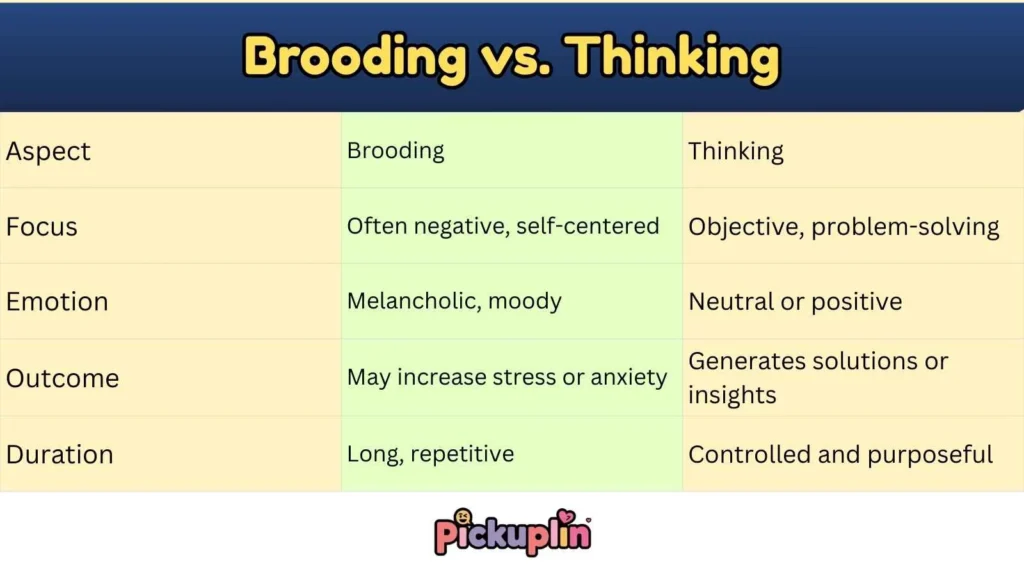
| Aspect | Brooding | Thinking |
|---|---|---|
| Focus | Often negative, self-centered | Objective, problem-solving |
| Emotion | Melancholic, moody | Neutral or positive |
| Outcome | May increase stress or anxiety | Generates solutions or insights |
| Duration | Long, repetitive | Controlled and purposeful |
Examples of Brooding in Everyday Life 📚
- A student replaying a failed exam in their mind for hours.
- Someone quietly sitting by the window, thinking about life choices.
- An artist contemplating past mistakes before creating new work.
- Reflecting deeply on a recent argument or hurtful comment.
Brooding Personality Traits 🌟
Individuals who are naturally brooding often share these traits:
- Introspective: They frequently reflect on thoughts and emotions.
- Sensitive: Emotions are intense and deeply felt.
- Creative: Many artists, writers, and musicians have brooding tendencies.
- Reserved: They may appear quiet or withdrawn.
- Analytical: They tend to overthink and analyze situations thoroughly.
Positive Aspects of Brooding ✨
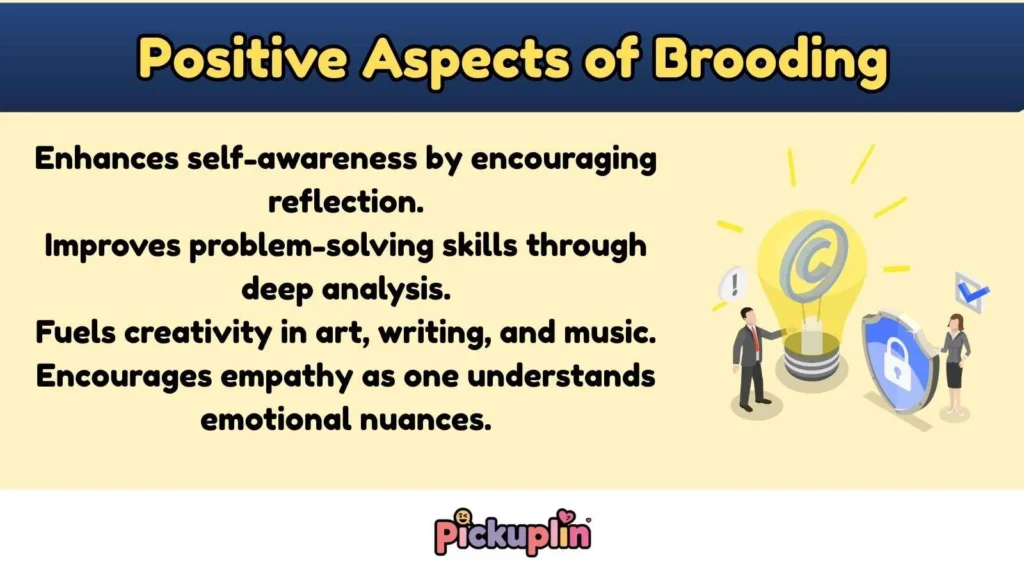
While brooding is often seen as negative, it can have benefits:
- Enhances self-awareness by encouraging reflection.
- Improves problem-solving skills through deep analysis.
- Fuels creativity in art, writing, and music.
- Encourages empathy as one understands emotional nuances.
Negative Effects of Excessive Brooding ⚠️
Too much brooding can impact mental health:
- Increases stress and anxiety
- Leads to depression in some individuals
- Impairs decision-making by overanalyzing
- Can affect social relationships due to withdrawal
Brooding in Literature and Art 🎨📖
Many iconic literary characters are described as brooding:
- Heathcliff in Wuthering Heights – dark, intense, and reflective.
- Edgar Allan Poe’s protagonists – melancholic and mysterious.
- Modern films often portray brooding heroes, symbolizing depth and mystery.
Psychological Perspective: Why Do People Brood? 🧠
Psychologists identify several reasons for brooding:
- Unresolved stress: Lingering problems spark repeated thoughts.
- Personality: Introverts and sensitive types are prone to brooding.
- Emotional processing: Helps understand feelings and experiences.
- Trauma: Past events may trigger persistent reflection.
Brooding and Emotional Intelligence 🌱
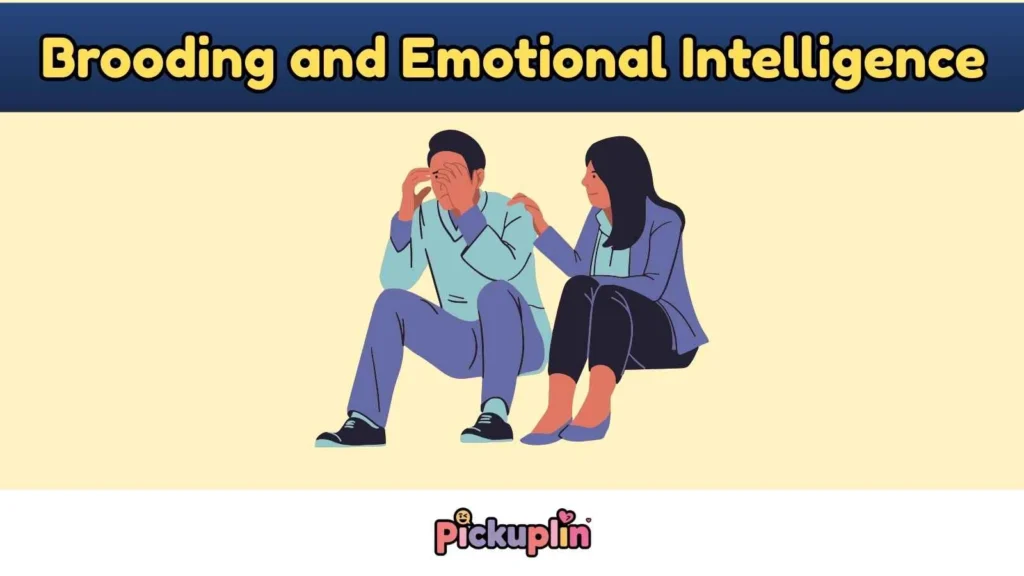
Interestingly, brooding can enhance emotional intelligence (EI). Individuals who brood are often more aware of their emotions and the emotions of others, which can improve empathy and social understanding. ❤️
Signs You Might Be Brooding Too Much 🔍
- Constantly replaying negative events in your mind.
- Difficulty focusing on the present.
- Feeling overwhelmed by emotions.
- Difficulty making decisions.
- Withdrawing from social interactions.
How to Channel Brooding Positively 💡
Brooding isn’t inherently bad. Here are strategies to make it productive:
- Journaling: Write down thoughts to release mental weight.
- Creative outlets: Use art, music, or writing to express emotions.
- Mindfulness: Focus on the present moment to reduce rumination.
- Problem-solving: Turn thoughts into actionable solutions.
- Physical activity: Exercise can clear the mind and reduce stress.
Brooding vs. Rumination: Understanding the Fine Line ⚖️
Both involve deep thinking, but they differ:
- Brooding: Can be reflective and constructive.
- Rumination: Persistent negative thinking without solution focus.
Brooding in Modern Culture 🌐
Brooding is often romanticized in media:
- TV shows and movies showcase mysterious, brooding characters as intriguing.
- Social media trends highlight introspective, “moody” aesthetics.
- Music genres like indie and alternative often embrace brooding themes.
Quotes About Brooding 📝
“The mind is a garden. Brooding thoughts are weeds that grow silently.” 🌿
“Brooding is the art of turning sorrow into reflection.” 💭
Brooding Across Different Cultures 🌏
Perceptions of brooding vary:
- In Western cultures, brooding can signal depth and mystery.
- In Eastern philosophies, reflection and meditation are revered, which overlaps with brooding traits.
- Art and literature across cultures often celebrate brooding as a mark of intellect.
Brooding in Relationships ❤️
Brooding individuals may appear distant but often care deeply. Key relationship tips:
- Communicate feelings rather than keeping them internal.
- Balance introspection with shared experiences.
- Support partners who tend to brood with patience.
Brooding Personality Test 📝
Quick self-check: Do you often feel or do the following?
- Lost in thought for hours
- Replay events repeatedly
- Feel emotions deeply
- Prefer solitude at times
- Analyze motives and actions of others
If yes, you might have a naturally brooding personality! 🌙
FAQs
1. What is the difference between brooding and thinking?
Thinking is usually purposeful and solution-focused, while brooding is reflective, often melancholic, and can dwell on past events.
2. Can brooding be healthy?
Yes! When balanced, brooding improves self-awareness, emotional intelligence, and creativity. Excessive brooding, however, can increase stress.
3. Is brooding a personality trait?
Brooding tendencies are linked to personality traits such as introversion, sensitivity, and high emotional awareness.
4. How can I stop over-brooding?
Practice mindfulness, journaling, physical activity, and problem-solving strategies to channel brooding positively.
5. Are brooding people more creative?
Often yes! Brooding encourages introspection, which fuels creativity in art, writing, and music. 🎨
Conclusion:
Understanding brooding meaning reveals a complex balance between reflection, emotion, and creativity.
While excessive brooding can challenge mental health, when channeled effectively, it can enhance self-awareness, creativity, and empathy. 🌿
Next time you notice yourself or someone else brooding, remember it’s not just moody silence—it’s a doorway to deeper understanding and personal growth. 🌌

I’m the voice behind Pikuplin, where I simplify meanings, slang, and everyday expressions in a way that actually makes sense. I love breaking down words and phrases so readers can understand not just the definition, but the real meaning behind them. Every piece I write is based on clarity, curiosity, and real human understanding.