Have you ever noticed that people with similar interests, personalities, or habits naturally stick together? This timeless observation is captured perfectly by the phrase “birds of a feather”.
But what does it truly mean, and why do humans seem to follow this age-old pattern? In this guide, we’ll explore the origin, meaning, examples, and real-life applications of this fascinating expression. 🌟
What Does “Birds of a Feather” Mean?
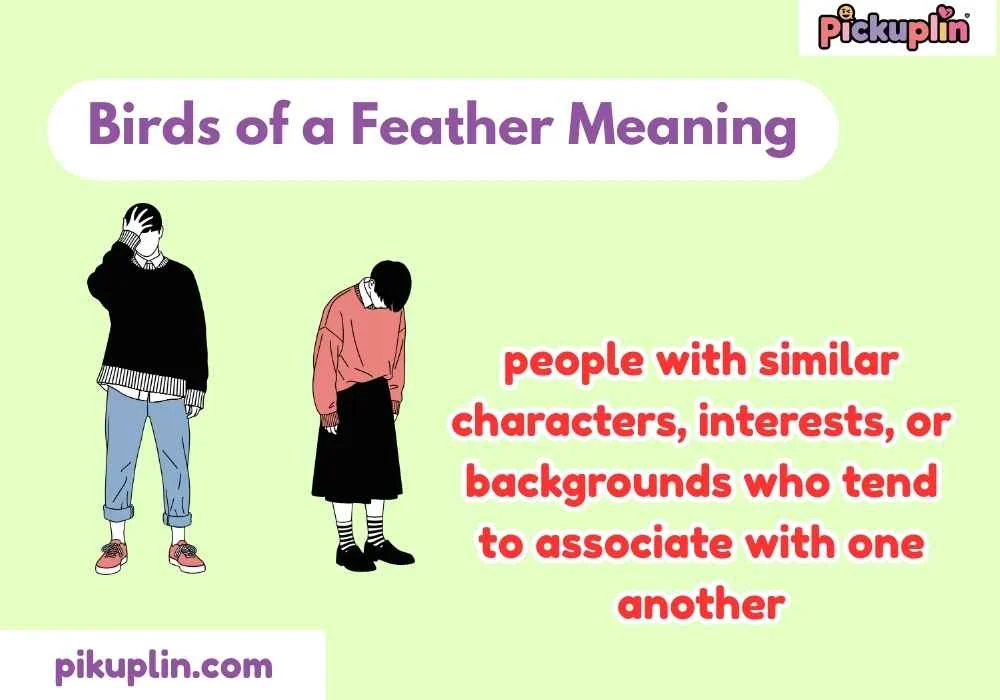
The expression “birds of a feather” is a metaphor suggesting that people who are alike tend to stick together. It’s often used to describe friendships, relationships, or social groups where shared traits, interests, or values create a natural bond. 👫
In essence, it highlights the idea that similar attracts similar, whether in personality, habits, hobbies, or even professional interests.
Key Points:
- Represents natural human bonding based on similarity.
- Can apply to positive or negative traits.
- Commonly used in both everyday speech and literature.
Origin of the Phrase 🕰️
The phrase “birds of a feather flock together” is centuries old. Its earliest known appearance dates back to the 16th century in English literature. The saying originally referred to birds of the same species grouping together for survival and social reasons, which humans later applied metaphorically to social behavior. 🐦
Early examples include:
- William Turner’s writings (1545): Describing how birds naturally flock together.
- Proverbs in various cultures: Many societies observed that like-minded individuals tend to associate.
Psychological Meaning Behind the Saying 🧠
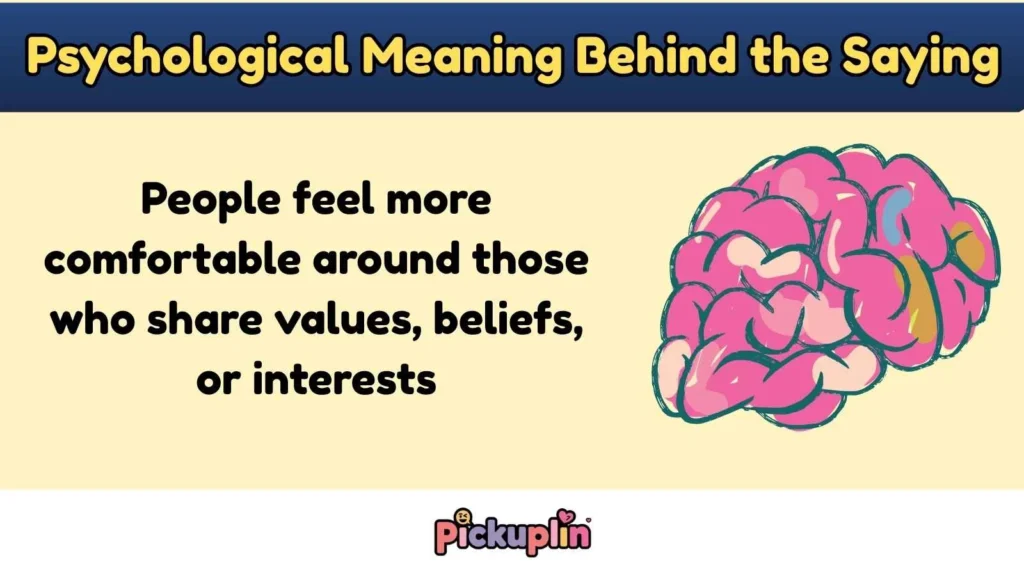
From a psychological standpoint, the phrase highlights the human tendency to seek similarity. Psychologists call this the similarity-attraction effect, meaning:
- People feel more comfortable around those who share values, beliefs, or interests.
- Similarity reduces conflict and increases trust in relationships.
- Shared interests foster deeper connections and stronger bonds.
Examples of “Birds of a Feather” in Everyday Life
Let’s make this tangible with real-life scenarios where the phrase applies:
1. Friendships 👭
Friends often share similar hobbies, humor, or life philosophies. Think of a group of friends who all love gaming, hiking, or painting—they naturally bond over these shared passions.
2. Workplace Connections 💼
In professional settings, colleagues with similar work ethics or problem-solving styles often gravitate toward each other, forming teams that function seamlessly.
3. Romantic Relationships ❤️
Couples often find compatibility through shared values, interests, or lifestyles. While opposites can attract, long-term relationships frequently thrive on similarity.
Positive and Negative Implications ✅❌
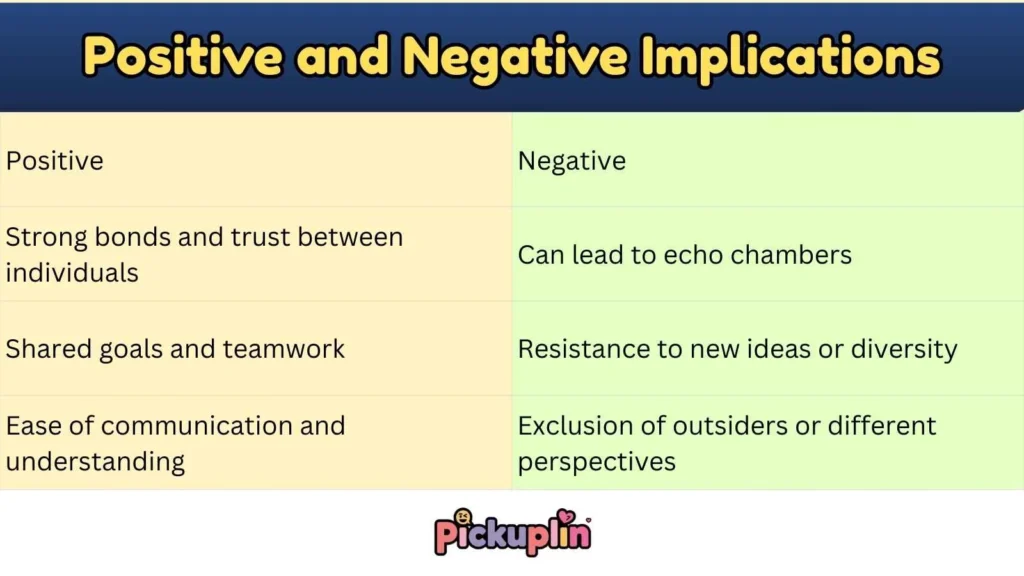
Like any social behavior, “birds of a feather” has both advantages and disadvantages:
| Positive | Negative |
|---|---|
| Strong bonds and trust between individuals | Can lead to echo chambers |
| Shared goals and teamwork | Resistance to new ideas or diversity |
| Ease of communication and understanding | Exclusion of outsiders or different perspectives |
Birds of a Feather in Literature & Media 📚
The phrase is widely used in books, movies, and TV shows. Authors use it to quickly convey:
- Character alliances
- Group behavior
- Social dynamics and conflict resolution
Example: In many classic novels, social circles are defined by shared values or status, perfectly illustrating the proverb.
Scientific Perspective 🔬
Studies in sociology and evolutionary biology confirm that humans, like birds, form groups based on similarity. Group cohesion improves survival, social stability, and emotional well-being. 🧬
Birds of a Feather vs. Opposites Attract
It’s common to wonder how this saying contrasts with the idea that “opposites attract.” Both exist, but research shows:
- Short-term attraction can happen with opposites.
- Long-term compatibility is usually stronger among similar personalities.
- Shared habits, values, and goals make sustained relationships easier.
Modern Usage in Social Media & Online Communities 🌐
In today’s digital world, the phrase perfectly describes online groups. Whether it’s a forum for gamers, a fitness community, or a book club, people cluster where they feel a sense of belonging. 📱
How to Apply the Concept in Real Life 🌟
You can use the principle of “birds of a feather” to enhance your personal and professional life:
- Networking: Seek groups where your values align for authentic connections.
- Friendship: Spend time with people who inspire and support you.
- Team-building: Form teams with shared goals for better results.
- Self-awareness: Recognize the types of people you naturally attract.
Famous Quotes About Birds of a Feather ✨
“Birds of a feather flock together.” – English Proverb
“People like themselves stick together, consciously or unconsciously.” – Modern Psychology
Birds of a Feather in Business & Leadership 💼
Leaders often use this understanding to:
- Build cohesive teams
- Enhance company culture
- Align employee values with organizational goals
Common Misconceptions ❗
Some people misinterpret the phrase as always encouraging conformity. In reality:
- It’s about natural bonding, not forced similarity.
- It can coexist with diversity if managed wisely.
- Awareness prevents negative effects like groupthink.
Birds of a Feather in Parenting & Social Development 👶
Children often form friendships based on shared interests, showing the concept is instinctive. Parents can:
- Encourage interactions with like-minded peers
- Balance similarity and exposure to diverse perspectives
- Guide healthy social habits from a young age
Birds of a Feather Table Summary 📊
| Aspect | Meaning | Example |
|---|---|---|
| Friendship | People with similar interests bond | Gamers forming a club |
| Work | Similar work styles improve teamwork | Creative team collaborating smoothly |
| Romance | Shared values enhance compatibility | Couples with same lifestyle goals |
| Social Media | Communities form naturally | Fitness forums or book clubs |
FAQs
1. What does “birds of a feather” mean in simple words?
It means that people who are similar in interests, values, or personality naturally stick together. 👫
2. Is it always a good thing to follow this saying?
Not always. While it helps build trust and comfort, it can also limit exposure to new ideas or perspectives. ⚖️
3. Can “birds of a feather” apply in professional settings?
Yes! Teams with shared work habits and goals often perform better and communicate more effectively. 💼
4. How does this phrase relate to psychology?
Psychologists refer to it as the similarity-attraction effect, showing humans naturally prefer others like themselves. 🧠
5. Are there any exceptions?
Yes, some people thrive in relationships or teams with complementary, rather than similar, traits. It depends on context. ⚡
Conclusion:
The phrase “birds of a feather“ is more than just a saying—it’s a reflection of human nature.
From friendships to workplaces, shared traits and interests form the backbone of social connection. While it has both advantages and challenges, understanding this concept helps us navigate relationships more effectively. 🐦
Embrace your flock, seek genuine connections, and remember: similarity brings comfort, but diversity brings growth. 🌱

I’m the voice behind Pikuplin, where I simplify meanings, slang, and everyday expressions in a way that actually makes sense. I love breaking down words and phrases so readers can understand not just the definition, but the real meaning behind them. Every piece I write is based on clarity, curiosity, and real human understanding.